

AI CERTS
3 hours ago
OpenAI Expansion: Bellevue Office Signals Seattle Region AI Surge
Consequently, the move cements Puget Sound’s status as an AI innovation corridor. Industry observers now ask what the footprint means for hiring, real estate, and regional economics. This article dissects the numbers, motivations, and implications behind OpenAI Expansion in the Eastside market. Readers will gain actionable insights backed by verified commercial real estate data and on-the-record quotes.
Moreover, professionals can benchmark their strategies against lessons from the project’s scale and velocity. Therefore, let us explore how one lease may recalibrate an entire metropolitan tech ecosystem.
Strategic Bellevue Location Choice
City Center Plaza formerly housed large Microsoft teams. In contrast, the tower now hosts cutting-edge research teams testing frontier models. OpenAI chose the site for several reasons. Firstly, public transit improvements mean staff can ride the East Link light rail within months. Secondly, proximity to Azure and AWS architects accelerates joint workload troubleshooting sessions. Additionally, real estate brokers offered competitive terms due to a 25.4% vacancy rate in downtown.
That concession window allowed leadership to secure roughly 272,000 square feet across up to 12 floors. Regional venture investor Matt McIlwain called the OpenAI Expansion a "virtuous cycle" for founder pipelines. Consequently, local startups anticipate easier access to technical mentors and early customer feedback. These location drivers clarify why executives celebrated beside Bellevue’s mayor during the ribbon cutting.
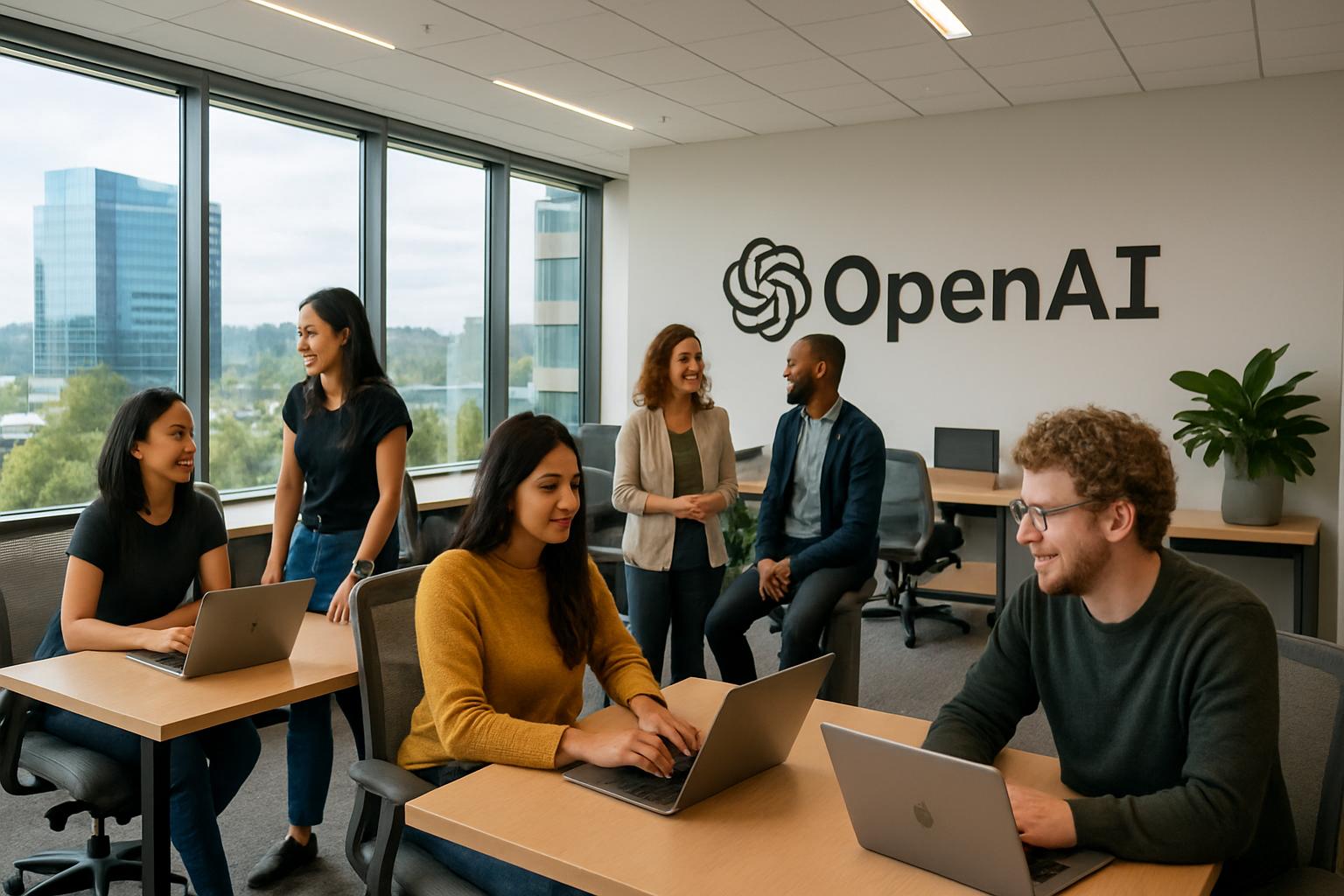
Strategic geography underpins the entire investment. However, space alone tells only part of the story, leading us next to leasing scale.
Lease Details And Scale
February filings with CoStar revealed an additional 223,000 square feet under contract. Subsequently, total occupancy potential climbed to nearly 296,000 square feet.
- ~223,000 extra square feet signed in February 2026, according to CoStar.
- Total footprint now approaches 296,000 square feet across up to 12 floors.
- Capacity estimates range from 1,000 to 1,800 desks, with 1,400 staffers used as midpoint.
Commercial analysts convert that footprint into capacity between 1,000 and 1,800 desks, depending on density assumptions. GeekWire reported an interim target of 1400 employees for the completed build-out. Moreover, the lease spans multiple floors once controlled by Microsoft, demonstrating measurable market churn. Rental rates remain confidential, yet brokers hint at rates below pre-pandemic peaks.
Therefore, OpenAI Expansion capitalized on weakened pricing while securing long-term flexibility. CBRE sources noted possible rights of first refusal on remaining floors, safeguarding future growth paths. Nevertheless, capacity projections matter little without corresponding talent acquisition. The next section examines those hiring mechanics in detail.
Square footage offers a tangible metric for ambition. Consequently, understanding hiring intents will reveal whether numbers translate into headcount reality.
Talent And Hiring Plans
OpenAI currently lists scores of Bellevue engineering and product roles on its careers portal. Roles span reinforcement learning, enterprise integrations, and safety evaluations. Furthermore, Vijaye Raji emphasized during the opening that regional teams already collaborate with San Francisco counterparts daily. Headcount today sits near 250, yet blueprints accommodate 1400 employees once construction finishes. Consequently, staffing will likely scale through phased waves aligned with floor activations.
Recruiters target alumni from University of Washington and former Amazon machine learning units. In contrast, some candidates may arrive from smaller startups attracted by research resources. Professionals hoping to differentiate can validate skills through the AI+ Network Security™ certification. Such credentials shorten evaluation cycles and satisfy rigorous compliance requirements. Moreover, internal mobility policies will allow staff to rotate between research and applied product groups.
Hiring objectives remain aggressive yet structured. However, workforce growth alone cannot rescue a struggling urban core, so economic impact deserves scrutiny.
Economic And Market Impact
Office towers across downtown suffer record vacancies after pandemic relocations. Therefore, landing a marquee tenant offers landlords and city planners welcome relief. Analysts estimate OpenAI’s rent may inject millions annually into municipal tax streams. Furthermore, hospitality businesses expect lunchtime and event traffic to rebound. Nevertheless, experts caution that one lease cannot erase a 25% vacancy overnight. Meanwhile, competing subleases still flood the Eastside market, keeping effective rents subdued.
Local economists model secondary spending using multipliers that include transportation, retail, and housing services. Early models suggest up to 1,500 induced jobs. Those roles come in transit, retail, and housing services. Consequently, regional GDP could expand by tens of millions within three years. These projections spark optimism, yet community advocates remain vigilant regarding affordability pressures.
Economic momentum seems tangible yet not guaranteed. Subsequently, community engagement will influence whether benefits distribute equitably.
Local Community Engagement Initiatives
OpenAI Academy scheduled a Small Business AI Jam one day after the office debut. The workshop teaches entrepreneurs how to embed generative models into operations without heavy capital. Moreover, engineers plan monthly meetups featuring live demonstrations and ethics panels. City leaders welcome these programs because they bridge corporate prowess with neighborhood needs. Bellevue officials particularly highlight partnerships with local high schools for internship pipelines. Consequently, early workforce exposure may diversify applicant pools long before college recruitment begins.
Nevertheless, civic groups request formal impact reporting on transportation congestion and housing demand. In contrast, OpenAI pledged to share anonymized commuting data after six months of operation. These transparency steps could strengthen trust and preempt regulatory friction. Next, we examine dissenting voices questioning the pace of OpenAI Expansion within the region.
Community outreach initiatives appear robust at launch. However, critical perspectives underline unresolved systemic challenges ahead.
Challenges And Critical Views
Housing affordability represents the loudest concern from residents and nonprofit coalitions. Median rents already climbed 7% year over year in surrounding zip codes. Furthermore, traffic models warn of heavier rush hour loads until light rail fully opens. Political debates over potential payroll taxes add further uncertainty for corporate planners. Nevertheless, Mayor Mo Malakoutian labels the OpenAI Expansion a "vote of confidence" in municipal policy. Critics counter that incentives mask longer-term service funding holes.
In contrast, venture investors argue the economic flywheel will outpace new costs. Therefore, stakeholders must balance rapid scaling against sustainable infrastructure funding. Bellevue council will revisit zoning adjustments after headcount surpasses 1400 employees, according to meeting minutes. These debates highlight why forecasting remains challenging despite exact square footage data.
Criticism reflects valid systemic pressures. Consequently, strategic planning must anticipate externalities linked to workforce expansion.
Future Outlook And Takeaways
Market watchers will monitor actual occupancy rates quarterly. If hiring matches projections, 1400 employees could arrive by late 2027. Moreover, City Center Plaza may require further retrofits to handle power-dense compute labs. Subsequently, other AI startups may cluster nearby, reinforcing a critical mass. Investors already cite the OpenAI Expansion when pitching new funds focused on generative applications. Meanwhile, commercial landlords hope the headline deal stabilizes lease rates across other downtown towers.
Professionals assessing career moves should track upcoming facility phase dates and posted roles weekly. Additionally, continuous learning remains vital as OpenAI publishes novel model capabilities. Skills validation through the earlier linked certification can future-proof security competencies. These signals suggest ongoing momentum, yet adaptive strategy will separate leaders from followers.
Forward indicators point toward sustained growth. However, only measured execution will convert promise into lasting regional prosperity.
OpenAI Expansion has already shifted commercial narratives across the Seattle metropolitan area. Moreover, early leasing ripples boosted confidence among downtown landlords still facing elevated vacancy. However, the project’s long-term value hinges on delivering 1400 employees, robust community reporting, and continuous upskilling. Stakeholders should therefore track quarterly hiring data, infrastructure milestones, and fiscal policy debates. In contrast, talent professionals can seize opportunity now by certifying security expertise.
They can begin with the previously referenced AI+ Network Security™ credential. Consequently, each individual step reinforces the broader OpenAI Expansion, ensuring benefits ripple beyond one office. Act today, stay informed, and participate actively in shaping the future innovation corridor. Ultimately, successful OpenAI Expansion can serve as a blueprint for responsible tech growth worldwide.


