

AI CERTS
3 months ago
Observable AI: The Missing Layer For LLM Reliability
Consequently, Observable AI is emerging as the final mile for LLM Reliability. This article unpacks the market drivers, engineering patterns, and governance trade-offs. Readers will gain actionable guidance to build auditable, trustworthy services at Enterprise scale. Meanwhile, analysts already compare these practices to classic SRE playbooks.
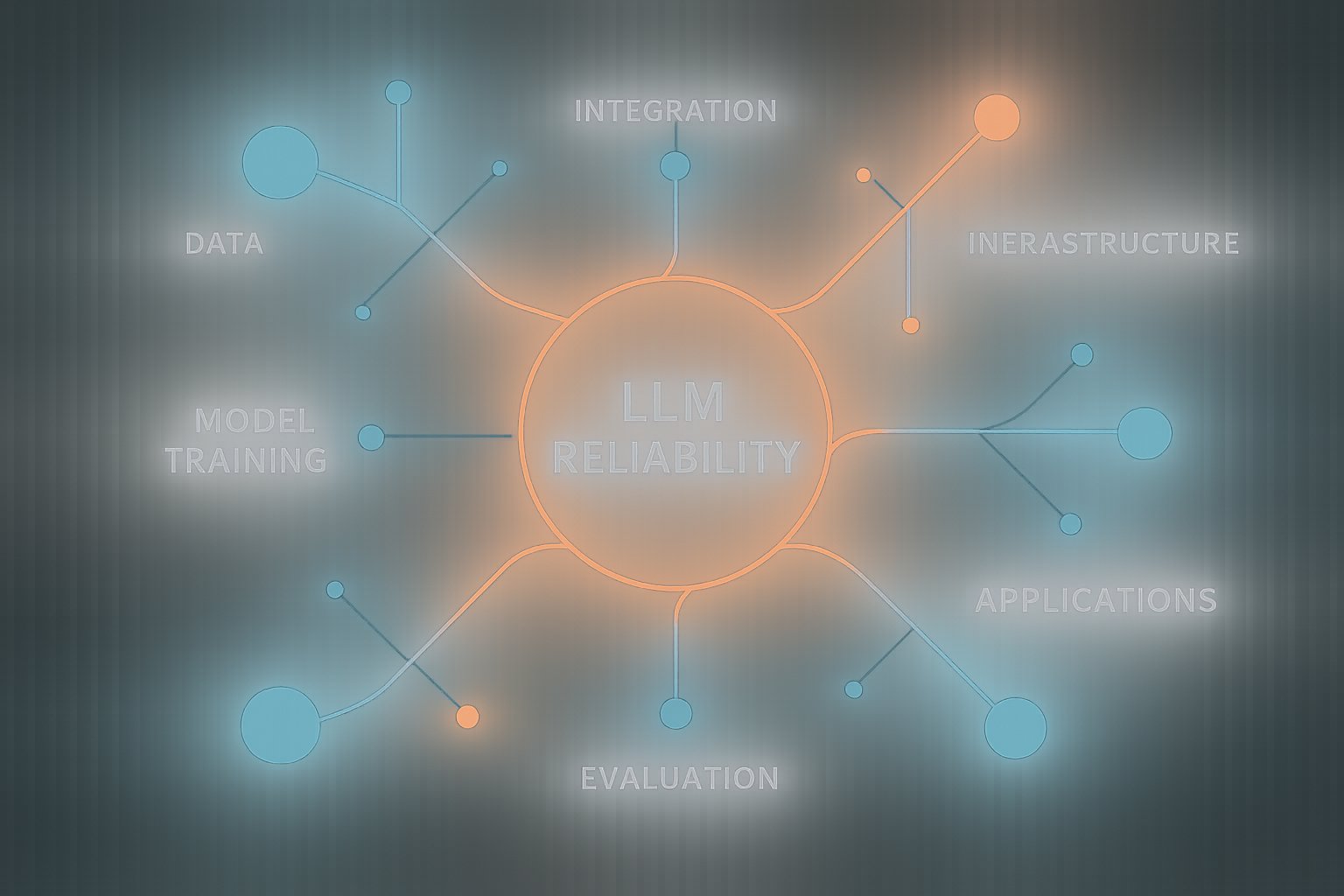
Market forecasts show hundreds of millions flowing into AI observability tooling. Furthermore, regulators increasingly expect provable controls around model behaviour. Let us examine what that expectation means for architects and operators.
Why Reliability Demands Observability
Large models hallucinate, misroute tools, and spike token bills without warning. Moreover, customer-facing bots now influence payments, healthcare, and legal workflows. Any outage or toxic reply becomes brand damage within minutes. Therefore, teams need deep Observability that links every prompt to downstream effects.
Each missed signal erodes LLM Reliability unnoticed until users complain. Such linkage enables fast rollback and post-mortem clarity. Gartner advises capturing five signal classes for dependable operations. They are prompts, model metadata, tool invocations, retrieval context, and human feedback.
Consequently, these signals build evidence chains auditors can trust. Observable AI shifts reliability from hope to measurement. However, understanding the commercial momentum shows why budgets follow.
Market Signals And Spend
Analysts peg LLM observability platforms at USD 510.5 million during 2024. Market.us projects USD 672.8 million next year, with 31 percent compound growth. Meanwhile, Datadog attributes fresh revenue to its new AI Agent Monitoring suite. Investors favour vendors that demonstrate Trustworthy audit trails.
WhyLabs and LangChain also report rising Enterprise pilots converting into paid tiers. Consequently, investors recognize that LLM Reliability problems translate into tangible spend. Research firms therefore integrate AI Observability criteria into mainstream APM quadrants. These signals confirm a durable category rather than hype.
Budgets move where risk meets revenue. Vendor roadmaps increasingly highlight LLM Reliability as a premium differentiator. Next, we inspect how teams gather the required data.
Engineering A Data Trail
Engineers add telemetry through proxies, SDKs, or OpenTelemetry spans. LangSmith exposes a per-call trace capturing prompt, parameters, and tokens. Additionally, Datadog correlates tool calls with upstream user intents using distributed tracing. However, low latency remains vital; synchronous logging must stay under 20 milliseconds.
WhyLabs claims sub-300 millisecond guardrail response by pushing detection into streaming paths. SRE teams instrument automation to guarantee alert fidelity within minutes. Detailed traces create feedback loops that steadily improve LLM Reliability. Capturing these fields makes every decision Auditable and reproducible.
- trace_id and timestamp
- model ID and version
- resolved prompt or hash
- token usage metrics
- safety filter results
Consequently, operators can replay incidents and benchmark cost optimizations. A solid data trail underpins actionable dashboards. Still, passive logs alone cannot prevent public failures. Active guardrails close that gap.
Guardrails And Active Control
Passive monitoring stops at detection. In contrast, guardrails block or reroute unsafe outputs before delivery. WhyLabs embeds toxicity, privacy, and jailbreak detectors inside the inference loop. Furthermore, filtered responses can escalate to human reviewers when severity exceeds thresholds.
Such design echoes classic SRE circuit breakers in distributed systems. Real-time enforcement improves LLM Reliability by limiting blast radius. Continuous policy testing further hardens LLM Reliability against novel attacks. However, adding policy code introduces performance and maintenance costs.
Teams must balance speed, coverage, and storage overhead. Guardrails transform Observability from retrospective to proactive defense. That transformation raises financial and architectural questions addressed next.
Balancing Risks And Costs
Capturing every prompt grows storage costs quickly. Moreover, sensitive data may breach privacy rules if logs remain unredacted. Enterprise teams adopt hashing, role-based access, and time-to-live policies for mitigation. Storage tiering and sampling strategies therefore reduce retention bills without losing critical context.
Additionally, cost dashboards highlight token hotspots and suggest cheaper model routes. Teams should define SLOs for latency, factuality, and safety, then enforce error budgets. Consequently, leadership gains a quantifiable view of risk versus spend. Such visibility strengthens Auditable posture during compliance audits. Governance budgets frequently expand when boards realise poor LLM Reliability risks fines.
Pragmatic cost controls keep reliability sustainable. However, standards and skills will decide long-term success.
Future Standards And Skills
OpenTelemetry working groups discuss a common "prompt span" schema. Meanwhile, openLLMtelemetry and LangKit propose reference implementations. Nevertheless, no formal standard yet unifies vendors. Industry observers expect convergence because customers fear lock-in.
Talent also matters. SRE engineers must now understand embeddings, drift, and retrieval pipelines. Professionals can enhance expertise with the Chief AI Officer™ certification. Such credentials signal Trustworthy leadership in Enterprise AI governance.
Moreover, hiring managers increasingly list LLM Reliability skills in requisitions. Standards plus skilled people will close current gaps. Consequently, early adopters will dominate regulated markets.
Observable AI elevates language models from experiments to reliable services. Throughout this article we traced market growth, engineering patterns, guardrails, and governance. Key takeaways include capturing granular telemetry, enforcing real-time controls, and aligning cost with value. Additionally, defining SLOs establishes a clear contract between business and engineering.
Consequently, LLM Reliability becomes measurable, Auditable, and Trustworthy. Enterprise leaders should pilot emerging standards and skill programmes now. Consider pursuing the linked certification to build cross-functional authority. Act today to secure a competitive advantage and strengthen LLM Reliability before incidents erode brand trust.


