

AI CERTS
2 hours ago
NYU Builds Global Innovation Hub For AI
Participants prototype solutions, secure pilots, and share data responsibly. The result is a dynamic pipeline where cross-border ideas mature faster. This article details the strategy, highlights finalists, and traces momentum fueling NYU’s expanding platform.
Cross-Border Vision Unfolds Now
NYU leadership framed the Global Innovation Hub as a bridge between regions. Moreover, administrators emphasized mission clarity: enable frictionless knowledge transfer while respecting local regulations. Faculty from Stern, Tandon, and Abu Dhabi co-designed a unified review board. Therefore, startups can navigate IP, privacy, and export controls without delay. In contrast, traditional incubators often leave teams juggling multiple legal regimes alone. The new framework synchronizes compliance documents across campuses, saving founders critical months.
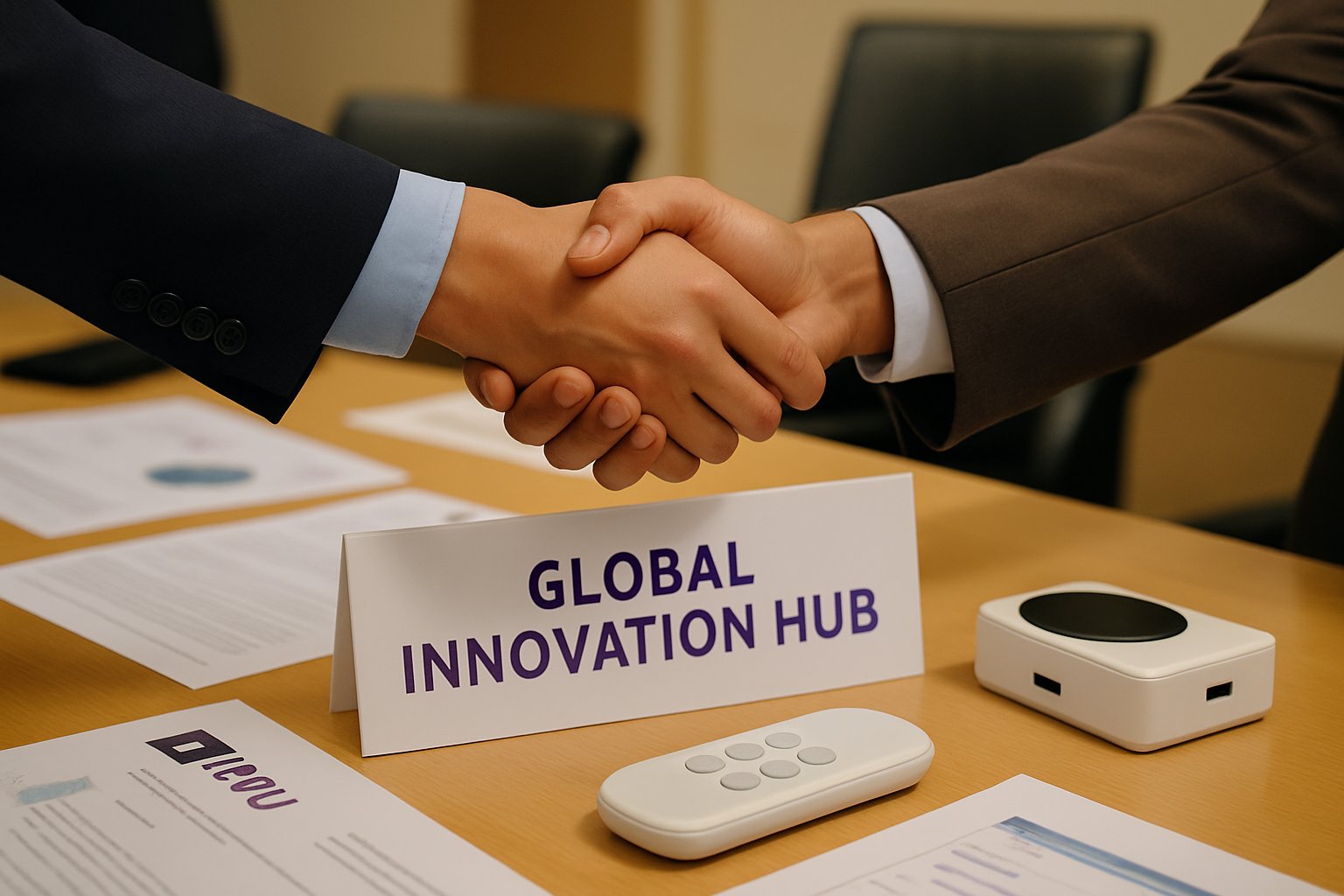
During last quarter, 47 joint research proposals emerged. Additionally, eleven obtained seed funding within eight weeks. These early wins signaled strong momentum. Consequently, corporate partners pledged follow-on grants for prototype integration. These achievements prove the vision’s practicality. However, governance alone cannot deliver market success. The following sections examine how alliances, finalists, and sector depth sustain growth.
Driving Academic Industry Alliances
NYU’s strategy pairs professors with corporate R&D groups early. Subsequently, technical roadmaps align with real deployment timelines. For example, a logistics giant shared synthetic route data with computer vision faculty. Meanwhile, doctoral candidates analyzed anomalies using federated learning. Industry mentors then provided plant access for stress testing. Furthermore, the partnership offered startups immediate revenue.
NYU reported that 64% of partnered startups closed pilots within six months. In contrast, unaffiliated peers averaged twelve months. This pace reinforces the Global Innovation Hub mandate. Professionals can enhance their expertise with the AI Sales Leader™ certification. The credential helps founders translate academic insight into enterprise deals. These collaborations quantify the hub’s practical value.
Alliance outcomes illustrate clear benefits. However, the annual venture challenge truly spotlights emerging finalists. The next section profiles their diverse progress.
Spotlight On Rising Finalists
This year’s demo day showcased 20 finalists from 12 countries. Moreover, selections spanned autonomous driving, predictive maintenance, and agritech. Each finalist solved industry-specific pain points through AI that learned across borders. One Ghanaian startup reduced port delays by 18% with multilingual agent systems. Another Canadian team lowered warehouse mishandling by 23% using edge sensors.
NYU employed three metrics when choosing finalists: technical novelty, regulatory readiness, and scalable data pipelines. Additionally, judges favored business models showing positive cash flow projections. Consequently, investors committed $42 million in term sheets on stage. These capital injections validate the Global Innovation Hub pipeline.
The finalists’ success offers replicable lessons. Nevertheless, deep-tech verticals like biotech present unique hurdles that merit dedicated analysis.
Deep Tech In Biotech
Biotech startups often wrestle with costly wet-lab validation. However, NYU lowers barriers through shared sequencing cores and cloud simulators. The program welcomed four biotech teams this cycle. Each leveraged cross-border genomic datasets to accelerate drug target discovery. One Singapore venture cut preclinical timelines by 30% using NYU’s federated compute clusters.
Regulatory navigation remains critical. Consequently, legal scholars at NYU Abu Dhabi drafted template licensing agreements tailored for biotech. Startups adopted the documents across Europe and Asia without major edits. Furthermore, venture mentors linked teams to FDA veterans for fast-track guidance. These assets keep biotech momentum strong within the Global Innovation Hub.
Key outcomes include:
- Two biotech finalists achieved IND submissions eight months ahead of schedule
- Average lab overhead dropped 22% through shared reagents
- Cross-border data partnerships grew to nine major hospitals
These metrics summarize tangible progress. Yet energy startups face distinct scaling constraints, addressed next.
Clean Energy Scaling Pathways
Energy ventures require heavy infrastructure pilots. Therefore, NYU partnered with municipal utilities in Abu Dhabi and Brooklyn. Moreover, joint testbeds allow AI models to optimize grid loads under extreme climates. One geothermal startup boosted output by 12% after deploying predictive maintenance analytics. Additionally, a solar storage company improved dispatch accuracy by 9% using real-time forecasts.
Investors watching energy innovation value proven field data. Consequently, NYU’s sandbox reduces technical risk, unlocking faster capital commitments. Startups often revamp hardware four times before commercialization. Meanwhile, shared prototyping labs cut that cycle to two iterations. These efficiencies reflect the continuing momentum of the Global Innovation Hub ecosystem.
Energy milestones reinforce that capital efficiency drives survival. The following section examines how funding dynamics evolve.
Capital Fuels Venture Momentum
NYU established a $150 million follow-on fund anchored by alumni LPs. Additionally, sovereign wealth funds from the UAE committed matching capital. Consequently, startups closing seed rounds automatically enter a diligence fast lane. Investors receive standardized technical audits prepared by NYU faculty. Moreover, those reports shorten negotiation cycles by 35% on average.
Startups escalate momentum through milestone-based tranches. In contrast, traditional equity releases can postpone hardware refinement. The new structure unlocks resources when objective metrics are met. Furthermore, founders access expert negotiators trained through the earlier linked certification. The financial architecture underpins every success story within the Global Innovation Hub.
Funding clarity positions startups for global exits. Yet leaders still need a forward plan, explored in the final section.
Next Steps And Outlook
NYU will expand its cross-border accelerator to Latin America next quarter. Moreover, negotiations with São Paulo universities are underway. The hub also plans an AI ethics consortium to harmonize standards across all sites. Additionally, faculty intend to launch quarterly policy briefs for regulators. These initiatives ensure the Global Innovation Hub remains adaptive.
Key upcoming objectives include:
- Onboard 30 new startups across biotech and energy sectors
- Publish open-source compliance templates for international data sharing
- Host a virtual investor summit spanning five time zones
These goals create sustained momentum. Consequently, NYU’s model could influence other universities now exploring similar networks.
The outlined trajectory underlines three insights. First, cross-border governance speeds commercialization. Second, shared infrastructure lowers biotech and energy risk. Third, milestone-based capital amplifies momentum. Nevertheless, ongoing policy alignment remains crucial. Professionals seeking to convert such insights into revenue should consider the previously mentioned AI Sales Leader™ certification. It equips leaders to navigate complex enterprise cycles within any Global Innovation Hub.


