

AI CERTS
2 hours ago
Nvidia DLSS 5: Generative Graphics Reach Their GPT Moment
Generative Graphics advocates argue that cinematic lighting at interactive speeds will transform production pipelines and player immersion. Meanwhile, skeptics view another proprietary push to homogenize styles while selling expensive GPU tech upgrades. Additionally, publishers such as Bethesda and Capcom endorse the model, citing fidelity gains without asset rework. Therefore, professionals need a clear breakdown of benefits, challenges, and timelines before committing resources. This feature provides that analysis and maps next steps for teams exploring Generative Graphics adoption.
DLSS 5 Unveiling Moment
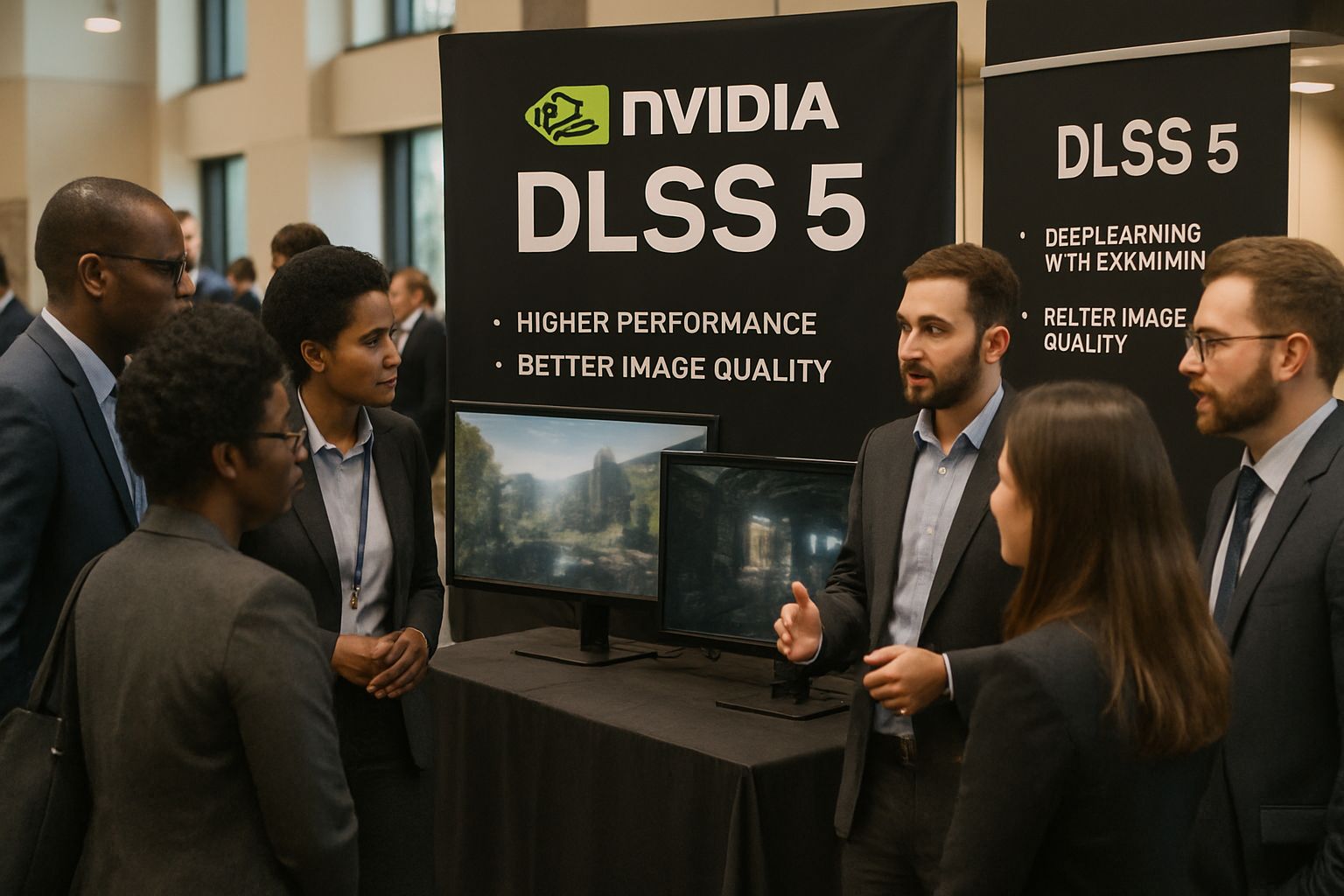
Press materials confirm the reveal occurred at GTC and GDC on 16 March 2026. Tom’s Guide reported the demo used two RTX 5090 cards, with one reserved for DLSS 5 inference. Furthermore, Nvidia listed Bethesda, Capcom, Ubisoft, and Tencent among early partners pledging fall shipping support.
Accordingly, analysts predict publishers will trial DLSS 5 in blockbuster updates before the holiday window. Nevertheless, hands-on reporters observed photorealism gains mostly in lighting, while character models shifted toward smoother skin. These contrasts fueled the social storm described later.
Early coverage shows technical promise tempered by hardware cost and aesthetic controversy. However, understanding the neural pipeline clarifies why those tensions exist, setting up the next section.
Neural Rendering Explained Simply
Neural rendering combines deferred shading inputs with a transformer trained on film-grade reference frames. Consequently, the network predicts photorealism by refining albedo, specular, and subsurface layers in one pass. In contrast, classic raster pipelines calculate those elements through multiple shader stages, increasing draw calls. Generative Graphics treat the scene as a 3D-aware prompt, producing learned pixels that remain temporally stable. Meanwhile, tensor cores accelerate inference, keeping frame times competitive on modern GPU tech.
DLSS 5 feeds motion vectors, depth, and material IDs into the model to anchor outputs per frame. Therefore, shimmering and ghosting stay minimal compared with naive image-to-image generators. Moreover, developers gain control sliders for intensity, color grading, and masking to preserve stylistic choices. That flexibility counters fears of automatic homogenization.
Understanding these mechanics illustrates how Generative Graphics can coexist with handcrafted art. Subsequently, we examine the community response amplified by those artistic concerns.
Industry Reaction And Debate
Public opinion split within hours of release. AP chronicled memes portraying heroes as glossy influencers, a result critics likened to unwanted beauty filters. Nevertheless, Bethesda’s Todd Howard praised the fidelity leap, asserting that player immersion outweighs transitional discomfort.
PC Gamer noted that photorealism benefits shone outdoors, yet indoor faces felt generically attractive. Digital Foundry echoed those findings, stressing the importance of developer masking options. Meanwhile, Nvidia spokespeople pointed to those same tools as safeguards of creative intent.
The clash highlights a gap between technical capability and cultural acceptance. Consequently, hardware feasibility becomes the next focal point.
Hardware And Deployment Hurdles
TechRadar confirmed the demo’s dual-GPU configuration, reigniting price anxiety among mainstream buyers. Moreover, analysts caution that few enthusiasts can justify two flagship boards solely for Generative Graphics workloads. Therefore, practical rollouts may rely on cloud inference through GeForce NOW or future silicon optimizations.
In contrast, some studios predict acceptable performance on a single RTX 4090 once driver improvements arrive. Still, mobile platforms will need scaled-down models or hybrid streaming, pushing GPU tech innovation. Nvidia has yet to publish latency charts for such scenarios, keeping performance unknowns alive.
Cost considerations could slow adoption despite visual allure. However, development opportunities remain compelling, as the next section explains.
Opportunities For Development Teams
Studios can integrate the model through the existing Streamline SDK and Unreal Engine plugin. Furthermore, Generative Graphics may reduce manual lighting passes, cutting production schedules during crunch. Consequently, smaller art teams could deliver blockbuster sheen with fewer headcount increases.
Training bias mitigation offers another growth area for middleware suppliers and academic partners. Professionals can enhance their deployment expertise with the AI Project Manager™ certification. Additionally, certified leads coordinate cross-functional testing that balances photorealism gains against narrative authenticity.
- Faster environmental iteration cycles
- Reduced texture memory footprints
- Automatic avatar material upgrades
- Potential new revenue from deluxe visual tiers
These benefits illustrate why many publishers signed on early. Subsequently, leaders must distill strategic takeaways before committing budgets.
Strategic Takeaways And Outlook
Generative Graphics now sits at the intersection of artistry, silicon, and player expectation. Meanwhile, rival vendors like AMD prepare countermeasures, ensuring healthy competition. Consequently, standards discussions around neural APIs will accelerate this year.
Teams should request performance whitepapers, schedule bias audits, and align launch windows with marketing beats. In contrast, ignoring the shift risks visual parity gaps by 2027.
The technology promises transformative realism yet demands careful governance. Therefore, measured experimentation paired with certification-backed leadership offers the safest route.
DLSS 5 marks a pivotal advance that blends neural inference with established raster techniques. Nevertheless, hardware pricing and artistic autonomy remain legitimate obstacles. Generative Graphics will thrive only if studios exercise the masking tools and communicate changes transparently to fans. Meanwhile, cloud acceleration and next-generation GPU tech could lower entry barriers for average players. Consequently, early adopters should prototype now, benchmark rigorously, and document bias mitigation strategies. Professionals seeking a leadership edge can pursue the linked certification to steer projects responsibly. Adopt a measured strategy today, and your team may define tomorrow’s Generative Graphics landscape.


