

AI CERTs
2 hours ago
Nvidia Cosmos Builds Physical AI Foundation
New breakthroughs from Nvidia are reshaping advanced robotics and autonomous driving.
At CES 2025 the company unveiled Cosmos, a suite of physics-aware world models.
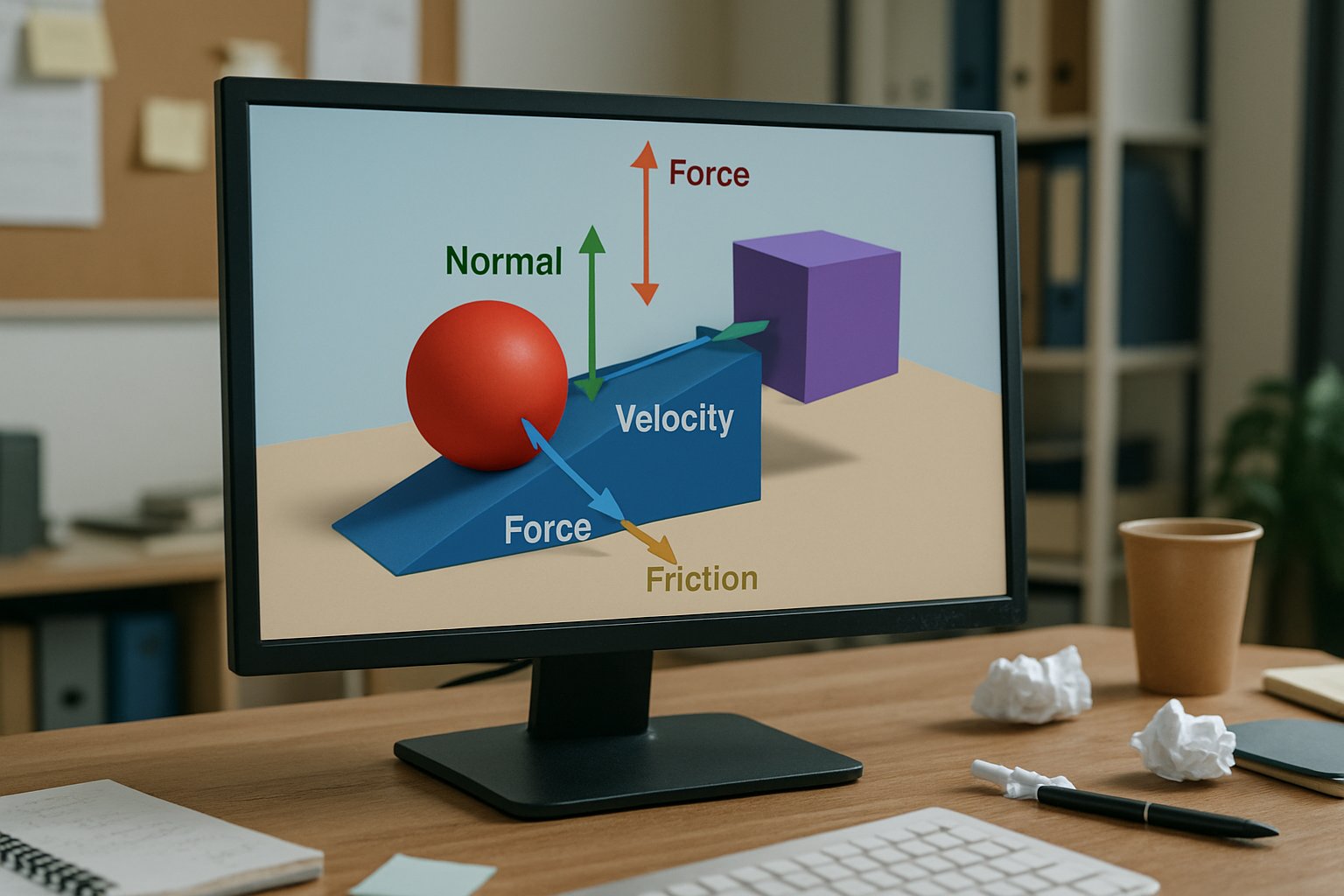
These models aim to serve as the cornerstone of the Physical AI Foundation.
Consequently, developers can predict, generate, and reason about real-world dynamics without dangerous field testing.
As a result, the Physical AI Foundation promises consistent abstractions across vision, language, and control loops.
Moreover, subsequent releases at GTC 2025 and CES 2026 expanded capabilities and performance.
The platform now processes 20 million video hours in only 14 days on Blackwell GPUs.
Meanwhile, partners ranging from Uber to Agility Robotics are already integrating Cosmos into production pipelines.
This article examines the technology, metrics, benefits, and open questions that define Nvidia’s strategy.
Furthermore, it outlines practical steps for professionals eager to experiment with synthetic environments today.
Cosmos Platform Deep Dive
Cosmos groups three core world foundation models into one cohesive stack.
The Predict variant forecasts future frames, enabling foresight for navigation and manipulation systems.
Additionally, Cosmos Transfer converts simulator signals into photoreal video, bridging the notorious sim-to-real gap.
Besides, Cosmos Reason offers chain-of-thought visual reasoning for annotation and planning tasks.
Therefore, the trio supports the Physical AI Foundation across data generation, realism, and decision support.
Nano, Super, and Ultra variants scale from four to fourteen billion parameters, providing flexible deployment options.
In contrast, previous robotics frameworks lacked unified tokenizers, guardrails, and licensing.
Nvidia publishes models, weights, and reference pipelines on Hugging Face, NGC, and GitHub under an open license.
Consequently, early adopters can fine-tune without starting from scratch.
These components create a repeatable path from simulation to deployment.
However, understanding underlying metrics is essential before committing resources.
Key Technical Metrics Explained
Numbers reveal whether marketing claims survive engineering scrutiny.
Moreover, Nvidia’s press materials share several headline statistics.
- 20 million video hours pretrained, covering robotics and driving domains.
- 14 days to process that data using NeMo Curator on Blackwell GPUs.
- 8× tokenizer compression and 12× faster processing versus leading alternatives, according to Nvidia testing.
- 14.37 billion parameters for the largest Cosmos-Predict2.5 model available publicly.
Importantly, Cosmos tokenizers feed the Physical AI Foundation with highly compressed yet lossless video tokens.
Furthermore, output reaches 16 FPS at 720p for thirty-second clips, sufficient for many perception pipelines.
Consequently, engineers can prototype on DGX Cloud and later distill models for Jetson edge deployment.
Nevertheless, compute costs remain significant, especially when fine-tuning at scale.
Experts such as Jensen Huang label this wave the "ChatGPT moment for robots."
Therefore, the Physical AI Foundation demands careful capacity planning as workloads grow.
These metrics underline remarkable throughput improvements.
Meanwhile, benefits hinge on synthetic data quality.
Synthetic Data Benefits Unpacked
Synthetic Data offers scale, safety, and diversity impossible with physical collection alone.
Additionally, Cosmos Transfer converts segmentation, depth, and pose maps into photoreal scenes, enriching Synthetic Data pools.
Consequently, partners like Agility Robotics generate rare corner cases without risking costly humanoid prototypes.
Moreover, statistical coverage expands across lighting, weather, and sensor noise conditions.
The approach aligns with astrophysics projects like Vera Rubin observatory, which simulated skies before first light.
In contrast, real-world robotics datasets often miss unusual but critical events.
Therefore, the Physical AI Foundation leverages Synthetic Data to balance risk and realism.
Nevertheless, independent researchers caution that model bias can still creep into procedurally generated scenes.
Vera Rubin teams faced similar validation hurdles when comparing simulated star fields with telescope images.
Subsequently, Cosmos users must validate outputs against physical tests before deployment.
Synthetic Data accelerates experimentation while controlling exposure.
However, quality assurance remains non-negotiable, leading to ecosystem collaboration.
Ecosystem And Partner Landscape
Nvidia intentionally seeded a broad partner ecosystem around Cosmos.
Uber, Waabi, XPENG, and Wayve test driving scenarios within the World Simulation pipeline.
Similarly, Agility, Figure AI, and 1X employ humanoid blueprints for warehouse tasks.
Moreover, Omniverse partners like Parallel Domain supply procedural city assets, enriching World Simulation fidelity.
Meanwhile, academic groups reference Vera Rubin cosmology workflows to justify synthetic-first research budgets.
Additionally, deployment spans DGX Cloud, on-prem DGX systems, and compact Jetson Thor edge modules.
Consequently, the Physical AI Foundation integrates cloud scale with edge responsiveness.
Professionals can enhance their expertise with the AI Security Compliance™ certification.
The credential covers governance frameworks vital when distributing synthetic video across teams.
A diverse network accelerates capability adoption across sectors.
Nevertheless, confusion persists around openness and liability.
Open Questions Persisting Today
Despite progress, several issues remain unresolved.
Firstly, Nvidia has not released full dataset provenance, raising copyright concerns.
Furthermore, independent benchmarks comparing Cosmos-trained policies with real-data baselines are scarce.
In contrast, astrophysics communities around Vera Rubin publish transparent simulation code and data.
Safety guardrails, watermarking, and IP protection exist, yet public audits are pending.
Consequently, risk-averse enterprises may hesitate before embracing the Physical AI Foundation fully.
Moreover, the required GPU infrastructure centralizes power within large vendors.
Nevertheless, Huang argues open weights democratize research even if hardware remains expensive.
Therefore, analysts expect third-party validation efforts to intensify over 2026.
Open questions highlight governance and trust gaps.
Subsequently, practitioners need clear onboarding guidance.
Getting Started With Cosmos
Quick experimentation helps teams evaluate value before large investment.
Moreover, Nvidia publishes step-by-step blueprints on GitHub and Hugging Face.
The following checklist shows a typical entry path.
- Spin up a small DGX Cloud instance with Cosmos Notebook images.
- Download the Cosmos-Predict2.5 Nano weights for local fine-tuning.
- Generate a World Simulation scenario using provided Omniverse assets.
- Curate outputs with NeMo Curator and evaluate synthetic-real blend.
- Iterate hyperparameters, then deploy distilled models on Jetson hardware.
Additionally, Nvidia’s documentation details tokenization commands that compress video into training tokens efficiently.
Professionals report prototype cycles completing within a weekend when datasets stay under 100 hours.
Consequently, early wins build internal credibility for larger Physical AI Foundation initiatives.
Hands-on trials demystify the technology’s learning curve.
However, strategic road-mapping safeguards long-term budgets.
Looking Ahead And Action
Cosmos has moved world models from research novelty to production reality.
Furthermore, throughput gains and open weights lower entry barriers across robotics, mobility, and industrial automation.
Nevertheless, governance, fairness, and cost questions require transparent answers.
Developers who pilot small projects today position themselves for rapid capability scaling tomorrow.
Therefore, embracing the Physical AI Foundation strategically can deliver competitive advantage.
Meanwhile, certifications such as the linked AI Security Compliance™ program strengthen organizational resilience.
Explore model cards, join community forums, and start generating safe Synthetic Data now.


