

AI CERTs
2 months ago
Nvidia China chips saga: Huang’s delicate diplomacy
Global chip watchers have tracked every Jensen Huang flight log since 2025. However, the stakes surrounding Nvidia China chips have never felt higher. U.S. export restrictions keep shifting, while Beijing’s own rules evolve weekly. Consequently, Huang’s late-January 2026 visit could determine whether billions in planned H200 revenue materialise. Meanwhile, investors fret over customs delays and security critics lobby Washington. This report unpacks the saga and outlines what professionals should monitor next.
China Market Stakes Rise
China once supplied roughly 13 percent of Nvidia sales. Moreover, analysts estimated 2024 H20 revenue at up to $15 billion. Therefore, losing that stream proved painful when stricter U.S. licences arrived in April 2025. Nvidia immediately flagged a $5.5 billion charge tied to stranded inventory. Nevertheless, Huang responded swiftly, conducting a surprise Beijing tour to reassure cloud giants such as Alibaba and Tencent. Subsequently, the company prioritised designing compliant replacements to keep Nvidia China chips flowing, albeit at lower performance.
Those efforts bought time. In July 2025, Washington relaxed licence filing for the downsized H20. Huang’s “charm offensive” convinced several buyers to resume orders. Yet higher-end demand stayed unmet. These dynamics spotlight China’s scale and strategic value. However, the opportunity remains hostage to regulators on both sides.
These figures confirm China’s lucrative pull. Nevertheless, policy volatility forces constant recalibration.
Export Rules Tighten Again
January 13 2026 delivered a fresh twist. The U.S. Commerce Department issued case-by-case guidelines for H200 AI chip approval. Furthermore, shipments faced third-party testing, buyer screening, and tariff surcharges. In contrast, exporters must certify that China receives under half the volume sold domestically. Consequently, compliance costs soared.
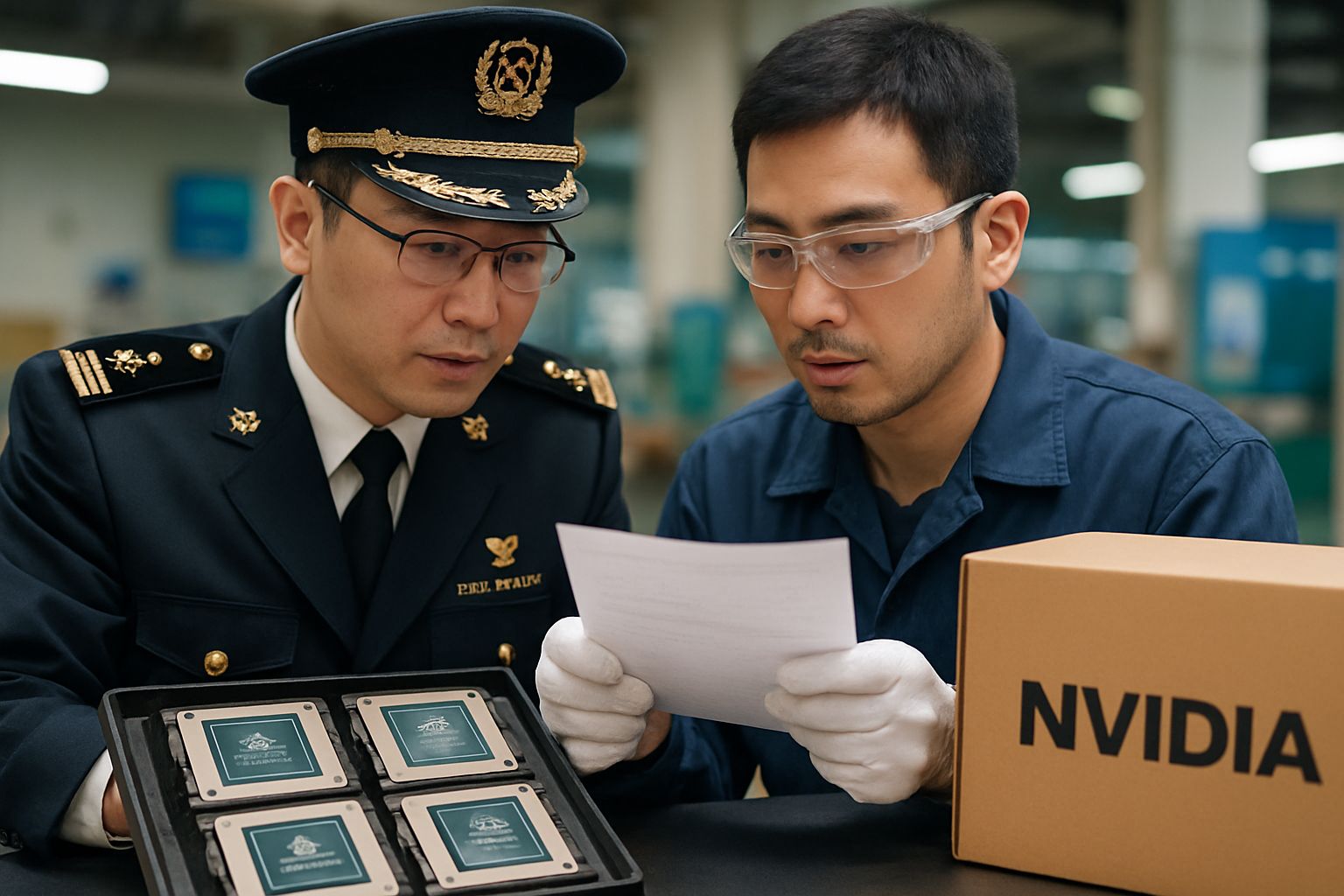
Meanwhile, Reuters revealed Chinese customs had blocked early H200 consignments. Suppliers paused output amid uncertainty. Industry insiders whispered that some batches might be rerouted through Hong Kong warehouses pending clearance. Therefore, Huang’s planned meetings aimed to unblock logistics and secure final nods.
- $1.3–2.6 billion: potential first-wave H200 revenue if approvals stick
- 5,000–10,000 modules: initial shipment size reported by Reuters
- 25 percent: discussed tariff level under new U.S. package
These hurdles illustrate the labyrinth exporters navigate. However, executives believe licences provide a workable, though narrow, corridor.
Huang Charm Offensive Strategy
Huang’s diplomacy blends technical briefings with political theatre. Additionally, he publicly praises Chinese AI talent, calling the market “dynamic.” During April 2025 meetings he told officials, “We hope to continue to cooperate with China.” Such language counters rising nationalist rhetoric and reassures local partners that Nvidia China chips remain available.
Subsequently, he staged media-friendly campus visits, photo-ops with research teams, and quiet dinners with policymakers. Observers label the approach “engineer-in-chief meets envoy-in-chief.” Nevertheless, access to senior regulators appears limited compared with earlier years. Therefore, success likely hinges on behind-closed-doors concessions involving supply guarantees and technology disclosures.
These soft-power tactics sustain goodwill. However, formal licence stamps still dictate shipment feasibility.
Persistent H200 Approval Uncertainty
Despite provisional H200 AI chip approval, practical obstacles persist. Financial Times sources say customs demanded clarifications on end-use restrictions. Meanwhile, Alibaba and ByteDance reportedly delayed purchase orders pending clarity. Furthermore, Nvidia had to correct media claims about upfront payments, confirming standard terms apply.
Security hawks intensified opposition. Anthropic CEO Dario Amodei compared selling advanced accelerators to “selling nuclear weapons to North Korea.” Consequently, lawmakers revived the AI Overwatch Act, seeking stricter oversight. Each headline pressures agencies to slow or revoke clearances, threatening the delicate pathway for Nvidia China chips.
Logistics friction underlines the fragility of provisional licences. Nevertheless, incremental progress remains possible if both governments coordinate.
Security Critics Voice Concerns
Washington’s security community worries that accelerated computing will boost Chinese military AI programs. Moreover, sceptics argue controls on software access mean little if hardware remains plentiful. Therefore, they advocate zero high-end sales. In contrast, commercial voices warn that unilateral bans would cede market share to Huawei, AMD, or domestic startups.
Beijing officials echo their own security narrative. State media praises domestic substitutes while urging “secure and controllable” supply chains. Consequently, future imports may require buyers to pair every foreign board with a Chinese coprocessor. Such clauses would diminish unit volumes for Nvidia China chips even if licences stay open.
These competing national priorities create unpredictable guardrails. However, the debate also signals where additional policy levers could emerge.
Domestic Rivals Gain Ground
Huawei’s Ascend accelerators already captured several public-cloud workloads. Additionally, Cambricon markets customised AI cards tailored for Chinese procurement rules. Meanwhile, AMD seeks its own H200 AI chip approval analogue for the MI325X. If granted, competition could intensify price pressure.
Chinese ministries funnel subsidies toward local fabs, aiming to match Nvidia within years. Nevertheless, analysts doubt parity before 2028. Therefore, short-term gaps persist that Huang intends to monetise. However, every delay grants rivals extra runway.
Competitive dynamics reshape bargaining power. Consequently, Nvidia must balance pricing with licence compliance to preserve share.
Outlook And Next Steps
Many observers ask whether planned inventory will clear ports before Lunar New Year. Furthermore, questions remain about the precise meetings on Huang’s January itinerary. Reuters could not confirm vice-premier sessions at press time. Nevertheless, insiders expect face-time with commerce officials to finalise documentation.
Professionals can enhance compliance knowledge with the AI+ Legal Strategist™ certification. Moreover, understanding dual-use export law now ranks alongside technical fluency for executives handling Nvidia China chips.
Possible scenarios include:
- Licences flow, customs relent, and revenue rebounds quickly.
- Partial approvals split volumes, limiting upside.
- Geopolitical shocks halt all shipments, accelerating domestic substitution.
Industry leaders should model each path and update supply strategies quarterly. Therefore, agility remains paramount.
These projections outline plausible trajectories. However, real-time monitoring of regulatory filings will determine which narrative prevails.
Nvidia China chips now sit at the center of a geopolitical tug-of-war. If case-by-case licences hold, Huang could still transform inventory into multibillion-dollar sales. Conversely, escalating security pushback may freeze shipments and hasten Chinese self-reliance. Consequently, every regulatory notice, customs memo, or investor disclosure warrants immediate scrutiny.
In summary, the company’s future China growth hinges on operational finesse, persistent diplomacy, and continued H200 AI chip approval. Therefore, strategic diligence will separate winners from laggards in the AI accelerator race.


