

AI CERTS
2 hours ago
Nudify App Scandal Exposes Store Failures and Regulatory Storm
Moreover, advocacy groups cited links to Porn driven blackmail and sextortion. This introduction sets the stage for a detailed, data-rich investigation into how the scandal unfolded, why enforcement failed, and what Regulation may follow.
Key Watchdog Report Findings
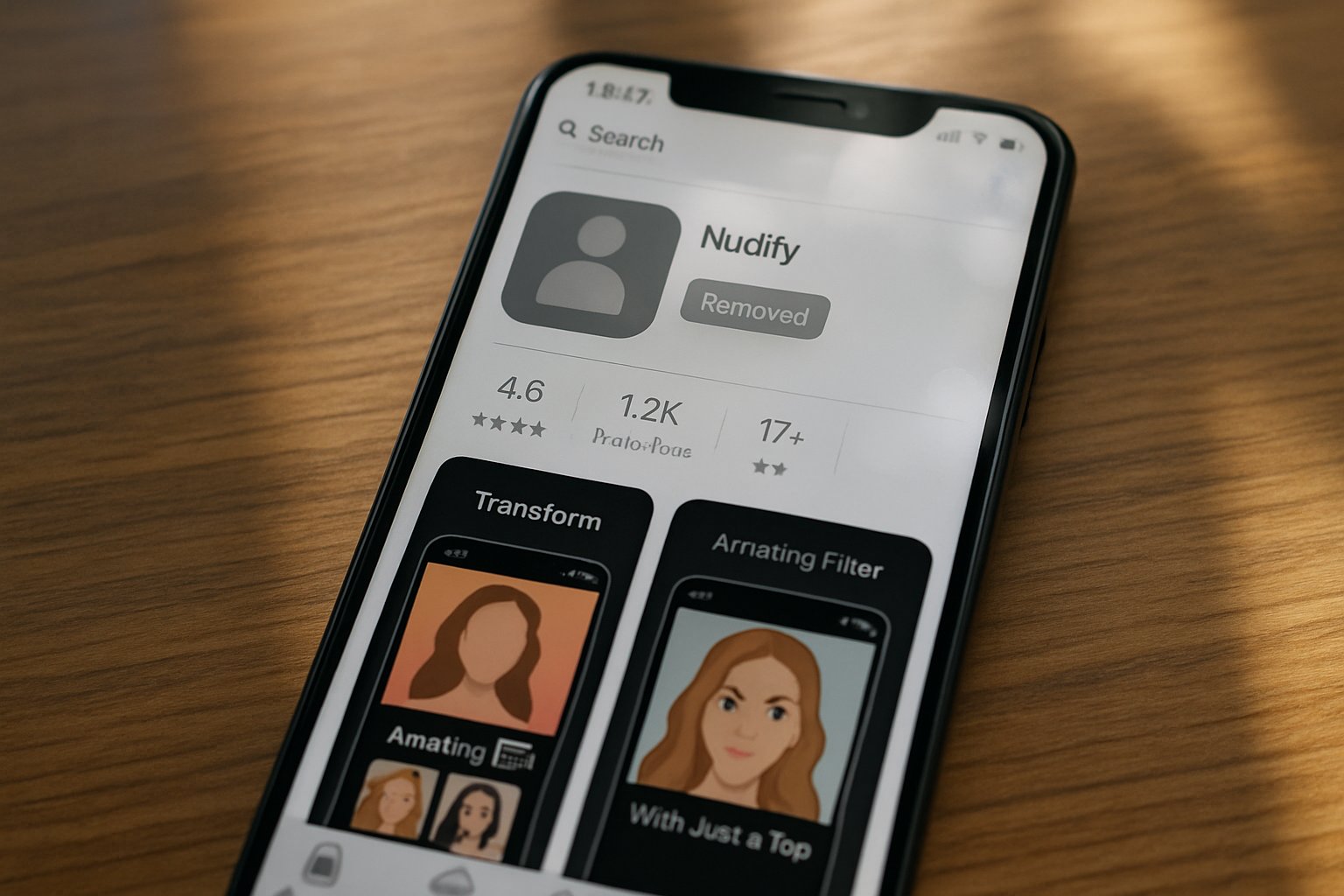
TTP’s investigation documented 55 Android apps and 47 iOS counterparts available on January 21, 2026. Additionally, 38 offerings appeared in both Stores. AppMagic data showed 705 million combined downloads and $117 million in lifetime revenue. In contrast, Apple and Google policies forbid non-consensual sexual content. Nevertheless, testers easily generated Porn style images using free tiers. TTP used only AI-generated faces to avoid harming real people. Subsequently, journalists cross-checked the list and confirmed similar results. Forbes published excerpts describing DreamFace, Collart, and Swapify transforming innocent selfies into explicit clips in under a minute.
TTP’s lead researcher stated, “The scale proves voluntary vetting failed.” These findings highlight systemic moderation gaps. However, they also illuminate repeatable patterns that platforms could detect.
These revelations emphasize the scandal’s breadth. Consequently, the next logical focus is how platforms reacted once the spotlight intensified.
Rapid Platform Reaction Timeline
After reporters sought comment, Apple removed 28 flagged titles. Meanwhile, Google suspended 31 listings within hours. Yet many apps quickly resurfaced under new names, underscoring flexible loopholes inside both Stores. Moreover, neither company announced a lasting policy overhaul. Company spokespeople instead cited ongoing manual reviews. In contrast, Meta pursued a different tactic. The firm sued Hong Kong developer Joy Timeline over CrushAI ads that promoted Porn themed face-swap services on Facebook feeds.
Industry veterans told Forbes the moves felt reactive rather than strategic. Furthermore, analysts noted that platform fees tied to in-app purchases created mixed incentives. Therefore, partial crackdowns left revenue flows intact. Consequently, watchdogs predict additional removals will arrive only after further public pressure.
This uneven timeline underscores accountability gaps. However, escalating legal heat may soon narrow corporate wiggle room.
Global Regulatory Heat Intensifies
Government scrutiny rose swiftly once the Nudify App Scandal reached European headlines. The UK’s Ofcom launched inquiries into X’s Grok model, which produced thousands of suggestive images per hour. Meanwhile, EU officials triggered Digital Services Act questionnaires targeting Apple, Google, and X. Minnesota lawmakers earlier drafted a bill to penalize nudify operators, citing child protection. Moreover, international debates mirrored 2025 arguments over deepfake Porn bans.
Legal scholars told Forbes that Regulation will likely expand beyond content removal toward mandatory safety audits. Consequently, app approval pipelines could soon require automatic nudification detection tests. Nevertheless, First Amendment concerns complicate comprehensive U.S. bans. In contrast, EU bodies possess broader authority to levy fines for systemic risk.
Regulators now hold the spotlight. Subsequently, technologists must explain how these controversial apps actually work.
Core Technical Mechanics Explained
Most nudify tools operate as slim front-ends atop powerful diffusion or transformer models. Users upload a face; the backend removes clothing pixels or swaps the face onto a prebuilt nude template. Additionally, some apps accept text prompts that steer pose, lighting, or explicit detail. Safety filters, when present, rely on simple keyword blocks that attackers bypass with slang. Moreover, developers frequently host inference servers in jurisdictions with lenient data rules, raising surveillance worries.
Consider this simplified workflow:
- Image ingestion and face detection
- Model inpainting or face-swap generation
- Client preview with watermark
- Upscale and download after payment
Each stage offers potential choke points. However, current review processes rarely test hidden functions. Consequently, malicious operators mask Porn outputs behind innocuous marketing copy until post-launch exploits emerge.
Understanding these mechanics clarifies why monetization thrives. Therefore, the next section explores financial incentives sustaining the ecosystem.
Risky Monetization And Incentives
AppMagic shows the flagged titles earned $117 million to date. Furthermore, platform commissions reached roughly $35 million, based on standard 30 percent splits. Subscription tiers promise uncensored 4K renders, while pay-per-credit models encourage binge generation. Forbes estimates average revenue per paying user at $3.40 across both Stores. Moreover, advertisers chasing viral trends amplify downloads, even as Meta bans related creatives.
Developers defend the business as “adult cosplay.” Nevertheless, victims receive no share of profits despite reputational harm. Consequently, civil litigation risks grow. Investors now weigh potential compliance costs against lucrative return rates.
These monetary forces resist voluntary reform. However, stakeholder momentum for safeguards is building.
Practical Mitigation Paths Forward
Experts propose multilayer defenses. Firstly, Stores could mandate pre-submission nudification scans and block hidden Porn flows. Secondly, provenance watermarks can signal synthetic edits. Moreover, model-level safety filters should reject disallowed prompts by default. Consent verification adds another protection layer when real faces appear.
Professionals seeking to lead responsible AI programs can enhance their expertise with the AI Educator™ certification. Additionally, corporate trust teams require updated escalation playbooks that integrate law-enforcement liaisons. Consequently, development roadmaps should allocate resources for red-team testing before every major release.
Collectively, these steps create a defense-in-depth strategy. Nevertheless, implementation demands sustained funding and cross-industry coordination.
These forward paths illustrate feasible action. Subsequently, we distill overarching insights from the scandal.
Key Lessons And Future
The Nudify App Scandal offers clear lessons. Transparent auditing beats secretive moderation. Moreover, economic alignment matters; platform profits must not eclipse user dignity. Regulation will broaden, yet technical safeguards remain equally critical. Forbes editorials argue that Stores can introduce tiered review regimes without stifling innovation. In contrast, blanket bans invite legal pushback.
Company leaders should track three priority metrics: residual nudify app count, policy revision cadence, and confirmed victim reports. Additionally, cross-functional teams must rehearse breach scenarios involving synthetic Porn distribution. Consequently, proactive posture now may prevent damaging headlines later.
These lessons encapsulate the scandal’s enduring impact. Industry stakeholders should act before the next controversy erupts.


