

AI CERTS
2 hours ago
Nuclear AI Synergy: France and Korea Forge Power-Compute Pact
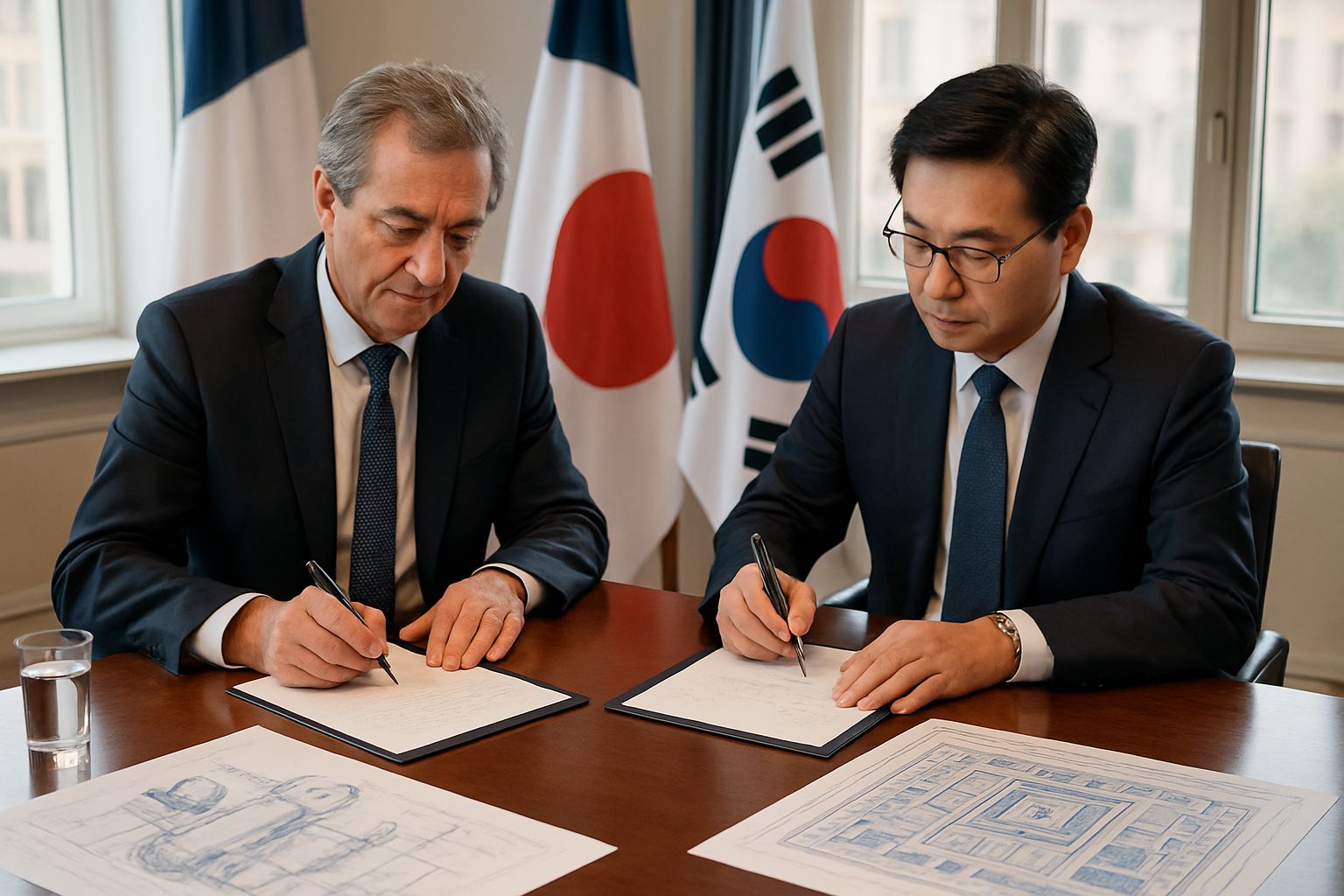
French president Macron and South Korean president Lee underscored that theme during their April 2026 meeting.
Meanwhile, Korean utilities test small modular reactors to feed AI data centers.
French ministries pledge nuclear capacity directly to upcoming GPU clusters.
Collectively, these moves hint at unprecedented scale.
Nuclear AI Synergy, therefore, presents both opportunity and risk for industry players.
This article maps the drivers, numbers, and pitfalls for seasoned executives.
Subsequently, readers will gain guidance on next strategic steps.
Policy Drivers Intensify Demand
France’s AI Action Summit in 2025 set the tone.
During that event, Macron allocated one gigawatt of nuclear output for model training.
Moreover, the pledge signaled reliable baseload power for hyperscale chips.
In contrast, South Korea announced a 23-billion-dollar program covering AI and advanced reactors.
Lee framed the budget as groundwork for national competitiveness.
Consequently, policy communities on both shores now reference Nuclear AI Synergy as a shared mission.
Policy staff in Paris drafted incentive packages covering taxation and grid interconnection fees.
Seoul, meanwhile, prepared matching grants for foreign data-center investors.
These high-level signals translate purpose into budgets.
Meanwhile, they prepare the stage for concrete corporate deals.
Industrial Deals Taking Shape
KHNP and LS Electric signed a memorandum in late 2024.
The document explores powering data centers with the 170-megawatt i-SMR design.
Additionally, executives promoted export potential for the combined energy-compute package.
Koo Ja-kyun said the platform could anchor smart net-zero cities abroad.
Samsung SDS and Atos reportedly conducted preliminary sizing studies for SMR-backed campuses.
Nevertheless, details on equity structure remain confidential.
French utility EDF, nevertheless, eyes similar offerings around existing reactor fleets.
Competitive tension persists, yet Nuclear AI Synergy offers room for co-investment.
Macron hinted at possible EDF partnerships during preparatory briefings.
Subsequently, market watchers expect joint feasibility studies within twelve months.
These commercial steps convert diplomatic rhetoric into tangible megawatts.
Consequently, investors monitor contract pipelines closely.
Market Numbers In Focus
Sound decisions require verified data.
Therefore, a snapshot clarifies the scale.
- IEA projects global data-center demand could reach 945 TWh by 2030.
- France earmarked 1 GW of nuclear capacity exclusively for AI clusters.
- South Korean data-center load may hit 3.2 GW by 2027.
- KHNP targets 170 MW per i-SMR unit, with design completion in 2025.
Moreover, chips shortages amplify urgency because power availability now influences fabrication site choices.
In contrast, France leverages an existing nuclear fleet to protect energy sovereignty.
Korean planners adopt a similar logic to maintain semiconductor supremacy.
Therefore, executives weigh load projections against reactor deployment timelines.
These figures provide a reality check.
Nevertheless, technology curves can shift quickly.
France projects AI electricity needs could rival household consumption by 2032.
Korean think-tanks present similar curves, albeit with steeper early growth.
Numbers expose both capacity and constraint.
Subsequently, regulatory questions move to center stage.
Security And Governance Tension
Reliable power is not the only concern.
However, cybersecurity and nuclear safety demand equal attention.
KHNP temporarily blocked public AI tools on internal networks over data leakage fears.
Meanwhile, French agencies draft guidelines for model deployment at reactor sites.
Analysts warn that compromised chips could undermine reactor instrumentation as well.
Moreover, dual-use worries revive non-proliferation debates in regional forums.
Nuclear AI Synergy appears attractive, yet governance gaps could stall projects.
Therefore, bilateral working groups now address standardized audits and incident disclosure.
Industrial insurers now request cyber-nuclear coverage riders before underwriting projects.
Additionally, the International Atomic Energy Agency pilots digital safeguard dashboards.
These safeguards aim to reassure investors and citizens.
Consequently, security frameworks will shape market velocity.
Robust governance underpins investor confidence.
In contrast, weak controls could derail momentum.
Risks Temper Growth Hopes
Even with momentum, formidable hurdles persist.
Licensing small reactors remains a multi-year process in every jurisdiction.
Public acceptance swings quickly after any incident, however minor.
Financing costs also spike when interest rates rise.
Furthermore, commercial rivalry between EDF and KHNP can complicate joint bids.
Lee and Macron must balance cooperation with national industrial pride.
Moreover, critics question whether Nuclear AI Synergy could crowd out renewables.
Some NGOs argue wind and storage offer faster climate dividends.
Nevertheless, integrated SMR-data-center models promise unique reliability.
Geopolitical friction around reactor exports adds separate complexity.
Consequently, multilateral dialogues may ease tender disputes.
These trade-offs define boardroom debates this year.
Risks underscore the need for diversified strategies.
Consequently, pragmatic roadmaps will likely prevail.
Strategic Outlook And Actions
Executives now ask how to capture upside while hedging downside.
Therefore, several tactical moves emerge.
- Secure early reactor siting permits near high-voltage nodes.
- Negotiate dedicated nuclear power purchase agreements for AI workloads.
- Invest in advanced chips cooling to maximize power-to-compute efficiency.
- Pursue joint R&D on SMR safety analytics using explainable AI.
Moreover, professionals can enhance credibility through specialized training.
Many opt for the AI Executive™ certification to master governance essentials.
Nuclear AI Synergy expertise, consequently, positions leaders for cross-border project roles.
In contrast, firms lacking talent will struggle to execute.
Corporate boards should schedule scenario workshops every quarter.
Meanwhile, supply chain audits can spotlight hidden single points of failure.
Future Research Priorities Ahead
Think tanks urge granular modelling of grid impacts under extreme training scenarios.
Additionally, scholars study how energy sovereignty politics influence semiconductor supply chains.
Moreover, chip fabrication roadmaps tie directly to secure electricity contracts.
Nuclear AI Synergy will remain central to that interdisciplinary agenda.
Actionable insights give companies a competitive edge.
Subsequently, early movers can shape international standards.
The bilateral story blends policy, engineering, and finance.
France supplies mature reactors; Korea contributes agile SMR know-how.
Consequently, computing ambitions gain dependable low-carbon power.
Nevertheless, governance, licensing, and public opinion remain pivotal.
Executives who master Nuclear AI Synergy will navigate these hurdles with confidence.
Moreover, leaders should monitor chips supply chains and watch energy sovereignty debates.
Continuous monitoring will let teams pivot when regulations shift.
Engaging early with regulators can shorten project timelines.
Therefore, consider pairing strategic planning with targeted education.
The AI Executive™ certification deepens insight and expands networks.
Adopt Nuclear AI Synergy today, and position your organization for sustainable growth tomorrow.


