

AI CERTS
2 hours ago
Nuclear AI: How SMRs Could Power Tomorrow’s Data Centers
Nuclear AI offers one increasingly prominent solution, pairing advanced reactors with machine-learning infrastructure. However, conventional gigawatt reactors remain expensive, slow, and politically fraught. Therefore, vendors are championing small modular reactors, or SMRs, that promise factory fabrication and incremental capacity. Moreover, Google, Amazon, and other hyperscalers have signed early agreements to secure SMR output. These deals could redefine corporate energy procurement strategies if timelines hold. This article unpacks the technology, economics, and policy roadblocks shaping the Nuclear AI landscape.
Surging Data Demand
AI model training needs dense compute clusters that run day and night. Furthermore, inference tasks add continuous baseline load once models move into production. IEA analysis shows demand from these Centers could match the electricity draw of Japan by 2030. In contrast, solar and wind face variability that complicates direct alignment with server utilization curves. Consequently, firms require firm generation with predictable output and minimal carbon intensity. Nuclear AI aligns with those criteria, delivering nonstop electrons without combustion emissions. Yet the traditional nuclear fleet ages, and new large stations encounter spiraling costs. Therefore, the market spotlight has shifted toward compact advanced reactors. The next section explains how hyperscalers plan to deploy these smaller units.
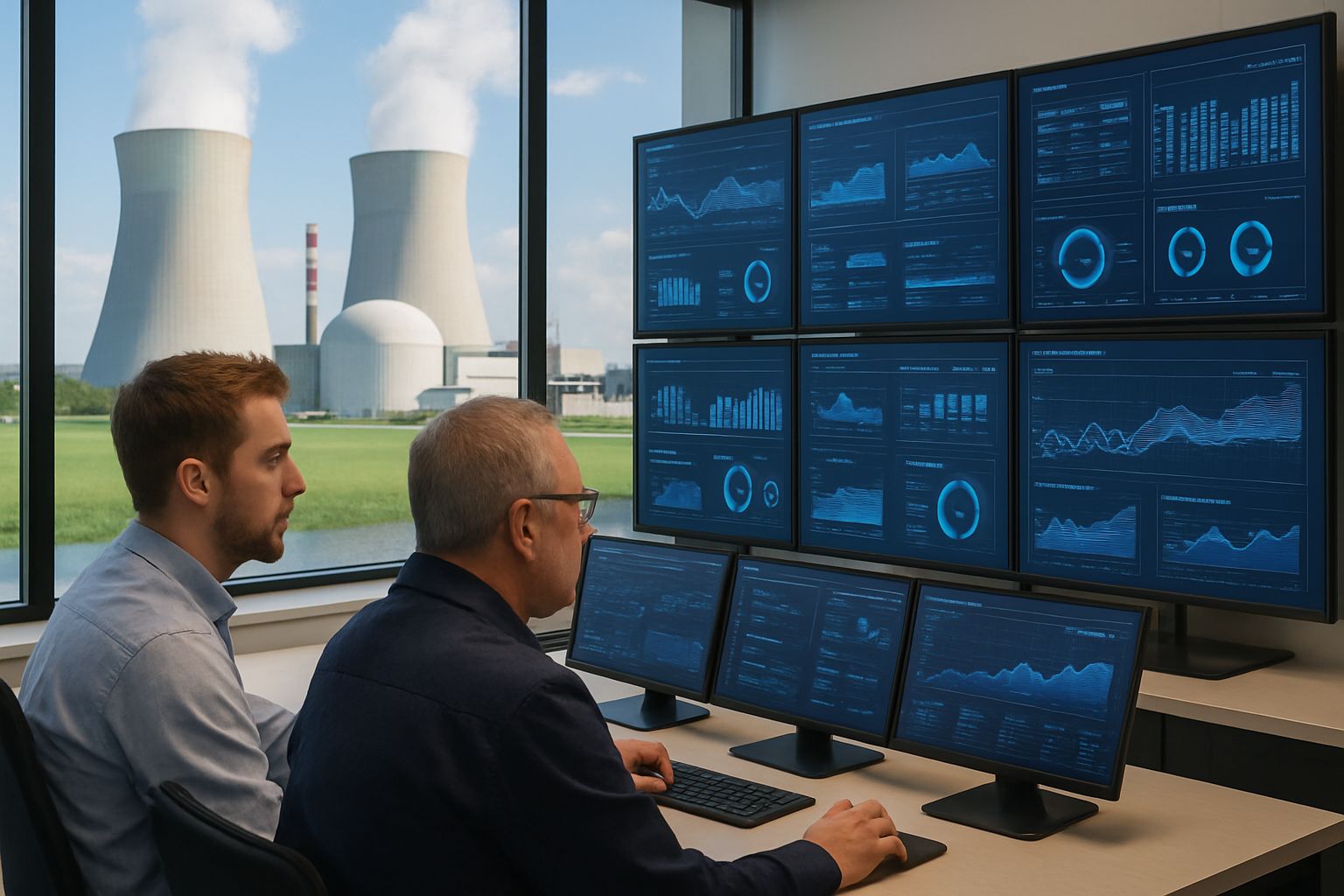
Electric loads are ballooning faster than intermittent resources can scale. However, compact reactors promise a firmer path. The narrative now turns to corporate adoption patterns.
Hyperscalers Choose SMRs
Google, Amazon, and Sabey have each announced marquee deals for advanced SMR capacity. Moreover, Google partnered with Kairos Power and TVA to access up to 50 MW from the Hermes 2 prototype. The arrangement uses a grid PPA, attributing clean energy to specific Tennessee Centers. Amazon instead invested in X-energy and launched a feasibility study with Energy Northwest. Consequently, the proposed Cascade site could host four Xe-100 modules totaling 320 MW. A future expansion to twelve modules would deliver 960 MW, meeting AWS regional growth. Meanwhile, TerraPower and Sabey signed an MOU around the 345 MW Natrium design with molten-salt storage. These commitments illustrate how Nuclear AI partnerships de-risk early reactor builds through corporate off-take guarantees.
Core Project Metrics Data
- Google-Kairos-TVA: Hermes 2, 50 MW target online around 2030.
- Amazon-X-energy: Four Xe-100 modules, 320 MW first phase, option for 960 MW.
- TerraPower-Sabey: Natrium reactor, 345 MW base output, 500 MW with thermal boost.
Collectively, those plans add almost 1.3 GW of prospective capacity. Nevertheless, every project must clear financing milestones before construction can begin. Financing complexities are examined next.
Financing Risk Lessons
Capital intensity remains the central hurdle for emerging SMR ventures. NuScale’s terminated Carbon Free Power Project offers a cautionary blueprint. Subsequently, subscription shortfalls and cost overruns forced participating utilities to withdraw. In contrast, hyperscaler anchor tenants provide steadier revenue expectations. Moreover, multi-decade PPAs can support loan guarantees and lower interest rates.
Yet lenders still demand demonstrated technology performance plus clear regulatory pathways. Therefore, first plants often rely on Department of Energy cost-share grants. Investors will also watch manufacturing progress at facilities like Rolls-Royce’s Derby factory. These lessons underscore the delicate balance between innovation and bankability. Understanding this balance guides the forthcoming discussion on licensing barriers.
Cost surprises derail projects without committed customers. However, strategic PPAs shift risk yet cannot eliminate financing scrutiny.
Licensing Roadblocks Ahead
Regulators must certify each SMR design before construction begins. For example, the NRC approved an uprated 77 MW NuScale module in 2025. Nevertheless, the broader NuScale fleet remains years from breaking ground. Meanwhile, Kairos must submit additional safety data for Hermes 2 experimental fuel. Similarly, TerraPower’s Natrium demonstration awaits a construction permit in Wyoming. Consequently, projected commercial dates cluster around 2030 if proceedings stay on schedule. Moreover, international regulators add complexity for Rolls-Royce projects across Europe. Public consultation periods can trigger unforeseen delays, especially when opposition groups mobilize. These regulatory dynamics feed back into financing risk, as lenders track licensing probability.
Licensing remains a critical path item for every Nuclear AI roadmap. The next section explores whether supply chains can meet simultaneous orders.
Supply Chain Factors
Factory assembly promises lower onsite labor hours yet requires robust component vendors. Furthermore, high-nickel alloys, forgings, and specialized pumps face tight global availability. Rolls-Royce partnered with Siemens Energy to secure turbine integration early. Nuclear suppliers are scaling tooling to meet standardized part specifications. Similarly, X-energy is building a fuel fabrication plant for TRISO particles in Texas. Consequently, synchronized investments across fabrication, transport, and field services become imperative. If bottlenecks appear, delivery dates for Centers could slip, eroding corporate electrification timetables. Nevertheless, multi-reactor orders from hyperscalers create predictable demand signals for suppliers. Therefore, governments are channeling tax credits toward domestic nuclear manufacturing hubs.
Coordinated supply strategy improves schedule certainty. However, talent shortages and material scarcities still threaten Nuclear AI deployment speed. The discussion now shifts to workforce and policy expertise.
Policy Skills Pathways
Advanced reactor programs need regulators, lawyers, and community liaisons versed in atomic law. Moreover, data center operators require internal teams who can translate kilowatt requirements into licensing language. Professionals may upskill via the AI Policy Maker™ certification. Additionally, program graduates gain fluency in safeguards, resilience metrics, and community engagement models. These competencies will prove vital when Nuclear AI projects enter local permitting hearings. Consequently, organizations are budgeting training funds alongside capital expenditure.
Skilled staff accelerate regulatory reviews. Therefore, investment in human capital complements hardware spending. A concise recap follows.
Essential Closing Insights Brief
Nuclear AI initiatives aim to supply firm, low-carbon Power for expanding digital workloads. Recent deals with Kairos, X-energy, and TerraPower demonstrate early commercial momentum. However, financing, regulatory navigation, and supply chain maturity remain formidable challenges. Consequently, hyperscalers must pair capital commitments with skilled policy teams and diversified vendor pools. Meanwhile, investors will monitor first-of-a-kind plants for construction discipline and budget control.
Nevertheless, successful pilots could unlock gigawatts of additional capacity by mid-next decade. Professionals should track milestones and pursue targeted credentials to stay competitive. Therefore, consider enrolling in the AI Policy Maker™ program. Your expertise could influence upcoming Nuclear AI licensing and procurement decisions. Time is short; proactive learning positions you at the forefront of resilient data Centers. Act now to help steer reliable Power into the digital economy. Forward-looking leaders recognise Nuclear AI as a cornerstone of sustainable compute strategy.


