

AI CERTS
7 hours ago
NHS AI Pilot Reinvents Lung Care with Medical Diagnostic Tools
Consequently, clinicians may confirm malignancy during a single hospital visit. This initiative joins a wider wave of advanced Medical Diagnostic Tools across Oncology services. Moreover, the trial underscores how strategic investment in robotic tools accelerates innovation within overstretched hospitals. The following analysis explains the technology, evidence, and implications for health-system leaders.
AI Pilot Overview Today
NHS England announced the pilot on 27 January 2026 during a London briefing. Guy’s and St Thomas’ functions as the lead site, with expansion planned to two neighbouring trusts. Funding flows from the NHS Cancer Programme and the SBRI Healthcare innovation fund. The investment also covers maintenance for advanced robotic tools.
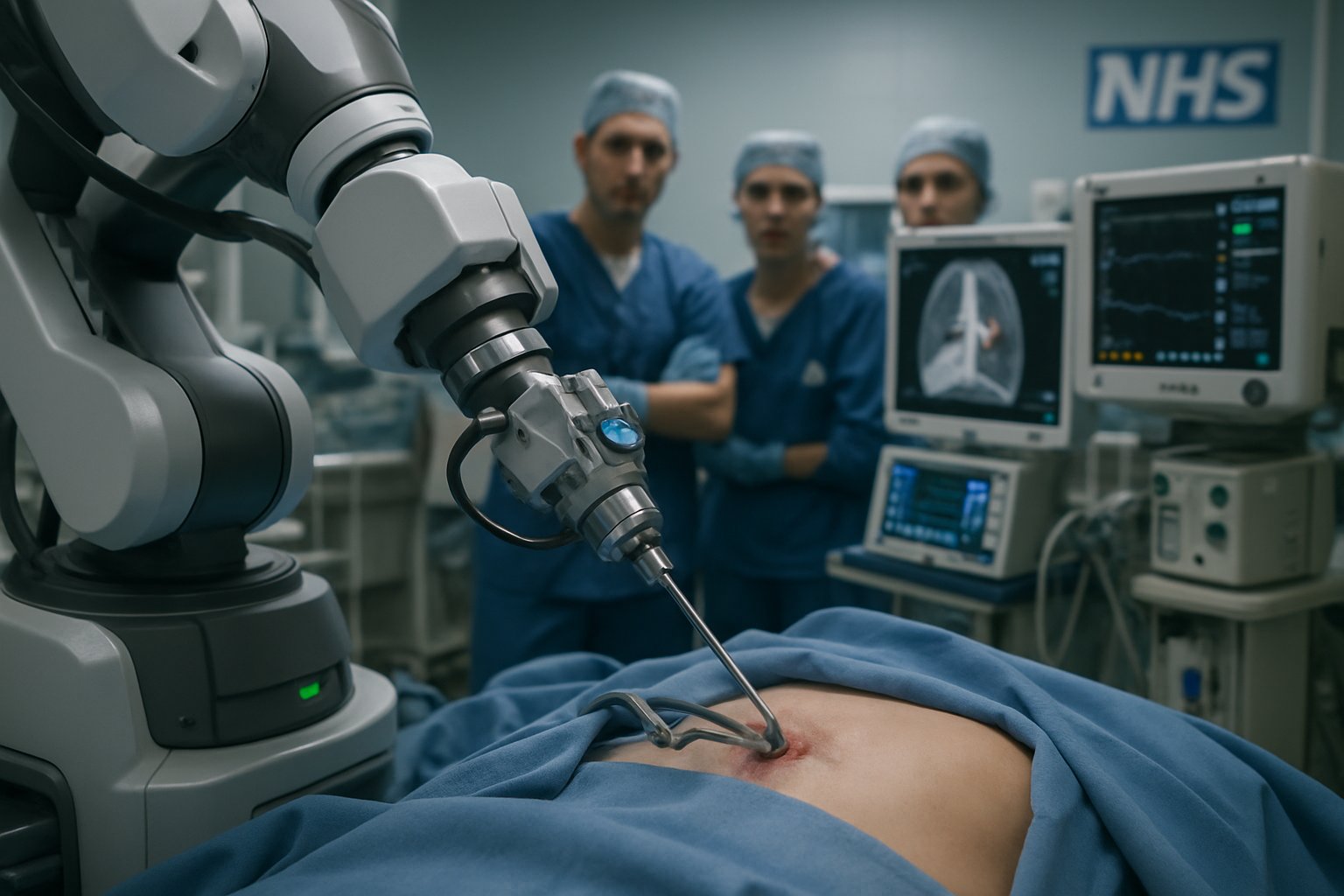
The pathway combines two complementary Medical Diagnostic Tools. Optellum’s Virtual Nodule Clinic assigns a malignancy score based on CT radiomics plus clinical data. Meanwhile, Intuitive’s Ion system guides a flexible catheter along a pre-planned airway route to peripheral nodules.
Consequently, radiologists can triage suspicious lesions and schedule robotic biopsy during the same appointment. Preliminary data at Guy’s shows roughly 300 procedures completed, with 215 cancers confirmed. Nevertheless, evaluation will assess complication rates, equity metrics, and cost-effectiveness before national rollout.
Early clinical activity indicates a viable workflow for rapid tissue confirmation. Consequently, attention now shifts to the underlying technology details.
Core Technology Components Explained
Optellum’s algorithm analyses 3D CT voxel patterns alongside patient factors. It then generates a Lung Cancer Prediction score between zero and one. Scores above predefined thresholds trigger biopsy recommendations. Therefore, low-risk nodules avoid unnecessary surveillance scans or invasive surgery. Oncology teams receive the score within their routine PACS viewer.
Robotic navigation begins with segmentation of the patient’s CT scan. The system maps an airway path and continuously tracks catheter shape using fibreoptic sensors. Moreover, a stabilised platform improves biopsy accuracy in nodules under ten millimetres. Consequently, diagnostic yield increases compared with conventional bronchoscopy or CT-guided needle.
When combined, both Medical Diagnostic Tools create an end-to-end digital pathway. AI selects eligible lesions; the robot ensures precise tissue sampling. Subsequently, histology reaches multidisciplinary teams sooner, allowing streamlined treatment planning. This technical fusion anchors the pilot’s promise.
The hardware–software synergy illustrates how AI complements engineering innovation. Such integrated Medical Diagnostic Tools redefine procedure planning. Next, we examine likely clinical returns.
Projected Clinical Impact Ahead
Lung cancer remains Britain’s top cancer killer, claiming about 33,000 lives yearly. Targeted lung health checks have already invited 1.5 million citizens since 2021. Moreover, NHS England plans to invite another 1.4 million people within twelve months. The screening programme could detect up to 50,000 cancers by 2035.
- Earlier staging: Optellum flags high-risk nodules before symptoms emerge.
- Higher biopsy yield: Ion reaches 80-90% of peripheral targets.
- Shorter waits: Combined workflow cuts diagnosis times from weeks to days.
- Reduced harm: Accurate risk scores lessen unnecessary thoracic surgery.
Health economists expect reduced imaging duplication and fewer hospital admissions for complications. Therefore, the pilot could generate measurable savings despite capital costs for robotic tools. In contrast, failure to validate specificity may inflate follow-up volumes and erode benefits.
Collectively, these Medical Diagnostic Tools could shift lung cancer detection toward curative intent.
Overall projections suggest meaningful survival gains if accuracy holds in real settings. However, potential pitfalls deserve scrutiny next.
Implementation Challenges Ahead Now
AI models sometimes sacrifice specificity for sensitivity, increasing false positives. Consequently, patients may endure extra scans, anxiety, or unnecessary biopsies. Independent systematic reviews highlight this trade-off across multiple Medical Diagnostic Tools. Therefore, prospective UK data remain critical.
Performance can drift when algorithms meet new populations or scanners. NHS England will monitor algorithm bias within urban, rural, and deprived cohorts. Moreover, robust governance frameworks set audit triggers for any performance collapse.
Ion systems require capital investment plus specialist training for respiratory teams. Meanwhile, operating theatres must schedule longer robotic procedures during early adoption. Nevertheless, Guy’s reports low complication rates and steady workflow improvements.
These operational issues are real yet manageable with strong oversight. Subsequently, equity considerations enter the spotlight.
Equity And Access Risks
Lung screening uptake lags among deprived smokers and some ethnic minorities. In contrast, centres hosting advanced robotic tools cluster within affluent cities. Therefore, the pilot embeds community engagement and mobile scanning to close gaps. Moreover, outcome dashboards will report demographic stratifications.
Transparent metrics can flag widening inequalities early. Consequently, action plans can follow quickly.
Attention now turns to forthcoming evidence milestones.
Evaluation And Evidence Roadmap
The SBRI pilot will capture real-world safety, yield, and turnaround times. Endpoints include proportion biopsied, complication rate, and cost per diagnosis. Data collection aligns with national cancer audit standards. Consequently, findings can inform future NICE guidance. Robust Medical Diagnostic Tools metrics will enter national dashboards.
Two additional studies will contextualise results. DOLCE tracks 2,000 patients across 12 centres using Optellum in incidental workflows. Meanwhile, LungIMPACT randomises chest X-rays to Qure.ai triage or usual care. Interim publications are expected during 2025 and 2026 conferences.
Professionals can enhance their expertise with the AI Healthcare Specialization™ certification. Moreover, accreditation supports robust evaluation and governance of emerging Medical Diagnostic Tools.
These data efforts will shape procurement and policy decisions. Therefore, strategic leaders must track outcomes closely. The final section distils actionable insights.
Strategic Takeaways For Leaders
Hospital executives face tight budgets, rising demand, and workforce shortages. Nevertheless, selective investment in proven Medical Diagnostic Tools can unlock capacity. Pilot metrics will reveal whether AI plus robotic tools justify capital expenditure. Meanwhile, board agendas should include algorithm oversight, staff training, and equity dashboards.
- Create cross-disciplinary governance committees for Oncology AI deployments.
- Budget for maintenance, disposables, and software updates on robotic tools.
- Engage community partners to maximise screening uptake.
- Align procurement criteria with upcoming NHS England evidence standards.
Moreover, leaders should foster research collaborations to capture longer-term survival outcomes. Subsequently, organisations can negotiate value-based contracts tied to performance. In contrast, passive adoption risks expensive misalignment with future policy.
The NHS lung cancer pilot exemplifies a pragmatic blend of AI and robotics. If validated, the pathway could accelerate accurate diagnoses and improve Oncology survival rates. However, evidence, governance, and equity will determine sustainable success. Leaders should track forthcoming data, refine protocols, and invest in staff readiness. Moreover, pursuing relevant certifications strengthens organisational capability to vet new Medical Diagnostic Tools. Explore the linked AI Healthcare Specialization™ programme and position your institution at the vanguard of innovation.


