

AI CERTS
2 months ago
Netflix-WBD Deal Signals Media M&A Earthquake
Meanwhile, WBD will first spin out its Global Networks unit, clearing a path for closure in 12–18 months. Investors, regulators, and creatives now debate what this megadeal means for content supply, competition, and financing risk. Consequently, industry professionals require a clear breakdown of terms, strategy, and hurdles. This article delivers that clarity.
Key Media M&A Highlights
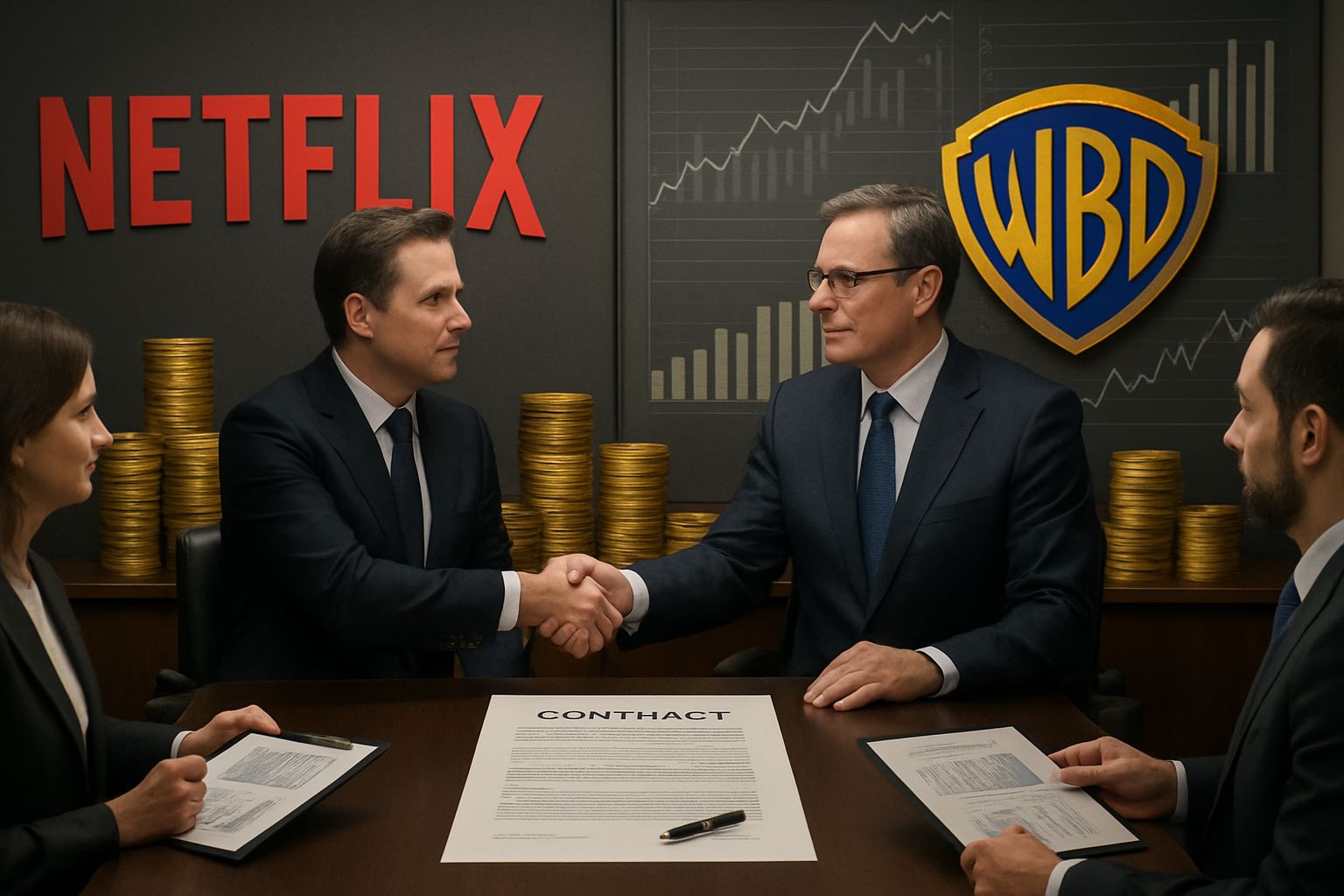
The Acquisition stunned Wall Street. It values WBD equity at $72 billion and enterprise value at $82.7 billion. Per-share consideration totals $27.75, split between $23.25 cash and $4.50 in Netflix stock, subject to a VWAP collar. Moreover, Netflix accepted a hefty $5.8 billion reverse termination fee, signalling confidence despite regulatory uncertainty. WBD must complete the Discovery Global spin-off before the transaction closes, currently expected by late 2026. Both boards have unanimously approved the pact after months of secret talks and rival overtures. Consequently, the headline joins the roster of transformative Media M&A events this decade.
- Equity value: $72 billion
- Enterprise value: $82.7 billion
- Projected annual synergies: $2–3 billion by year three
- Closing window: 12–18 months post announcement
These statistics set the scale. Nevertheless, strategic logic matters as much as raw numbers. The next section explores that logic.
Strategic Rationale Explained Clearly
Netflix has long chased scale. Furthermore, original hits alone cannot sustain subscriber growth forever. By absorbing WBD’s storied studios and acclaimed HBO brand, the streamer secures franchises like Harry Potter and Game of Thrones. Consequently, subscribers gain deeper libraries while churn risk falls. In contrast, WBD gains immediate liquidity and a premium relative to recent trading levels.
Although Consolidation worries competitors, analysts note clear synergies. Content duplication disappears, marketing budgets shrink, and technology stacks merge. Greg Peters projects $2–3 billion annual savings within three years. Moreover, WB Games extends the streaming giant’s gaming push, unlocking cross-media story universes. This strategic cocktail illustrates why executives pursued the bold Media M&A path despite heightened scrutiny.
The rationale sounds compelling. However, aggressive financing raises separate questions, which we address next.
Crucial Financing Structure Details
Financing an Acquisition of this magnitude requires creativity. Subsequently, Wells Fargo is spearheading a $59 billion bridge loan alongside BNP Paribas and HSBC. The cash tranche will fund the $23.25 per-share payment plus fees. Meanwhile, the company intends to refinance the bridge using a $25 billion unsecured bond, $20 billion term loan, and a $5 billion revolving credit line.
Credit agencies remain vigilant. Moody’s warned leverage could crest above four times EBITDA until 2028. Nevertheless, CFO Spencer Neumann promised a swift return to investment-grade territory within twenty-four months after close.
Equity Versus Enterprise Value
Equity value reflects shareholder consideration. In contrast, enterprise value adds net debt, here estimated near $10.7 billion. Therefore, enterprise value offers a cleaner comparison across transactions.
- Equity value: $72 billion
- Net debt assumed: ~ $10.7 billion
- Enterprise value: $82.7 billion
This structure exemplifies sophisticated Media M&A engineering. Yet money alone cannot guarantee approval, as the following section shows.
Regulatory Hurdles Loom Large
Antitrust agencies already signaled interest. Consequently, the U.S. Department of Justice and the European Commission will examine market concentration in Streaming. The Acquisition could reshape bargaining power overnight. Such a service controls the largest global subscriber base. Meanwhile, HBO Max commands roughly 130 million customers. Combining these footprints could constrain licensing markets and theatrical windows.
Regulators may demand divestitures or behavioral remedies, particularly around exclusive windows and content withholding. Additionally, the colossal reverse termination fee hints at prolonged litigation risk. Analyst Paolo Pescatore observed, “The combined dominant streaming player will be heavily scrutinized.”
Congressional voices echo those concerns. Nevertheless, Ted Sarandos pledged continued cinema releases to soothe exhibitors. Whether such promises suffice remains unclear. This scrutiny typifies high-stakes Media M&A battles in Washington and Brussels.
Regulatory review will shape final terms. Therefore, stakeholders must monitor filings, public hearings, and potential lawsuits, topics explored in the next industry section.
Broader Industry Impact Forecast
Market Consolidation rarely stops at one headline. Moreover, rival studios may seek defensive partnerships to regain leverage. Paramount or Comcast could re-enter deal talks, igniting further Consolidation flames.
Cinemas fear a reduced studio slate. In contrast, independent producers worry about fewer buyers. Nevertheless, combined resources might boost theatrical budgets for tentpole franchises.
Advertisers anticipate richer cross-platform data once the giant absorbs HBO Max audiences. Furthermore, international rights negotiations will shift as the new giant rebalances licensing.
For talent, bargaining power may tighten. However, new multi-format projects across film, television, Streaming, and gaming could expand creative opportunities. Professionals can enhance their expertise with the AI+ Government™ certification, preparing them for evolving policy debates.
These dynamics underline the far-reaching ripples of large Media M&A moves. The timeline section now outlines key milestones ahead.
Timeline And Next Steps
First, WBD will distribute Discovery Global to shareholders, likely in Q3 2026. Subsequently, shareholder votes at both companies must clear with majority support. Formal filings under the Hart-Scott-Rodino Act and the EU Merger Regulation will follow quickly.
During review, the buyer will syndicate bridge debt and test bond markets. Meanwhile, integration teams will map technology stacks and catalog overlapping content rights. Moreover, employee councils in Europe expect consultations under local labor rules.
Key upcoming dates include:
- Spin-off registration statement effectiveness.
- Regulatory decision deadlines, expected mid-2027.
- Financing package pricing windows.
- Final closing and ticker consolidation.
Meeting those dates will determine whether the record Media M&A closes on schedule. Consequently, investors should track SEC filings, bank syndications, and regulator statements.
Milestones clarify execution risk. Nevertheless, strategic lessons endure, as summarized next.
Netflix’s bold bid for Warner Bros. Discovery showcases contemporary Media M&A scale and complexity. The Acquisition still faces towering legal, financial, and cultural obstacles. However, potential synergies and richer libraries could redefine global entertainment economics. Professionals monitoring future Media M&A waves should study antitrust filings and capital-market signals. Nevertheless, knowledge alone is not enough. Therefore, enhance your policy expertise through the AI+ Government™ certification and stay ahead of rapid change.


