

AI CERTS
2 hours ago
Nebraska’s Election Integrity AI Regulation Battle
Supporters hail the bill as a vital Election Integrity AI Regulation safeguard against last-minute disinformation. However, critics warn about constitutional pitfalls, high enforcement costs, and jurisdictional blind spots. This analysis unpacks the measure’s text, fiscal realities, and national context. Industry professionals will also learn strategic steps to comply and communicate responsibly. Moreover, we highlight certifications that strengthen ethical capacities in the age of algorithmic campaigning.
Bill Addresses Deepfake Threats
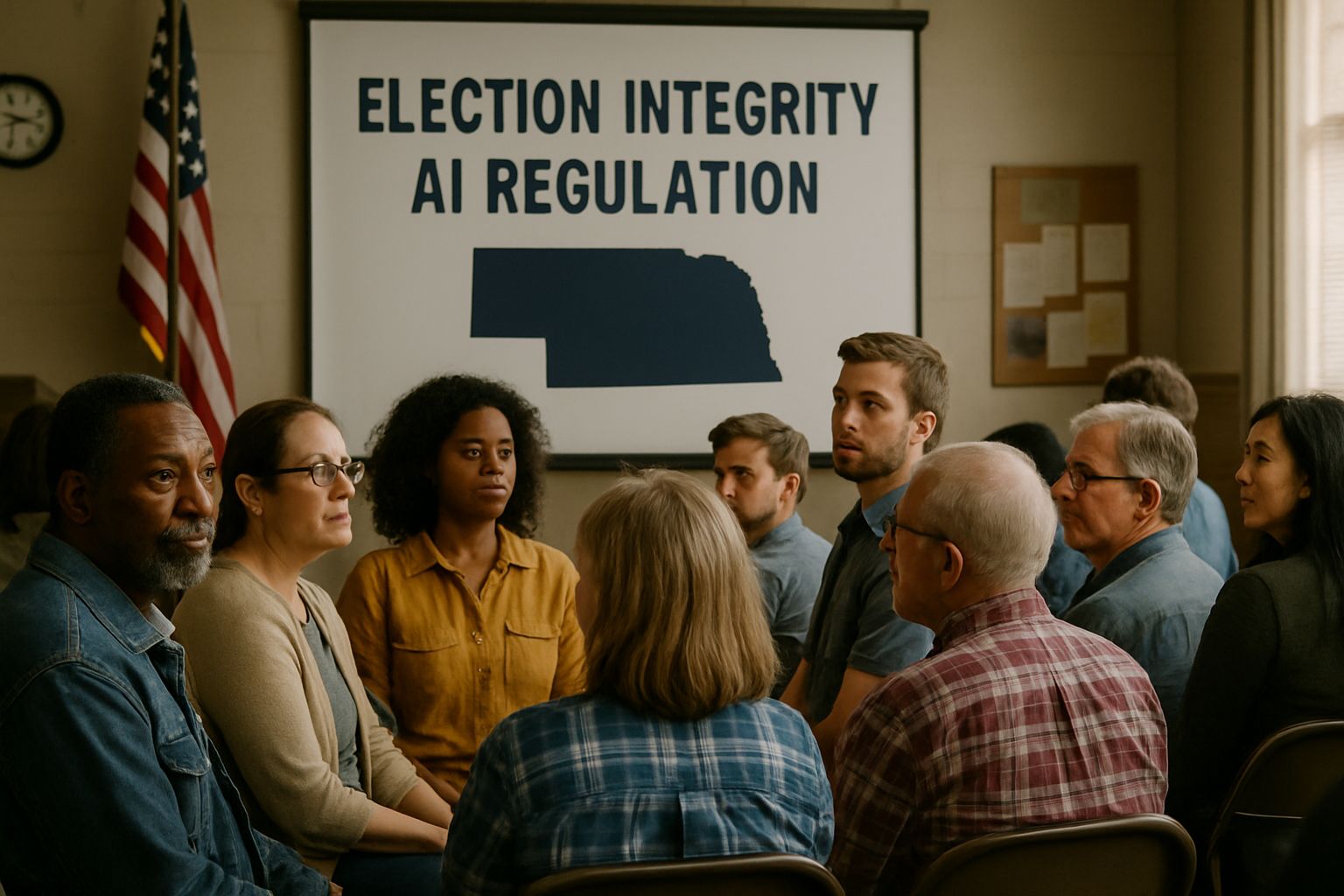
LB 615 targets content the statute labels a deceptive and fraudulent deepfake. Within 90 days of voting, distribution becomes illegal unless a conspicuous disclaimer accompanies the media. Additionally, the rule applies to every medium, including social platforms, broadcast channels, and text messages.
The definition focuses on material that would mislead a reasonable viewer about a candidate’s real actions. Satire, parody, and verified news reporting remain exempt when authenticity concerns are disclosed. Therefore, journalists and comedians preserve protected speech while bad actors lose impunity.
Supporters argue the careful carve-outs prove the measure remains narrowly tailored. Consequently, they frame the approach as balanced Election Integrity AI Regulation that respects First Amendment boundaries. Nevertheless, opponents doubt courts will agree, given recent rulings against similar statutes elsewhere.
Taken together, these provisions target only deceptive manipulation, not artistic expression. However, understanding the statutory language is just the first hurdle before implementation.
Key Statutory Rule Elements
Understanding the bill requires dissecting its operative clauses. Moreover, Section 1 introduces foundational definitions that drive enforcement decisions.
- "Deceptive deepfake" means synthetic media designed to injure or mislead voters about real events.
- The 90-day blackout period covers all state and local races.
- Compliant messages must carry the disclosure, “This media was manipulated by artificial intelligence.”
- Affected candidates can seek rapid injunctive relief in district court.
Meanwhile, the statute shields newsrooms that label uncertain footage and comedians who parody public figures. Therefore, sponsors insist the drafting reflects balanced Election Integrity AI Regulation principles. Yet, critics counter that subjective phrases like "reasonable person" invite arbitrary judgments. These textual choices outline the legal battlefield. Consequently, attention now shifts to fiscal feasibility.
Fiscal And Enforcement Costs
The Nebraska Accountability and Disclosure Commission sounded the loudest alarm during March 2025 testimony. Furthermore, its fiscal note projected $160,000 for an AI expert during the first budget cycle. Subsequently, annual costs could rise amid litigation or surging complaint volume.
Meanwhile, enforcement authority remains ambiguous because LB 615 lives inside the existing campaign-finance framework. NADC officials stressed they lack forensic tools to confirm AI manipulation across dispersed online channels. Consequently, observers fear courts may receive emergency injunction requests without reliable technical evidence.
Supporters of Election Integrity AI Regulation argue appropriations can fix staffing gaps quickly. Nevertheless, fiscal skeptics question whether taxpayers should fund uncertain, possibly unconstitutional oversight. These monetary realities will shape amendment negotiations. Moreover, cost debates lead naturally into constitutional analysis.
Budget uncertainty clouds implementation prospects. However, constitutional scrutiny may pose even larger barriers.
Constitutional Hurdles Loom Ahead
Federal courts have recently blocked deepfake election laws in Hawaii and Minnesota. In contrast, Nebraska’s civil-only design may survive stricter scrutiny than criminal counterparts. However, lawyers note that any content-based rule triggers exacting First Amendment review.
LB 615 still regulates speech based on subject matter and timing. Therefore, the state must prove a compelling interest and narrow tailoring. Sponsors will cite Election Integrity AI Regulation as that compelling interest.
Meanwhile, plaintiffs could argue the 90-day blackout chills legitimate political satire. Moreover, platforms like X have attacked Minnesota’s statute under Section 230, a theory foreseeable here. Consequently, litigation could commence the moment the governor signs the proposal.
These looming lawsuits could redefine acceptable Election Integrity AI Regulation nationwide. First Amendment battles appear inevitable. Subsequently, interstate comparisons reveal valuable lessons.
Comparative State Policy Landscape
Dozens of states have adopted or debated deepfake election statutes since 2023. Public Citizen counts at least ten enacted versions, including Minnesota, California, Colorado, and Texas. However, judicial outcomes differ sharply, creating a patchwork for campaigns operating across borders.
Because LB 615 relies on civil orders, lawmakers hope to avoid criminal precedents that recently failed. Meanwhile, New York is considering a disclosure-only model without blackout periods. Consequently, election lawyers advise building uniform compliance plans rather than chasing every statute’s quirks.
Robust Election Integrity AI Regulation would benefit from eventual federal harmonization, yet Congress remains gridlocked. These comparisons underscore why regional collaboration matters. Moreover, practitioners must translate lessons into concrete campaign policies.
State disparities complicate nationwide messaging strategies. Therefore, campaigns need proactive operational guidance.
Practical Advice For Campaigns
Smart managers should audit all creative pipelines well before the 90-day window. Additionally, maintain unedited source files to rebut authenticity challenges quickly.
- Document vendor contracts specifying no deepfake generation without disclosure.
- Tag every political asset with creation timestamps and responsible staff.
- Create rapid response teams for takedown or court filing decisions.
Furthermore, campaigns operating in Nebraska should pre-clear ads with counsel familiar with the measure. Professionals can enhance compliance expertise through the AI Ethics for Business™ certification. Adopting these routines aligns with responsible Election Integrity AI Regulation and builds public trust.
These operational tips favor preparedness over crisis control. Consequently, they lessen financial and reputational fallout.
Early planning limits litigation exposure. Meanwhile, developing workforce skills remains equally essential.
Skills And Next Steps
AI literacy now ranks alongside fundraising and field organizing for campaign professionals. Moreover, in-house lawyers must monitor court dockets that may alter Nebraska enforcement overnight. Training resources continue to expand, blending technical detection modules with ethical frameworks.
Therefore, completing at least one specialized credential demonstrates proactive Election Integrity AI Regulation leadership. The previously mentioned certification covers algorithmic bias, responsible disclosure, and governance best practices. Subsequently, graduates can draft robust internal policies or advise clients during crisis incidents.
This evolving skill set keeps strategies compliant across shifting political and legal terrains. These capacity investments future-proof organizations. Consequently, stakeholders stay prepared regardless of statutory outcomes.
Workforce readiness complements legal vigilance. In contrast, stagnant teams expose campaigns to preventable hazards.
LB 615 exemplifies the next phase in safeguarding campaigns from algorithmic fakery. Moreover, its fate will signal how far states may legislate without triggering constitutional defeat. Fiscal constraints, jurisdictional puzzles, and open First Amendment questions remain potent obstacles. Nevertheless, the proposal underscores an urgent need for coherent Election Integrity AI Regulation across jurisdictions. Campaign professionals should track court calendars as closely as polling numbers. Consequently, teams that invest early in training, disclosure protocols, and forensic partnerships gain resilience. Explore deeper ethical guidance through the linked certification and reinforce trust ahead of 2026 contests. Act now to build transparent operations before the next misinformation wave strikes.


