

AI CERTS
2 hours ago
Navigating Gradual Middle Manager Compression
Consequently, professionals must understand the mechanisms, timelines, and safeguards involved in this compression trend. This article synthesizes IMD research, analyst projections, and labor-market signals to clarify what lies ahead. Additionally, it outlines leadership actions that protect capability while capturing AI’s value. Readers will gain practical insights, risk alerts, and certification resources to strengthen their strategic readiness. Meanwhile, secondary data from Gartner and Revelio Labs reveal accelerating cost pressures on middle layers. Therefore, now is the moment to evaluate structure, skill gaps, and governance before change accelerates further.
Evolving Managerial Landscape Today
Historic corporate charts featured several supervision tiers that guided information upward and decisions downward. This evolution marks visible Middle Manager Compression across several sectors. However, digital dashboards and process Automation now provide executives with real-time visibility, reducing traditional coordination demands. Consequently, many organizations have already widened spans of control, setting the stage for deeper restructuring.
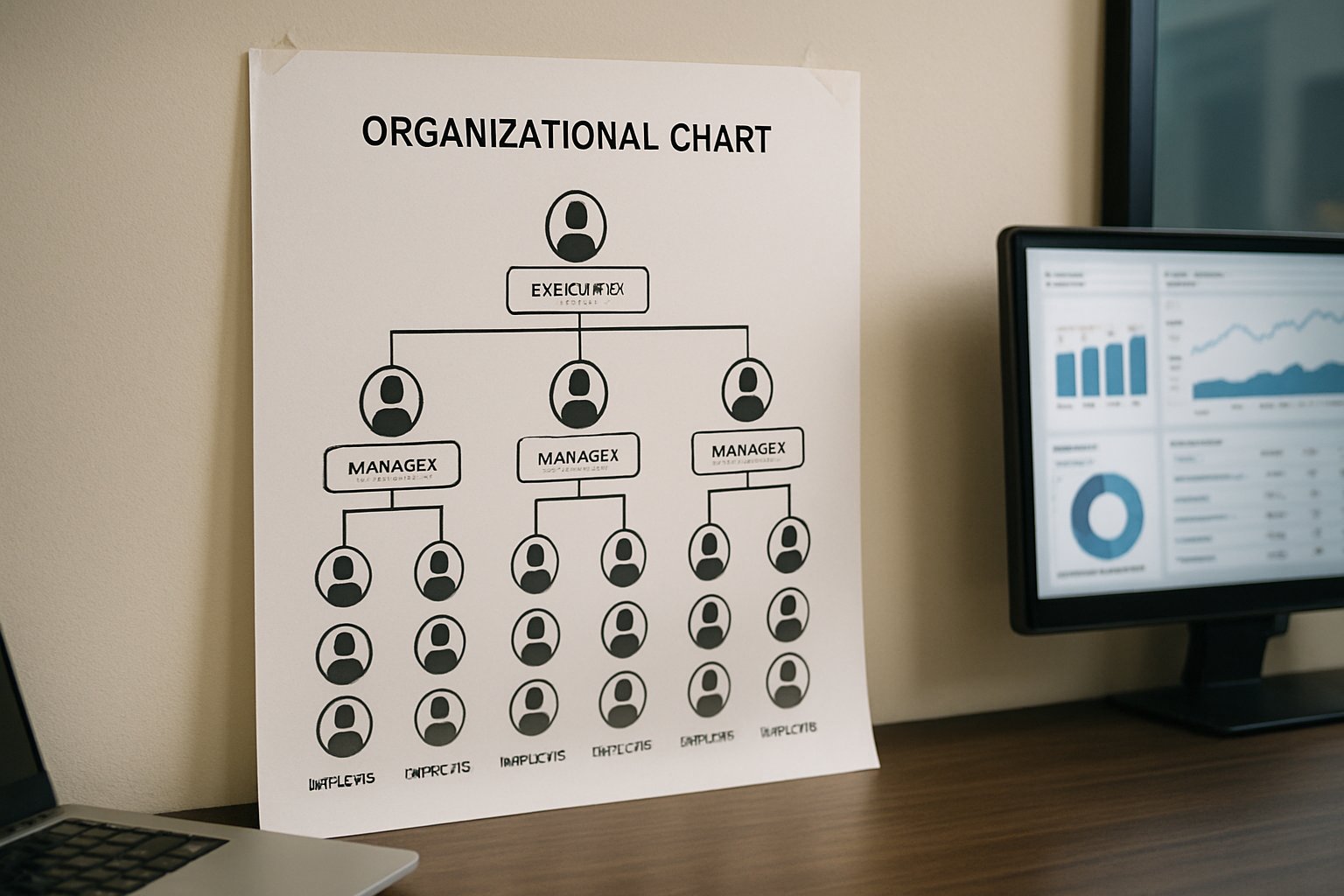
IMD observes that AI accelerates this shift by automating status reporting, scheduling, and performance monitoring. Moreover, smart assistants now draft memos and aggregate metrics, tasks that previously consumed managerial hours. Leaders therefore invest more time in coaching and cross-functional problem solving when redesign occurs deliberately.
In summary, technology has already eroded several routine supervisory duties. Middle layers face mounting scrutiny as executives chase speed, clarity, and savings. Next, we examine financial signals that amplify restructuring urgency.
GenAI Spending Rapidly Accelerates
Capital flows and market Trends underscore why structures must change quickly. IDC reports that 40% of firms deploy AI within six months of approval. Furthermore, Gartner expects generative AI spending to hit $644 billion in 2025. These numbers sharpen executive focus on cost-to-value ratios inside every function.
Key investment figures illustrate the pace:
- Gartner: 20% of companies will flatten structures, halving middle layers by 2026.
- Revelio Labs: postings for mid-level managers dropped 42% between April 2022 and October 2024.
- Amazon, Citi, and UPS publicized delayering programs linked to AI efficiency drives.
Collectively, these data points reflect accelerating resource allocation toward Automation and analytics. Therefore, Middle Manager Compression emerges as both cause and consequence of budget priorities.
Rising budgets signal leadership intent to scale AI enterprise-wide. Flattening becomes fiscally attractive as cost savings offset transformation spending. With money moving, attention turns to upcoming structural forecasts.
Forecasts Signal Structural Flattening
Analyst projections now sketch clearest pictures of pending hierarchy changes. Gartner predicts AI will enable elimination of over half current middle positions in many enterprises. In contrast, IMD stresses a slower gradient shaped by sector maturity and governance readiness. Nevertheless, both viewpoints agree that compression, not simple headcount freeze, is unavoidable.
Faculty member Julia Binder notes adaptability, not access, differentiates AI winners. Howard Yu adds that pragmatic problem selection yields small wins which compound into large shifts. These expert perspectives reinforce the need to redesign Roles before removal creates capability gaps.
Understanding Span Shifts
Span of control is the pivotal metric behind reported flattening figures. When administrative Automation frees time, managers can supervise larger teams without immediate quality loss. Consequently, Middle Manager Compression often materializes through span expansion rather than pink slips.
Forecasts align on fewer layers and wider spans during the next 18 months. Timelines vary, yet governance will determine human impact severity. Practitioners must now grasp daily work realities created by these forecasts.
Practical Effects On Work
Office routines already feel different where AI assistants curate dashboards or schedule shift rosters. Moreover, chatbots now draft performance summaries that managers previously compiled manually. Savings accumulate, but psychological safety may suffer when feedback loops become fully automated. Employee experience Trends reveal rising anxiety about unclear career paths.
Employees rely on middle leaders for coaching, conflict mediation, and informal culture transmission. If those Roles disappear or stretch too thin, mentorship pipelines can fracture. Additionally, burnout risk rises as remaining leaders monitor larger teams across time zones.
Deloitte warns that expanded spans demand fresh analytics abilities plus emotional intelligence. Consequently, skill portfolios must evolve alongside tool adoption. Middle Manager Compression therefore becomes a talent development challenge, not simply a headcount exercise.
AI augments output yet threatens relational glue that sustains engagement. Balanced redesign must safeguard mentorship while capturing automation benefits. Design choices form the focus of the next section.
Redesigning Roles And Governance
IMD advocates a structured, value-data-people framework when revisiting governance models. First, leaders map workflows, identifying where Automation reliably handles repeatable tasks. Second, they redefine Roles to emphasize judgement, creativity, and stakeholder alignment. Finally, they install guardrails covering ethics, security, and auditability to limit AI risks.
Successful pilots pair chatbots with managers rather than abandoning human oversight. Meta’s engineering units, for example, provide dashboards that surface anomalies while supervisors retain escalation authority. Consequently, accountability remains clear even as reporting burdens decline.
Professionals can enhance their expertise with the AI Executive™ certification. That credential reviews governance patterns, risk controls, and change sequencing for AI initiatives. Therefore, credentialed leaders drive smoother transformations and reduce downstream compliance surprises. Such disciplined planning curbs Middle Manager Compression from devolving into culture shock.
Role redesign works when governance aligns technology, people, and values. Certifications and frameworks give managers tested playbooks for action. Attention now shifts to reskilling roadmaps supporting these new expectations.
Strategic Reskilling Roadmap Ahead
Training investments determine whether compression yields productivity or widespread disengagement. McKinsey surveys show firms capturing AI value early dedicate 70% of budgets to people programs. Moreover, IMD recommends micro-learning modules that fit intensive workdays and target emerging analytics gaps.
Effective curricula blend data literacy, design thinking, and advanced collaboration skills. Subsequently, experiential projects reinforce lessons while delivering incremental business wins. Mentoring circles also replace missing ladder rungs created by Middle Manager Compression.
Organizations should track three leading indicators:
- Participation rates in new skill programs across business units.
- Employee sentiment on workload, autonomy, and growth prospects.
- Time-to-decision metrics within restructured teams.
Reskilling secures agility while sustaining morale under flatter structures. Continuous measurement ensures investments translate into lasting performance gains. Finally, leaders must contextualize timelines to anticipate future implications.
Looking Toward 2026 Implications
Forecast windows close fast as AI deployments compound. Gartner places 2026 as a watershed year for organizational flattening. Meanwhile, the institute expects compression to deepen gradually across finance, retail, and manufacturing instead of spiking suddenly.
Government regulation could also influence pacing, especially around algorithmic transparency. Nevertheless, most Trends suggest tightening labor markets for traditional supervisory roles. Therefore, proactive adaptation remains the safest strategic choice.
Executives should schedule quarterly reviews assessing span ratios, AI ethics compliance, and culture health. Those reviews keep Middle Manager Compression aligned with long-term talent strategy.
2026 may mark the tipping point for mainstream flattening. Prepared firms will convert change into competitive advantage. The article now concludes with practical next steps.
Actionable Next Steps Today
Middle Manager Compression is accelerating, yet thoughtful leaders can steer outcomes toward productivity and growth. Stakeholders should track spending signals, analyst forecasts, and internal workload analytics for early warning. Additionally, robust governance paired with clarified Roles will preserve accountability despite wider spans. Middle Manager Compression remains manageable when evidence guides every redesign step.
Continuous reskilling, supported by certifications, equips leaders for judgment-heavy tasks unlikely to be automated soon. Consequently, engagement and innovation can rise even as layers shrink. Organizations reluctant to act may face culture erosion and talent flight by 2026. Therefore, explore frameworks, consult recent research, and pursue the linked executive certification without delay. Adopt these measures now to transform flattening pressure into sustainable strategic momentum.


