

AI CERTS
2 hours ago
Navigating a SaaS Infrastructure Outage: Lessons for IT
An unexpected SaaS Infrastructure Outage shook enterprise workflows on 22 January 2026. Thousands of organizations briefly lost email, chat, and admin visibility. Consequently, IT leaders are re-evaluating core assumptions about cloud reliability. This news analysis reviews the incident timeline, impact scope, technical factors, and future-proofing strategies.
Critical Incident Timeline Overview
Initially, public trackers logged over 15,000 complaints within minutes. Meanwhile, Microsoft acknowledged incident MO1221364 on X. The company confirmed a regional infrastructure slice was not processing traffic. Within two hours engineers redirected flows and began load rebalancing. Subsequently, most tenants reported recovery, although some users experienced residual delays for several hours. Overall, the SaaS Infrastructure Outage window spanned much of the North American business afternoon.
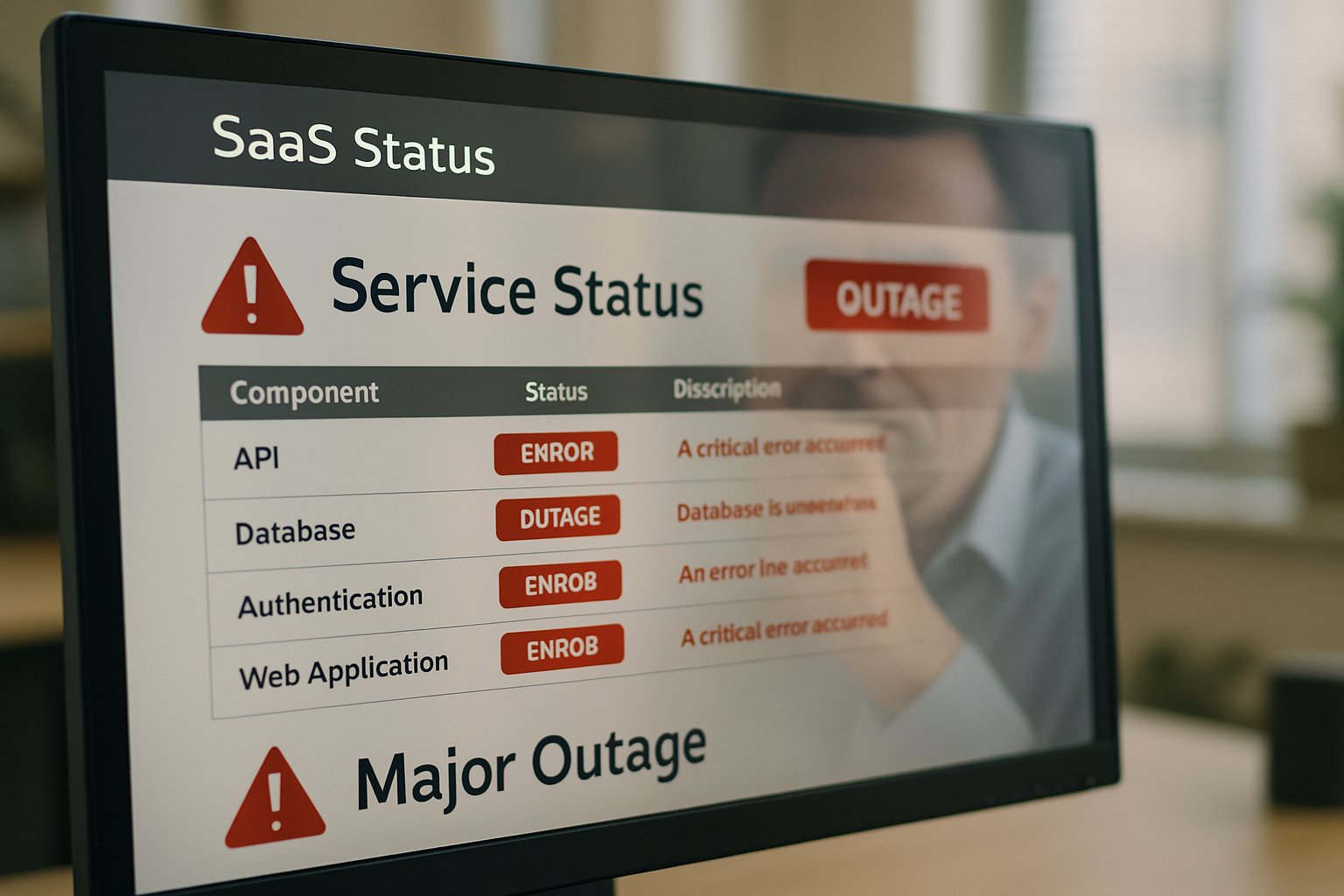
These timestamps highlight a rapid escalation cycle. However, they also reveal visibility gaps for admins relying on the same affected portals. Therefore, understanding cross-channel monitoring options is essential before the next crisis.
Impact Across Core Services
The SaaS Infrastructure Outage disrupted several Microsoft 365 pillars:
- Email queues showed SMTP 451 4.3.2 deferrals.
- Teams could not initiate new meetings.
- SharePoint and OneDrive search stalled.
- Defender and Purview dashboards timed out.
- Admin Center and Service Health pages intermittently failed.
Moreover, campus help desks confirmed that users struggled to confirm whether problems were local or global. In contrast, unaffected regions saw normal performance, underscoring the localized nature of this SaaS Infrastructure Outage.
These symptoms crippled routine collaboration. Nevertheless, cached mailboxes and alternate chat tools reduced some friction, illustrating the value of layered communication channels.
Likely Technical Failure Factors
Microsoft cited traffic misprocessing inside a North American slice. Industry analysts linked the pattern to routing or load-balancer misconfiguration. Additionally, control-plane changes can cascade quickly across tightly coupled microservices. Therefore, even partial failures can appear total to frontline users. Experts noted similar traits in previous cloud incidents, reinforcing that a single edge component can trigger a broad SaaS Infrastructure Outage.
Until the formal root-cause report arrives, administrators should assume core network abstractions remain potential fault zones. Consequently, proactive monitoring of latency, DNS resolution, and SMTP queues remains critical.
Business Continuity Lessons Learned
Operational fallout extended beyond delayed email. Sales demos stalled, support queues backed up, and compliance teams lost console access. Moreover, status blindness hampered decision speed because the Service Health portal was itself impaired. This event demonstrated that one SaaS Infrastructure Outage can simultaneously remove communication, visibility, and remediation tools.
Key takeaways include:
- Create offline incident runbooks available outside cloud portals.
- Maintain alternative alert channels, such as SMS trees.
- Document escalation contacts for vendor support.
- Regularly test backup SMTP relays and archives.
- Encourage staff to install local Teams or Outlook cache modes.
These points emphasize preparation. Furthermore, they show why layered resilience must precede the next lowercase outage.
Strategies For Future Resilience
Enterprises evaluating architectural safeguards can adopt several practices. Firstly, multi-region tenant routing mitigates regional faults. Secondly, hybrid on-prem gateways can absorb deferred mail. Additionally, multi-cloud SaaS brokers distribute risk across providers. Professionals can deepen relevant skills through the AI Ethical Hacker™ certification, which addresses secure traffic engineering. Consequently, teams become better equipped to recognize early indicators of the next SaaS Infrastructure Outage.
Financial leaders should quantify downtime costs against redundancy investment. Meanwhile, security teams must ensure failover designs preserve compliance logging. Overall, resilience is not a one-time purchase but a continuous improvement cycle.
Diverse Expert Community Perspectives
Site reliability engineers praised Microsoft’s rapid rerouting. Nevertheless, they warned that repeated incidents erode stakeholder trust. In contrast, platform sales teams argued that cloud scale still surpasses typical on-prem uptime. Furthermore, independent analysts suggested that transparent post-mortems would reassure skeptical users. Each stance circles a common theme: visibility and redundancy soften the shock of any future SaaS Infrastructure Outage.
This debate guides procurement choices. Therefore, technology leaders should weigh vendor openness alongside feature breadth when renewing contracts.
Key Takeaways
The 22 January event showcased both cloud strength and fragility. Most services recovered within hours, yet critical workflows paused. Consequently, organizations must treat resilience as a shared responsibility. Adopt layered monitoring, rehearse manual failovers, and pursue continuous education. Ultimately, preparation today reduces panic when the next SaaS Infrastructure Outage strikes.
Stay informed, refine your runbooks, and explore certifications like the linked AI Ethical Hacker™ program to sharpen defensive expertise. Act now, and remain productive regardless of who owns the infrastructure.


