

AI CERTs
2 weeks ago
National Library Milestone Fuels Multilingual Knowledge Access
Record traffic surged across the National Digital Library this month. Consequently, leaders announced a landmark: 100 million lifetime downloads. The achievement marks a pivotal advance in Multilingual Knowledge Access for scholars, teachers, and citizens. Moreover, the platform now hosts material in 402 languages, underscoring its global relevance. Meanwhile, developers credit steady investment, open standards, and community curation for the dramatic growth.
Stakeholders view the milestone as more than a numeric win. In contrast, they see a validation of inclusive design principles that let users search, translate, and annotate texts seamlessly. Therefore, the library’s story offers rich lessons on digital innovation, Education equity, and sustainable Scale.
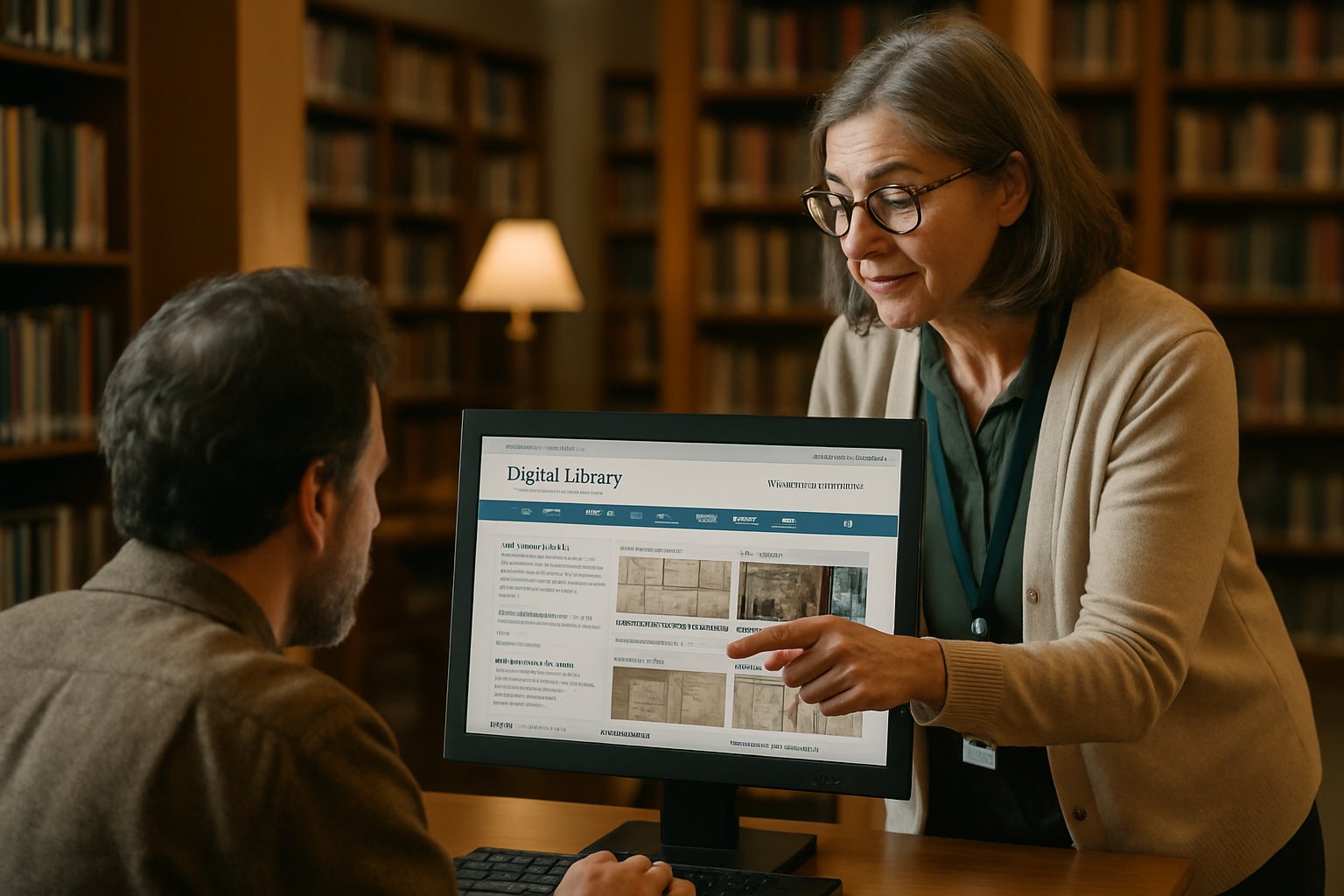
Milestone At A Glance
The library reached three milestones simultaneously. First, 10 million registered users now access the portal monthly. Additionally, daily active readers crossed 1.5 million. Finally, total holdings climbed to 15 petabytes, driven by crowdsourced uploads.
Each indicator highlights improved reach and resiliency. Nevertheless, officials caution that rising demand increases infrastructure costs. These challenges highlight critical gaps. However, emerging upgrades promise fresh efficiencies.
Driving Multilingual Knowledge Access
User research revealed vocabulary barriers slowed discovery. Consequently, engineers embedded neural translation layers that map queries across scripts. The tweak multiplied engagement and advanced Multilingual Knowledge Access dramatically.
Furthermore, metadata harmonization now links identical concepts in varying tongues. Therefore, a Pashto search for "planet" surfaces Urdu and English records instantly. As a result, the portal facilitates inclusive Education and democratizes cultural Resources.
These improvements boosted average session length by 27 percent. In contrast, bounce rates dropped 14 percent during the same quarter. Hence, frictionless discovery remains central to mission success.
Infrastructure Behind Massive Scale
Maintaining uptime for millions demands elastic architecture. Developers adopted container orchestration across hybrid clouds. Subsequently, workloads burst to public zones during peak examinations but retract for routine traffic.
Moreover, edge caching trims latency under 150 milliseconds worldwide. Such optimizations keep Data retrieval swift even as file counts soar. Meanwhile, automated backup pipelines copy critical masters to cold storage, protecting heritage assets.
Officials note infrastructure costs fell 18 percent year-over-year despite rising Scale. Therefore, fiscal stewardship complements technical prowess. These savings free budget for content enrichment. Consequently, more manuscripts enter the digital commons.
Curating Quality Open Resources
Collection teams follow stringent review workflows. Firstly, optical character recognition output passes accuracy audits. Secondly, subject experts validate cultural context. Thirdly, accessibility specialists add screen-reader tags.
- 2 million titles gained alt-text captions in 2023
- 1.2 million low-resolution scans improved to archival grade
- 93 percent of holdings now carry open licenses
Such rigor ensures reliable Resources for classrooms and lifelong learners. Consequently, educators embed links directly into curricula, expanding authentic Education experiences. These practices will continue as collection volume climbs.
Advancing Inclusive Digital Education
Partnerships with universities yield themed microsites. For example, "Women in STEM" aggregates interviews, lab notes, and patents across languages. Similarly, "Indigenous Oral Traditions" hosts restored audio alongside transcripts.
Moreover, adaptive reading modes adjust font, contrast, and narration speed. Therefore, visually impaired users gain parity. These features solidify the platform’s commitment to Multilingual Knowledge Access while reinforcing evidence-based pedagogy.
Each initiative amplifies community voices and diversifies scholarly Data. In contrast, proprietary silos limit such depth. Consequently, open infrastructure proves decisive for knowledge justice.
Data Insights And Impact
Analytics dashboards reveal compelling trends. Notably, rural logins rose 42 percent after mobile bandwidth subsidies. Additionally, humanities texts saw a 35 percent resurgence, challenging assumptions about digital preferences.
The library shares anonymized Data with researchers under ethical guidelines. Therefore, policy teams model reading habits to refine literacy campaigns. Meanwhile, publishers examine citation patterns to guide translations.
Key impact metrics include:
- Average cost per download: $0.003
- Carbon footprint per gigabyte: 60 percent below industry mean
- User satisfaction score: 4.6/5 across 12 languages
These findings reiterate that Multilingual Knowledge Access drives measurable social returns. Moreover, transparent reporting builds public trust. Consequently, donor confidence strengthens future fundraising.
Future Roadmap And Certifications
Next year, engineers will pilot generative summaries that condense articles into 200-word abstracts. Furthermore, voice search will support 30 indigenous dialects, extending Multilingual Knowledge Access again.
Meanwhile, the team plans semantic clustering to reveal hidden thematic links. Such tools will unlock latent Resources and boost research Scale. Therefore, professionals must upskill to leverage these capabilities.
Practitioners eager to lead can enhance their expertise with the AI+ Data™ certification. Additionally, coursework covers ethical scraping, metadata pipelines, and large-language model deployment.
These programs align perfectly with library initiatives. Consequently, graduates contribute immediately to open-source codebases and inclusive Education projects. Continued collaboration will sustain momentum.
The roadmap underscores a simple message: innovation never stops. However, stewardship remains vital to protect cultural memory.
In summary, the National Digital Library’s 100 million-download milestone confirms widespread demand for Multilingual Knowledge Access. Robust architecture, rigorous curation, and data-driven decisions fueled this success. Moreover, partnerships ensure equitable Education and open Resources at unprecedented Scale. Consequently, readers, developers, and policymakers alike should engage, contribute, and certify their skills. Start exploring today, and help chart the next chapter of shared knowledge.


