

AI CERTs
2 hours ago
Musk’s TeraFab Redefines AI Chip Manufacturing
Silicon scarcity is reshaping corporate strategy. Consequently, Elon Musk has proposed a colossal in-house manufacturing project named TeraFab. The initiative links Tesla, SpaceX and xAI inside Tesla’s Austin campus. It aims to deliver one terawatt of deployed AI compute annually, far exceeding current industry output. However, experts question whether even $20 billion can unlock such scale quickly.
This article unpacks the announcement, energy math, supply chain hurdles, and implications for chipmaking competitors. Moreover, we examine vertical integration promises and the audacious plan for off-earth processing. Readers will receive balanced insights and actionable signals to monitor in coming quarters. Therefore, by the end, you will judge if the manufacturing ambition matches engineering realities. Let's begin with the vision and headline numbers.
Terafab Vision And Scale
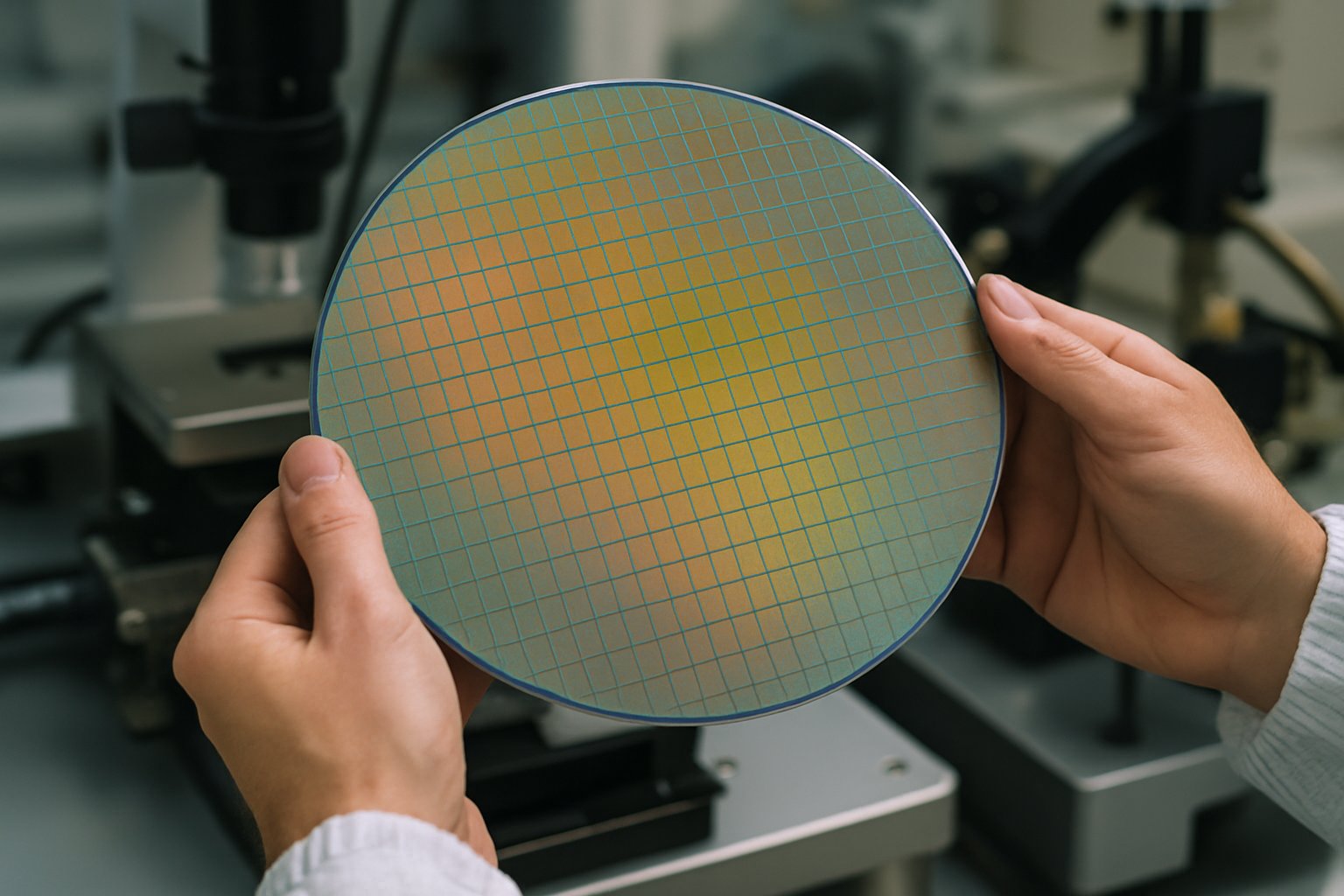
Musk unveiled TeraFab during a livestream from Giga Texas on 22 March 2026. Meanwhile, Reuters noted his teaser post promising a launch seven days earlier. He claimed the project would start with 100,000 wafer starts per month and scale to one million. That throughput rivals so-called gigafabs at established Taiwanese and Korean foundries. Additionally, he framed compute size using electrical power, targeting one terawatt of constant draw. In contrast, the International Energy Agency estimates all data centres consumed about 340 TWh in 2022.
The numbers reveal ambition unparalleled in commercial semiconductor history. Nevertheless, scale alone says little about timeline or feasibility. Next, we quantify the energy reality behind those figures.
Global Energy Demand Calculated
Power defines the ceiling for data-center deployment. Therefore, Musk's terawatt metric converts compute hype into grid planning language policymakers understand. IEA projects data-center electricity could surpass 415 TWh in 2024 and continue climbing. A constant terawatt would equal 8,760 TWh annually, dwarfing those projections. Consequently, terrestrial deployment of that load seems unrealistic without extraordinary renewable build-outs. Musk partitioned capacity: 100–200 GW on Earth, the rest aboard SpaceX satellites powered by solar arrays. Furthermore, off-earth placement sidesteps cooling water scarcity and local emissions. Analysts, however, flag unknown launch costs and orbital debris risks.
Energy math contextualizes the proposal against world electricity budgets. Still, moving compute skyward introduces fresh technical unknowns. Those uncertainties compound when vertical integration enters the conversation.
Vertical Integration Manufacturing Challenges
The plan folds logic, memory, packaging, and mask production under one roof. Consequently, procurement spans EUV scanners, deposition tools, metrology stations, and exotic chemicals. ASML alone ships fewer than 60 high-NA scanners yearly, each costing hundreds of millions. Meanwhile, yield learning can swallow several years before chips reach automotive reliability. Jensen Huang warned that advanced chipmaking remains extremely hard even for incumbents. Moreover, Tesla lacks decades of process know-how that TSMC honed across successive nodes. Integrating memory layers adds additional temperature and contamination constraints. Therefore, analysts doubt TeraFab achieves 2 nm economically without external partnerships.
Manufacturing depth multiplies risk across supply, talent, and time. Nevertheless, Musk argues vertical control shortens iteration cycles for AI chips. To grasp supplier significance, we examine ecosystem dynamics next.
Supplier Ecosystem And Risks
Fabrication equipment originates from a concentrated global roster of firms. ASML, Applied Materials, Lam Research, and KLA dominate critical manufacturing process steps. Additionally, Micron, Samsung, and SK Hynix provide advanced memory dies. Therefore, TeraFab must place multi-billion-dollar orders years in advance. So far, public filings show no firm purchase orders for EUV or immersion lithography tools. In contrast, TSMC disclosed 2025 allocations two years earlier, signaling execution discipline. SpaceX launch cadence also influences satellite compute timelines and payload mass budgets. Furthermore, Tesla investor calls have not itemized dedicated TeraFab capital expenditures.
- Target wafer starts: 100k → 1M WSPM
- Reported capex: $20-25 billion initial phase
- Energy draw goal: 1 TW continuous
- Terrestrial allocation: 100–200 GW annually
- Space compute share: ~800 GW annually
Consequently, equipment bookings will provide the first verifiable progress indicator. Experts can upskill through the AI Policy Maker™ certification. Supply dependencies underscore execution uncertainty. However, timely orders could narrow skepticism. The story extends beyond Earth, as the next section shows.
Space Compute Bold Bet
He envisions constellations hosting data-centre class silicon beside solar arrays. Consequently, orbital sunlight bypasses terrestrial grid bottlenecks and cooling limits. However, radiation hardening complicates chipmaking and inflates cost per transistor. Starlink experience gives SpaceX launch and operations expertise, yet compute payloads differ from broadband terminals. Additionally, satellite replacement cycles shorten when semiconductor process nodes advance rapidly. Insurance premiums, orbital congestion, and debris mitigation introduce further hidden expenses. Nevertheless, successful deployment would showcase cross-company synergies and strengthen Tesla autonomy from cloud vendors.
Off-earth compute solves energy supply yet creates aerospace engineering burdens. Industry players watch costs and reliability metrics cautiously. That caution frames the final question of immediate next steps.
What Happens Next Steps
Short-term signals will likely appear in regulatory filings and supplier releases. Meanwhile, ERCOT permit applications could reveal local grid upgrades for manufacturing power delivery. FCC submissions may outline satellite spectrum usage for orbital data centres. Moreover, ASML quarterly calls often disclose shipment scheduling for marquee customers. Investors should parse Tesla 10-K footnotes for rising capital commitments. Analysts also track Musk postings on X for timeline adjustments or unexpected pivots. Consequently, evidence trail will either validate or deflate the announced roadmap.
Concrete orders and permits will separate rhetoric from execution. Nevertheless, manufacturing breakthroughs remain possible if resources align. We close with overarching lessons for technology leaders.
TeraFab embodies a frontier vision that fuses manufacturing scale with orbital ambition. However, the gulf between concept and commercial manufacturing execution remains vast. Suppliers, regulators, and financiers will decide whether manufacturing dreams translate into wafer yield reality. Furthermore, rising AI electricity demand guarantees industry attention regardless of outcome. Leaders should monitor equipment orders, energy permits, and satellite manifests for tangible movement. Consider the AI Policy Maker™ credential to navigate future policy debates.


