

AI CERTS
2 hours ago
Muon Collider Proposal Reshapes High-Energy Physics in the US
Meanwhile, rival projects in Europe and Asia compete for attention and resources. Consequently, policy makers face tough prioritization choices across Science megaprojects. Funding uncertainties add further complexity just as climate priorities pressure Energy budgets. Nevertheless, advocates aim to launch critical Research and engineering phases within seven years. Therefore, understanding the roadmap, risks, and geopolitical calculus matters for every technical stakeholder. The following analysis explains the vision, timeline, challenges, and collaboration dynamics shaping the proposal.
Collider Vision Strategy Roadmap
National experts foresee a phased program for High-Energy Physics beginning with intensive design studies. Moreover, the report prioritizes a compact, roughly 10 km ring at Fermilab. That scale contrasts sharply with 100 km concepts discussed for electron or proton machines. In contrast, proponents argue the smaller footprint eases civil construction and Energy consumption.
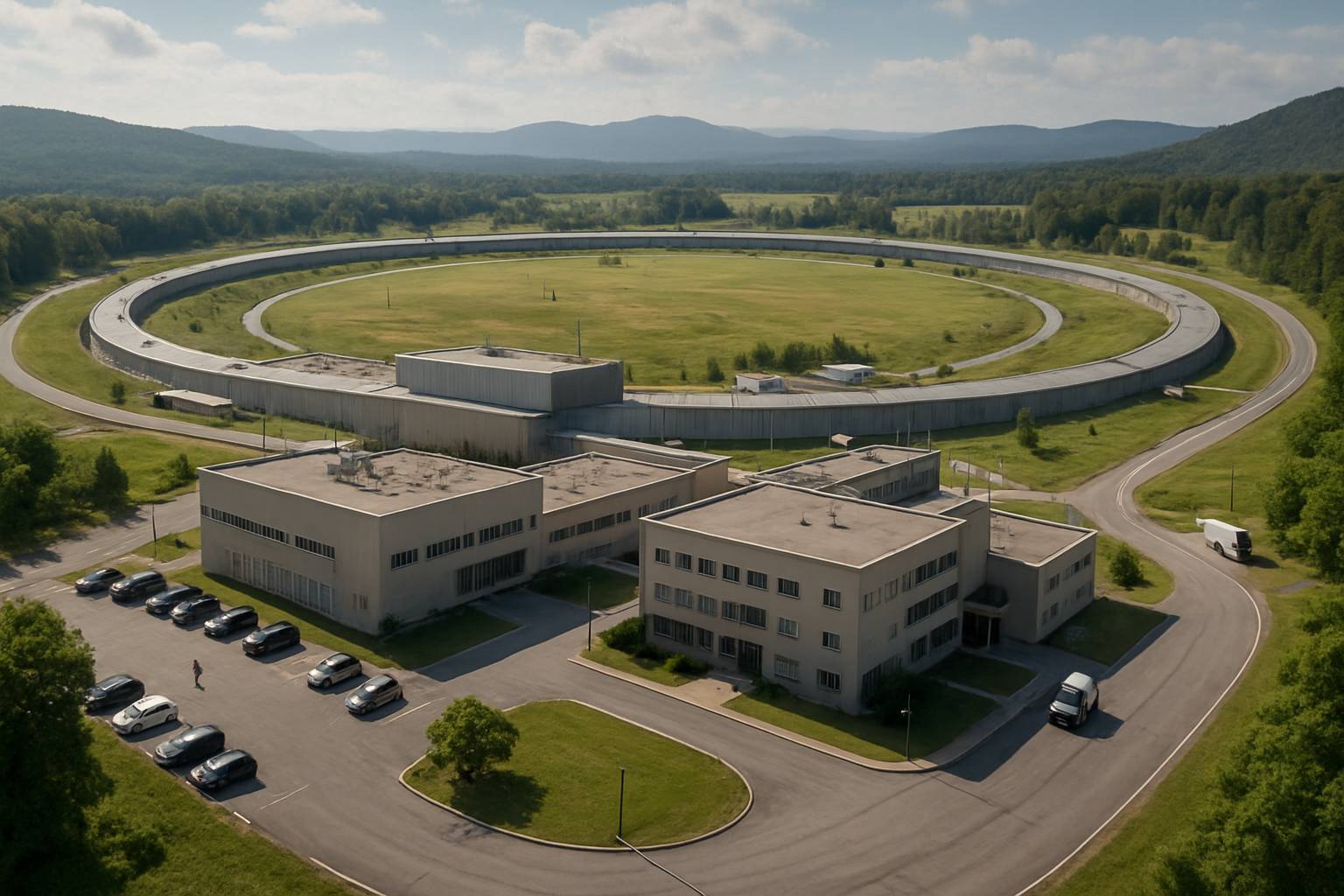
Furthermore, a dedicated electron-positron Higgs factory would proceed through international partnership, avoiding duplication. Subsequently, the muon collider would push the Energy frontier and complement precision Science goals. Experts describe this dual pathway as a balanced strategic portfolio for U.S. Research leadership. However, aligning timelines for both facilities remains politically delicate.
These strategic choices frame a bold yet focused national agenda. Next, the core muon technology merits closer examination.
Basics Of Muon Technology
Muon beams combine electron-like cleanliness with hadron-level mass. Therefore, they radiate far less while bending, enabling High-Energy Physics goals in tight rings. However, muons decay within microseconds, forcing rapid production, cooling, and acceleration. Ionization cooling reduces beam spread by passing muons through material and re-accelerating them.
Fermilab engineers plan an ionization-cooling demonstrator to validate these processes under realistic loads. Moreover, high-field superconducting magnets must guide the volatile beams without quenching. Consequently, magnet R&D spans novel conductor materials, cryogenics, and manufacturing workflows. Demonstrating integrated performance across all subsystems will unlock credible cost modeling.
Mastering these techniques underpins the entire collider concept. Accordingly, the upcoming R&D roadmap outlines phased milestones.
Detailed R&D Roadmap Timeline
The National Academies envision a seven-year exploratory R&D window. During this stage, simulation, component prototyping, and design optimization will converge. Subsequently, a decade-long demonstrator program would integrate full beamlines and detectors for High-Energy Physics validation. Therefore, decision makers could authorize full construction in the early 2040s.
Key milestones appear in agency planning documents:
- 2026: Complete ionization-cooling lattice design studies.
- 2029: Fabricate first high-field prototype magnet.
- 2032: Begin commissioning of cooling demonstrator.
- 2037: Publish integrated performance review and cost estimate.
- 2041: Issue go/no-go decision for full collider.
Each milestone demands sustained Science talent, Energy resources, and cross-disciplinary Research coordination.
These dates illustrate both urgency and realism. Still, technical risk remains the dominant unknown discussed next.
Key Challenges And Unknowns
Major hurdles span technology, cost, and environmental impact. First, ionization cooling efficiency at multi-megawatt beam powers lacks experimental proof. Additionally, detector designers must suppress intense muon-decay background hits to protect High-Energy Physics signals. Moreover, no reliable price baseline exists, complicating governmental Funding advocacy.
Energy consumption estimates look favorable, yet grid assessments require updated climate scenarios. In contrast, civil engineers warn about local groundwater and soil displacement near Fermilab. Consequently, early environmental reviews will influence schedule credibility. Furthermore, Workforce pipelines must secure specialized Science skills over two decades.
Risks span technical physics details and socio-economic realities. However, robust Funding strategies could mitigate several concerns, as discussed below.
Policy And Funding Landscape
Securing billions for any collider will test Washington’s appetite for big Science. Nevertheless, the Department of Energy regards frontier accelerators as national innovation engines. Therefore, advocates frame the project as stimulus for advanced manufacturing, clean power technology, and High-Energy Physics discovery. Meanwhile, congressional committees compare the proposal with existing megaprojects like DUNE and the Electron Ion Collider.
Global cost sharing appears critical for political palatability. Moreover, adopting staged approvals under DOE’s Critical Decision framework spreads Funding risk. Subsequently, private-sector partnerships could supply niche components and complementary Research grants. Professionals can deepen their knowledge with the AI+ Quantum Specialist™ certification.
Sustainable financial models will determine long-term viability. Next, international coordination shapes those models.
Global Collaboration Dynamics Today
Particle-physics progress traditionally relies on multinational consortia. Consequently, U.S. planners seek alignment with CERN, Japan, and China. Nature’s editorial called joint High-Energy Physics feasibility studies an affordable unity gesture. Moreover, the International Muon Collider Collaboration already shares magnet and beam-cooling research.
In contrast, Europe debates prioritizing its own Future Circular Collider. Meanwhile, China advances CEPC studies, intensifying geopolitical competition. Therefore, transparent governance and data access policies will attract partners and protect U.S. interests. Additionally, shared detector teams reduce duplication and cultivate global Science talent.
Cooperation promises cost relief and intellectual diversity. Finally, industry readers should consider the downstream commercial impacts.
Impacts For Industry Stakeholders
Advanced magnets, cryogenic pumps, and power converters will stimulate new manufacturing contracts. Moreover, data-analysis frameworks from High-Energy Physics detectors often translate into commercial AI tools. Consequently, vendors that invest early could capture lucrative high-margin markets. Science driven supply chains also enhance workforce resilience and regional power infrastructure.
Government procurement rules will reward companies meeting sustainability targets. Additionally, cross-cutting Research collaborations may open non-defense revenue streams for aerospace and electronics firms. Therefore, strategic positioning now offers clear competitive advantages.
Industry engagement can accelerate innovation while diversifying earnings. With that context, the discussion returns to the broader vision.
The proposed muon collider encapsulates a transformative opportunity for High-Energy Physics and the wider innovation ecosystem. Moreover, the phased R&D plan offers measurable guardrails against runaway budgets. Consequently, early successes in ionization cooling will galvanize community confidence. In contrast, delays could shift momentum toward overseas frontier colliders. Nevertheless, strong international ties position the United States to steward future High-Energy Physics breakthroughs. Industry should monitor procurement schedules, patent opportunities, and skills programs. Researchers can prepare by cross-training in magnets, superconductors, and advanced simulation. Readers seeking deeper technical expertise should review official documents and pursue the earlier certification link.


