

AI CERTS
3 months ago
Municipal AI Trials Under Scrutiny in Sydney
Transport for NSW confirms multiple AI video proofs of concept across the city. Moreover, the Secure Agility partnership focuses on counting pedestrians, cyclists, and micro-mobility devices. Consequently, policymakers gain exposure metrics rather than verified crash reduction statistics. This article examines the trial context, data gaps, and next steps for responsible deployment.
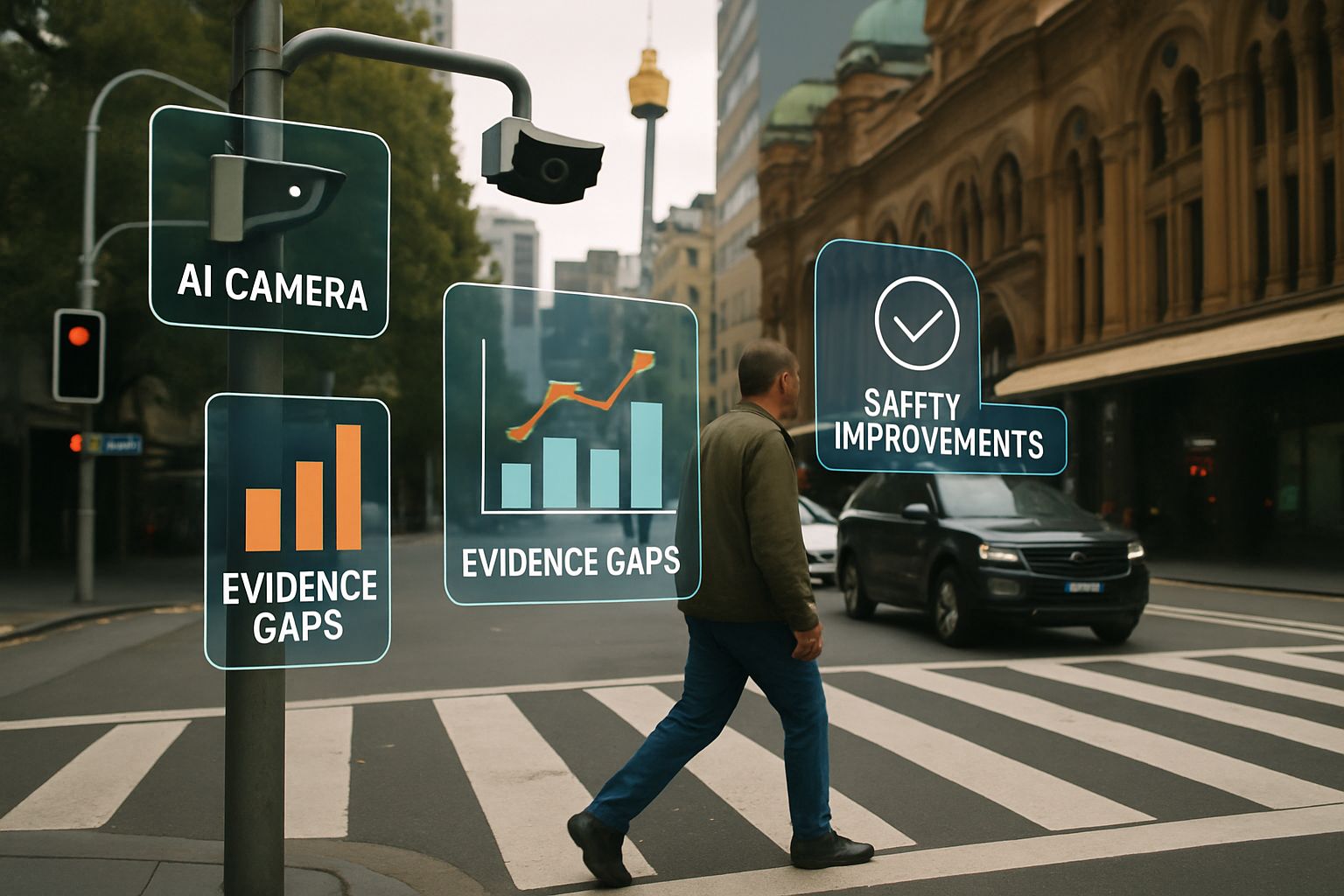
Along the way, we evaluate privacy concerns and certification pathways for professionals guiding similar projects. In contrast, we compare proven infrastructure interventions that demonstrably cut crashes. Readers will leave with grounded insights rather than unverified headlines.
Current AI Trials Context
Transport for NSW launched the Active Transport Cycleways proof of concept in September 2021. Furthermore, Cisco Meraki cameras measure directional counts at Oxford and College Streets inside the Sydney CBD. Meanwhile, similar sensors cover 33 cycleway sites statewide, creating a comparative baseline. Nevertheless, published material highlights evaluation goals limited to volume counts and near-miss event flags.
No peer-reviewed document yet links the cameras to quantifiable Accident Reduction metrics. Therefore, the celebrated 30% improvement remains anecdotal until official numbers appear. Municipal AI advocates acknowledge the gap and call for transparent statistical releases.
Current trials offer rich behavioural data, yet definitive safety evidence is pending. Consequently, verifying impact demands stronger study design, which the next section explores.
Latest Safety Data Reality
National Road Safety Data Hub shows pedestrian deaths rising 11.5% during 2024. Additionally, hospitalised injuries climbed almost 9% over the same period. Such trends underscore why Pedestrian Safety remains a pressing policy priority for every jurisdiction. In contrast, the Sydney CBD experienced fluctuating casualty numbers influenced by tourism rebounds and construction detours.
Experts caution that year-to-year volatility complicates attributing shifts to any one technology. Moreover, exposure levels change when pop-up cycleways or pandemic restrictions alter travel patterns. Robust before-after analysis must therefore adjust for those confounders before crediting Municipal AI deployments.
Overall crash numbers remain stubborn, while explanatory variables multiply. Consequently, headline claims require meticulous statistical framing addressed in the forthcoming discussion.
Edge Camera Technology Explained
Edge analytics keeps video processing on the camera, sending only de-identified metadata upstream. Consequently, bandwidth costs drop and privacy risk declines because raw images rarely store centrally. Algorithms classify pedestrians, bicycles, scooters, and vehicles within milliseconds. Meanwhile, event detection modules flag counter-flow movement or dangerous encroachments in crossing zones.
Municipal AI systems integrate with SCATS to adapt signal timing when vulnerable users appear. However, automated actuation remained outside scope for the initial Sydney CBD proof of concept. Therefore, the trial functioned primarily as a sophisticated counting device rather than an active controller.
- Near real-time pedestrian volumes.
- Automated incident hotspot alerts.
- Granular time-of-day exposure profiles.
- Scalable integration with adaptive signals.
Nevertheless, transforming those advantages into measurable Accident Reduction demands subsequent engineering interventions. Edge analytics delivers speed and scale, yet outcome linkage remains unresolved. The governance conversation illustrates why methodology matters.
Governance And Privacy Debates
Australian councils have faced backlash when facial-recognition trials proceeded without consultation. Therefore, TfNSW published a privacy impact assessment outlining data retention and anonymisation protocols. Moreover, signage near camera poles informs pedestrians about the AI study. Digital Rights Watch still questions proportionality, especially as benefit evidence remains unpublished.
Municipal AI champions argue that de-identified counts pose minimal surveillance risk compared with plate matching. Nevertheless, civil libertarians seek independent audits to verify model drift and false positive rates. Such transparency could bolster Pedestrian Safety efforts by strengthening legitimacy.
Effective governance balances innovation, privacy, and public communication. Subsequently, rigorous evaluation emerges as the bridge to meaningful consent.
Path To Impact Validation
Crash reduction claims require controlled before-after or interrupted time-series designs. Furthermore, analysts must adjust for exposure, weather, seasonal travel, and concurrent policy changes. Austroads guidance recommends minimum three-year windows to counter regression-to-mean effects. Consequently, the Sydney CBD pilot still lacks sufficient post-installation duration for statistical certainty.
Municipal AI proponents plan to overlay crash databases with temporal sensor logs once sample sizes grow. In contrast, built environment treatments like 30 km/h zones have extensive meta-analyses verifying double-digit Accident Reduction. Blending sensing with engineering could therefore yield the strongest Pedestrian Safety outcomes.
Recommended Data Verification Steps
Industry experts outline a simple, actionable roadmap.
- Request official evaluation reports from TfNSW.
- Release anonymised before-after crash datasets publicly.
- Engage independent statisticians for peer review.
- Publish methodology alongside summary headlines.
Professionals can enhance expertise with the AI Sales Strategy™ certification. Such training equips leaders to design accountable Municipal AI procurements.
Methodical validation nurtures trust and policy continuity. Consequently, subsequent investments gain clearer justification, as the next section illustrates.
Broader City Policy Implications
Municipal AI trials resonate beyond Sydney because every dense city battles pedestrian exposure risk. Moreover, real-time data can inform dynamic curb pricing, scooter governance, and crowd management during events. Cities adopting similar platforms should therefore prepare cross-department task forces early. Meanwhile, procurement guidelines must tie funding releases to verified Accident Reduction milestones.
Case studies from Barcelona and Toronto show how performance clauses accelerate intervention rollouts. Nevertheless, those contracts embedded privacy audits and public dashboards from day one. Sydney CBD agencies could replicate that transparency model to strengthen Pedestrian Safety commitments.
Urban leaders face converging mobility, climate, and equity pressures. Therefore, data-driven yet ethical frameworks will define the next decade of Municipal AI.
Sydney’s camera networks exemplify the promise and pitfalls of emerging civic technology. Current evidence confirms robust counting capabilities but not the advertised 30% crash benefit. However, structured evaluations, privacy safeguards, and multidisciplinary skills can transform raw sensing into safer streets. Industry certifications, including the linked AI Sales Strategy™ program, prepare professionals to navigate that complexity. Consequently, stakeholders who demand transparent data and align interventions with findings will realise genuine Accident Reduction gains. Municipal AI can still earn public trust, provided officials measure outcomes and publish results without delay. Act now to secure the data, skills, and certifications that will drive safer, smarter streets worldwide.


