

AI CERTS
3 hours ago
MrBeast Kalshi Case Spotlights Prediction Market Compliance
Consequently, Kalshi imposed a $20,397.58 penalty and referred the matter to the CFTC. Beast Industries terminated Kaptur days later, amplifying headlines far beyond financial circles. Moreover, the case highlights growing tension between open information markets and classic Insider trading rules. This article unpacks the timeline, enforcement mechanics, corporate fallout, and broader compliance lessons.
Readers will gain insight into how regulated prediction venues police integrity and what enterprises must watch. Consequently, risk officers can benchmark their own safeguards against this emerging standard.
Case Emerges In Public
Kalshi posted two disciplinary notices on 25 February 2026. One notice centered on markets tracking MrBeast Kalshi audience milestones. The exchange publicly named trader Artem Kaptur and described his role editing Donaldson’s videos. Meanwhile, a second case involved a political contract, illustrating wider surveillance reach.
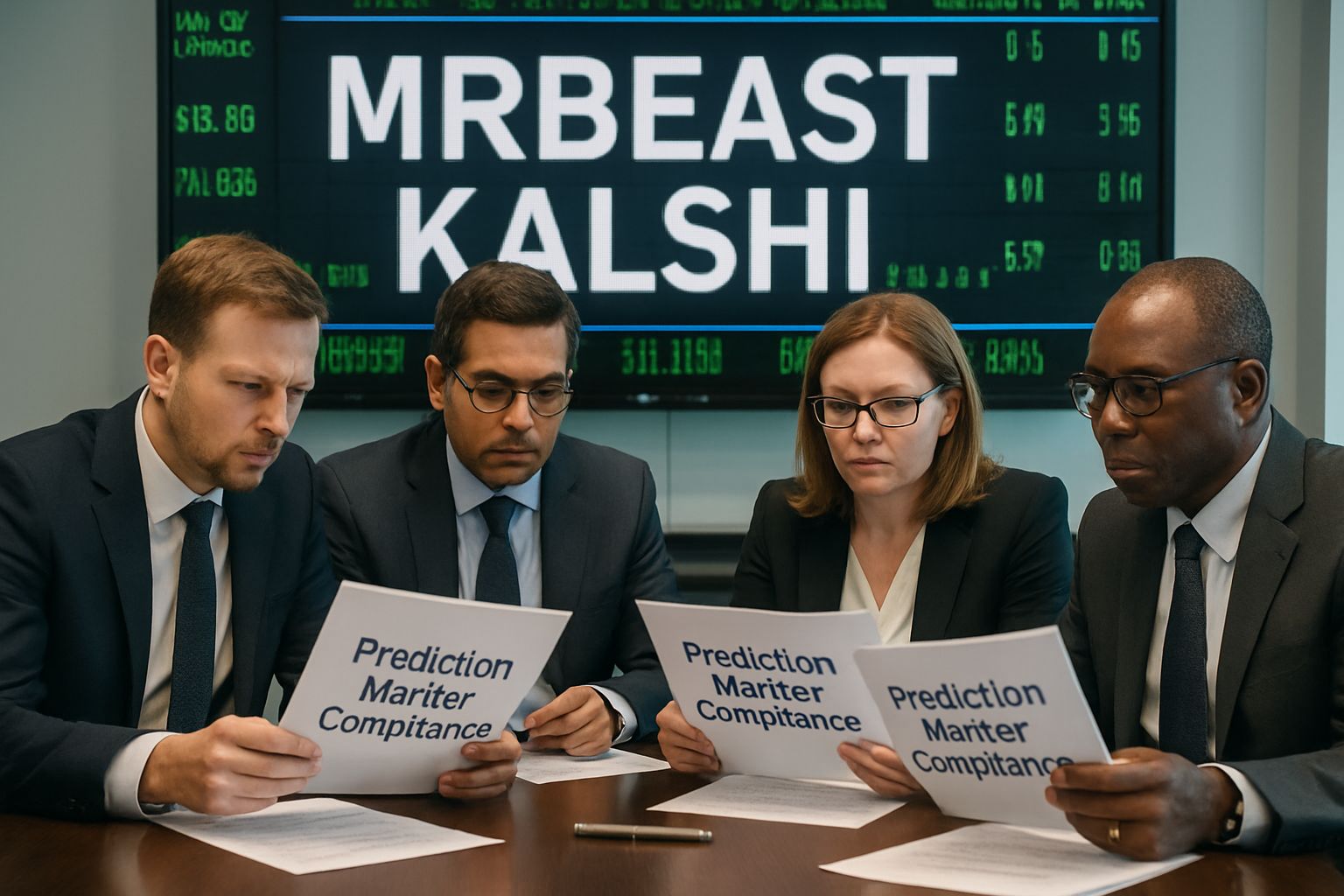
According to Kalshi, Kaptur placed roughly $4,000 across several August–September 2025 contracts. Those contracts predicted whether planned stunts would cross specific streaming thresholds on release day. Kalshi surveillance flagged near-perfect accuracy on positions the broader market priced below 20 percent.
Consequently, the disciplinary committee concluded Kaptur likely accessed material non-public information through his employment. It ordered disgorgement of $5,397.58 plus a $15,000 fine and a two-year ban. Moreover, Kalshi pledged to donate penalty proceeds to a consumer education nonprofit.
- $4,000 initial stake between August–September 2025
- $5,397.58 profit identified and clawed back
- $15,000 additional civil penalty imposed
- Two-year trading suspension effective immediately
The public notice detailed discrete, verifiable numbers drawn from Kalshi’s audit trail. Together, they outline a textbook misappropriation scenario. Next, we examine how Kalshi’s internal controls surfaced the anomaly.
Kalshi Enforcement Process Details
Kalshi is a CFTC-designated contract market with surveillance obligations mirroring futures exchanges. Therefore, it maintains automated flagging, manual review, and whistle-blower channels. The MrBeast Kalshi case began when algorithms spotted statistically improbable wins on low-probability contracts.
Subsequently, compliance analysts compared trade timestamps with internal production calendars shared among Beast Industries staff. Investigators observed several buys minutes after private Slack updates finalizing thumbnail tests. In contrast, no public hints appeared on Twitter, Reddit, or Donaldson’s community tab during that window. The MrBeast Kalshi flag appeared as a red beacon on compliance dashboards.
Kalshi’s Head of Enforcement, Bobby DeNault, told reporters the platform has opened 200 insider probes in 12 months. Moreover, partnerships with Wharton Forensic Analytics Lab and Solidus Labs now augment detection models. Professionals seeking similar rigor can validate skills through the AI Security Compliance™ certification.
Kalshi’s layered controls revealed the pattern quickly. That speed limited further market distortion and boosted regulator confidence. Regulators themselves did not stay silent.
CFTC Reaction And Context
The CFTC’s Division of Enforcement issued an advisory the same day as Kalshi’s notice. Consequently, it reminded every designated contract market about duties to police fraud and Insider trading. The advisory cited Commodity Exchange Act sections on misappropriation and manipulation.
Meanwhile, lawmakers seized on the headline to promote pending bills targeting illicit prediction activity. Representative Ritchie Torres referenced the MrBeast Kalshi incident while urging criminal penalties for government officials who trade event contracts. In contrast, Kalshi’s founders argued strict surveillance plus transparent discipline demonstrate responsible innovation. For regulators, the MrBeast Kalshi affair provided a convenient teaching example.
Regulatory scholars note the advisory stops short of a formal enforcement action. However, the agency can still subpoena records or file charges if new evidence arises. Consequently, enterprises watching prediction markets should treat the notice as an early warning.
The CFTC message was unmistakable: oversight accompanies innovation. Although no case has materialized yet, scrutiny will intensify. Corporate stakeholders felt that pressure almost immediately.
Beast Industries Swift Response
Beast Industries first acknowledged the investigation within hours of Kalshi’s announcement. Its statement emphasized zero tolerance for Insider trading by employees or contestants. Additionally, management promised an independent review of internal policies governing outside speculation.
On 5 March 2026, Associated Press confirmed the editor’s termination after completion of the review. Meanwhile, Donaldson tweeted gratitude to fans for patience and reiterated commitment to fair play. No further staff departures have surfaced, suggesting the probe found no broader scheme. Internally, managers circulated the MrBeast Kalshi notice during risk workshops.
Beast Industries also barred employees from trading any contracts linked to unreleased content. Furthermore, new orientation materials clarify disciplinary consequences for violations. Legal counsel is reviewing nondisclosure agreements to include explicit trading prohibitions.
Swift termination insulated the brand from extended reputational damage. Nevertheless, the episode triggered permanent compliance upgrades inside Beast Industries. Those internal shifts mirror broader market lessons.
Prediction Markets Compliance Lessons
The MrBeast Kalshi story resonates because celebrity content intersects huge retail prediction interest. Consequently, asymmetric information risk multiplies whenever production timelines remain secret. Exchanges therefore need surveillance tuned to niche, fast-moving contracts.
Experts outline several best practices emerging from the case:
- Integrate third-party analytics to flag improbable win ratios quickly.
- Cross-reference trading spikes with internal Slack or Git commit logs.
- Document employee policies banning event contract wagers on proprietary information.
- Disgorge profits to public education charities to deter repeat offenses.
For corporations, early policy clarity reduces legal ambiguity and deters opportunists. Meanwhile, traders should assume platforms will detect unusual success patterns. Therefore, transparent rulebooks paired with visible enforcement sustain market credibility. Ignoring a MrBeast Kalshi scenario could invite shareholder lawsuits.
Preventive controls cost less than retrospective scandals. Consequently, boards should budget now for predictive analytics and staff training. Industry analysts next turn to interpretive commentary.
Expert Voices Weigh In
Luana Lopes Lara, Kalshi co-founder, posted a blunt conclusion: “F***ed around, found out.” Her message captured popular frustration with information asymmetries. However, academics urged careful distinction between lawful research and Insider trading misuse.
Wharton professor Daniel Martin noted that event contracts thrive on diverse information sources. In contrast, monetizing privileged production data corrodes that diversity. Therefore, clear guidance should protect whistle-blowers while punishing deception.
Experts converge on balanced regulation that preserves price discovery. Nevertheless, they agree blatant misappropriation warrants harsh penalties. Unanswered questions still hover over the marketplace.
Outstanding Key Regulatory Questions
Will the CFTC open a full case against Kaptur or Kalshi? Observers expect clarity once subpoena windows expire later this year. Additionally, Beast Industries may publish its internal investigation findings to restore transparency.
Market microstructure researchers also want contract-level audit trails for replication studies. However, Kalshi has not yet released full transaction logs. Consequently, journalists continue requesting those PDFs and will report when available.
Transparency will decide whether the story fuels congressional crackdowns. In contrast, proactive disclosure could cement trust in regulated prediction markets. Either way, diligence now becomes non-negotiable for market participants.
The MrBeast Kalshi saga demonstrates how quickly private information can contaminate open markets. However, it also proves that strong surveillance, rapid disclosure, and firm penalties restore confidence. Beast Industries, Kalshi, and the CFTC each acted decisively, limiting broader fallout. Consequently, boards across media and finance should review employee trading policies today. Professionals can deepen their compliance mastery through the linked AI Security Compliance™ certification. Act now to align governance with emerging prediction market standards and safeguard your reputation.


