

AI CERTS
2 hours ago
Model Intelligence Drives Agentic Finance
Moreover, early adopters report smoother spreadsheet automation and richer document review. This article unpacks what matters for analysts, controllers, and CFOs.
We explore performance numbers, tool changes, and risk controls. Furthermore, we map concrete steps for pilots and scale-ups. Throughout, we test one question: does Sonnet 4.6 finally make autonomous finance agents practical? Read on for the data-driven answer.
Agentic Shift Explained Clearly
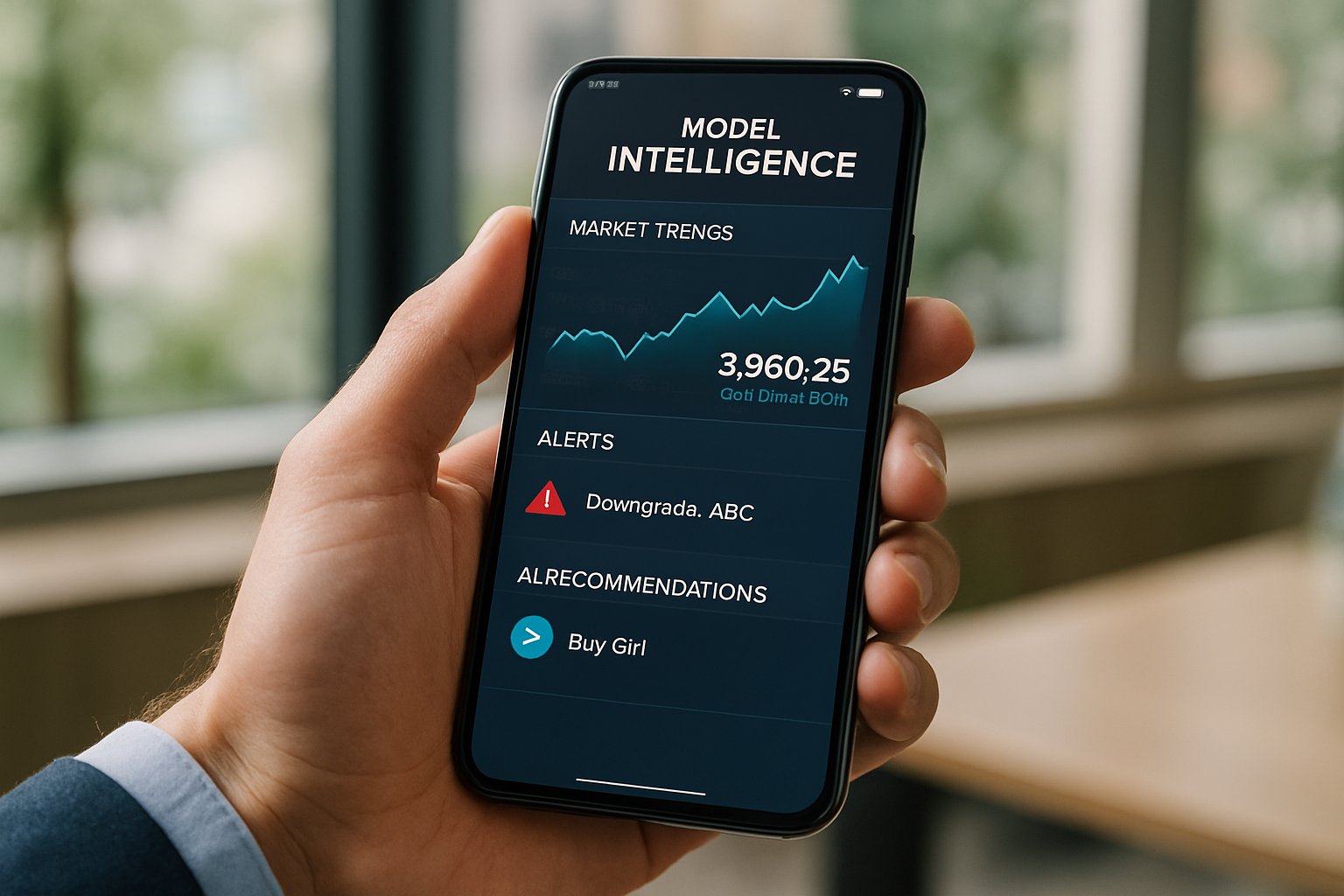
Agentic systems run multi-step tasks with minimal human steering. Therefore, they must reason, fetch data, and loop until objectives finish. Sonnet 4.6 pushes that envelope. Its Model Intelligence handles programmatic tool calling, sandboxed code, and web fetch in one request. Additionally, a beta one-million-token window swallows entire 10-K filings without chunking.
Recent Benchmarks validate the leap. SWE-bench Verified shows 79.6% task completion. Meanwhile, Finance Agent v1.1 records 63.3%, edging Anthropic’s flagship Opus. Office tasks show comparable gains, scoring 1633 Elo on GDPval-AA. In contrast, earlier midtier models lagged by double digits. These metrics reveal a turning point for routine audit schedules and variance analysis.
The section underscores why capacity matters. However, performance alone is not the whole story. The following section breaks down cost dynamics driving adoption.
Cost Performance Equation Unpacked
Token economics decide project viability. Sonnet 4.6 prices inputs at $3 per million tokens and outputs at $15. Consequently, frequent recalculations, Monte Carlo models, or large document ingestions become affordable. Model Intelligence now costs roughly 40% less than flagship tiers while matching quality on many tasks.
- Input token price: $3 per million
- Output token price: $15 per million
- Opus 4.6 differential: +$2 input, +$10 output
- Finance Agent score improvement: +3.2 percentage points
Moreover, fewer round trips cut idle latency. Programmatic calls let a single prompt schedule queries, aggregate results, and output numbers. Therefore, total spend drops further because loops avoid additional prompts.
These savings shift budget debates. Nevertheless, finance leads still weigh capability gaps. The next part explores how long context transforms heavy document work.
Long Context Advantage Detailed
Financial reports keep expanding. Traditionally, analysts sliced filings into bite-sized chunks, risking lost references. Sonnet 4.6’s million-token window changes workflow math. Consequently, entire credit agreements, term sheets, or HLE scenario books fit in one context.
Model Intelligence tracks cross-references, tables, and footnotes inside that mega window. Furthermore, analysts can append internal memos, making a unified knowledge pack. Benchmarks confirm accuracy remains stable beyond 500,000 tokens, a first for midtier models.
Long context also simplifies post-merger integrations. Agents can scan two corporate charts, align chart-of-accounts codes, and output mapping suggestions. Previously, Office specialists spent days on that task. Now they supervise agent drafts within hours.
The benefit feels convincing. However, spreadsheets remain finance’s dominant surface. The next section dives into new Excel connectors.
Spreadsheet Data Synergy Unleashed
Anthropic shipped Managed Connector Platform support for Excel. Therefore, agents now pull S&P Global, LSEG, Moody’s, and FactSet numbers directly. Moreover, tool calls respect licensing entitlements, avoiding fragile scraping loops.
Consider a quarterly model refresh. An analyst writes a single instruction. The agent fetches trailing twelve-month EBITDA, updates valuation tabs, and drafts commentary. Meanwhile, Model Intelligence catches mismatched date formats and reconciles line items. Benchmarks like OSWorld-Verified at 72.5% suggest reliable human-computer interaction.
This integration lifts Office automation beyond basic macros. Additionally, code execution inside the spreadsheet sandbox runs Python valuation scripts without leaving Excel. Productivity gains follow quickly. These wins invite rapid scaling, yet governance questions surface. Risk and compliance appear next.
Risk And Compliance Considerations
No finance leader deploys unchecked automation. Nevertheless, Sonnet 4.6 offers stronger prompt-injection resistance, matching Opus security levels. Enterprises should still log every agent decision. Moreover, deterministic test harnesses ensure outputs stay within tolerance.
Regulators expect auditable trails. Therefore, design agents to emit JSON logs, file copies, and intermediate code. In contrast, black-box chains invite scrutiny. Professionals can enhance their expertise with the AI+ Government™ certification to master oversight frameworks.
Hallucination risk persists. Consequently, mandate human sign-off for material statements or regulatory filings. These controls close major gaps. However, orchestrating scaled adoption still requires a playbook, covered in the final section.
Strategic Adoption Playbook Guide
Pilots start small. Select one HLE forecast template and load historical scenarios. Subsequently, measure speed, cost, and accuracy against manual baselines. Maintain a scoreboard of Benchmarks pertinent to your domain.
Second, extend to Office dashboard generation. Use Model Intelligence to draft variance narratives, but route drafts through controllers for review. Furthermore, integrate MCP connectors gradually, verifying vendor entitlements.
Third, automate recurring regulatory tables. Consequently, staff reclaim hours for investigative analysis. Finally, create a feedback loop. Logs inform prompt tweaks. Transition checkpoints decide when to graduate each agent from test to production.
This phased strategy mitigates surprises. Moreover, constant measurement anchors stakeholder confidence. These steps close the adoption cycle. The conclusion distills key insights and next actions.
Claude Sonnet 4.6 elevates Model Intelligence across finance tasks. Its friendly pricing, vast context window, and Office integrations shrink historical barriers. Benchmarks show near-flagship accuracy, while risk tooling advances audit readiness. Consequently, autonomous agents edge from concept to reality. Finance leaders should run targeted pilots, enforce governance, and track cost outcomes. Moreover, expanding expertise through certifications strengthens oversight muscle. Explore the linked programs and start building tomorrow’s finance desk today.


