

AI CERTS
3 hours ago
Mistral Speech Model Drives Voxtral’s Open Audio Revolution
Furthermore, the Apache 2.0 license enables commercial experiments without legal friction. This introduction explains why technical leaders should track Mistral’s latest release.
Comprehensive Model Family Overview
Mistral offers two core sizes. Voxtral Small carries 24 billion parameters for data-center tasks. Meanwhile, Voxtral Mini packs 3 billion parameters for edge hardware. Additionally, realtime and batch variants target subtitles, call summarization, and voice automation. Each variant ships with multilingual support across at least eight major languages.
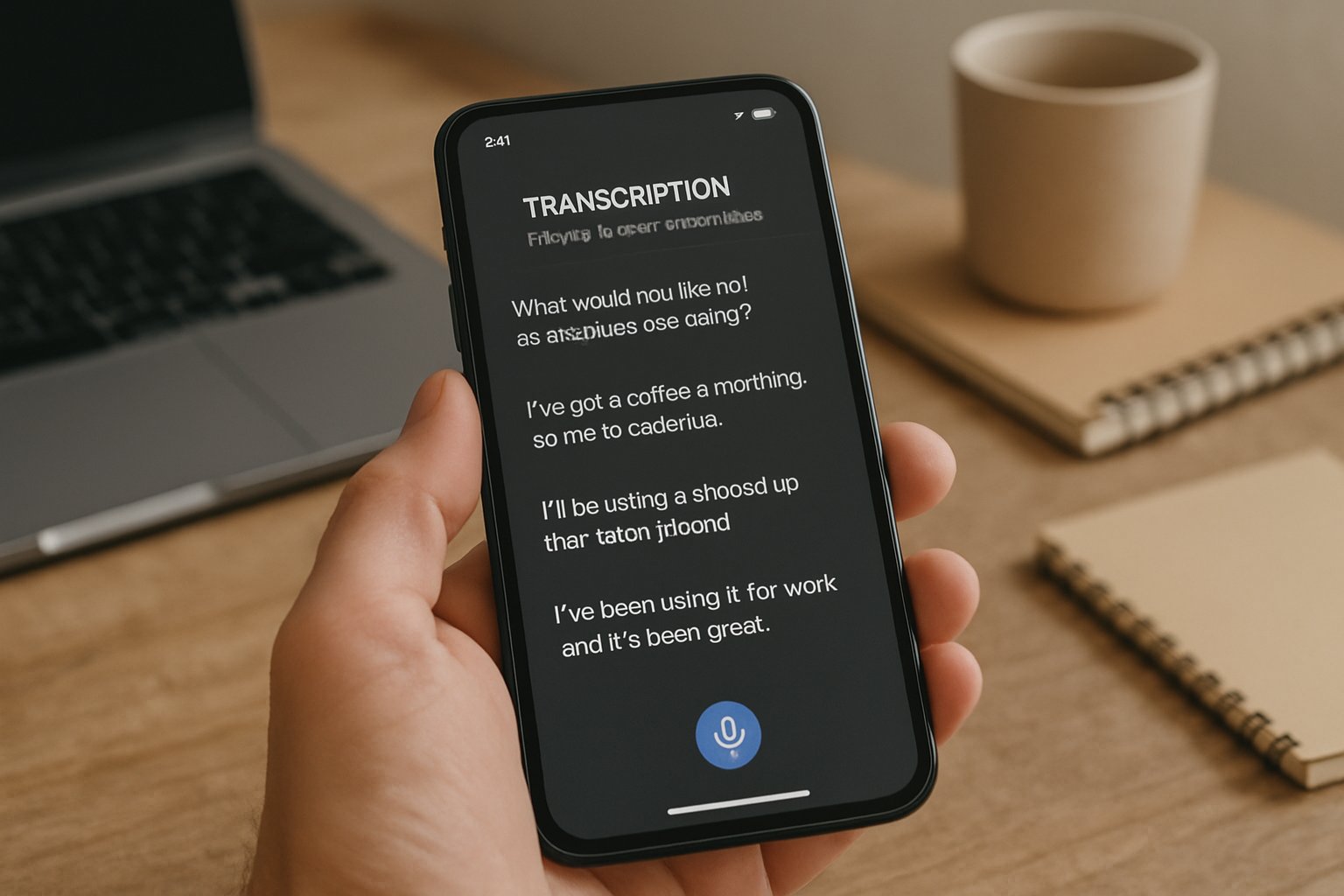
Key specifications appear in official model cards and press coverage:
- Context window: 32k tokens, roughly 40 minutes of audio
- Diarization available in batch modes
- Realtime latency: ~200 ms in tuned pipelines
- Apache 2.0 license for selected weights
These facts illustrate a breadth uncommon in today’s speech landscape. However, the Mistral Speech Model must still prove reliability outside laboratory tests. These early details set the technical context. Subsequently, performance considerations become critical.
Latency And Realtime Performance
Low latency drives adoption for live agents and captioning. Wired reports Voxtral Realtime sustaining 200 ms end-to-end delay. Moreover, Mistral’s engineers claim the pipeline remains stable under variable network jitter. In contrast, many cloud APIs exceed 400 ms in real scenarios.
Realtime strength partly originates from compact 4 billion-parameter builds. Therefore, developers can deploy an on-device agent on recent mobile chips. The ability to keep audio local improves privacy and reduces bandwidth costs. Nevertheless, 24B deployments still demand H100-class GPUs.
Fast inference unlocks use cases such as simultaneous translation and regulated industry meetings. These latency metrics demonstrate practical readiness. Consequently, attention shifts toward hardware feasibility.
Deployment And Hardware Footprint
Running the 24B model requires about 55 GB of GPU memory. Consequently, only multi-GPU servers or premium accelerators qualify. However, Voxtral Mini occupies roughly 10 GB in bf16 mode, enabling single-GPU rigs. Additionally, optimized Ubuntu images simplify containerized rollout.
For tighter constraints, Mistral publishes quantized checkpoints. These checkpoints shrink memory needs and allow genuine on-device execution on powerful smartphones. Many European banks already test local transcription to satisfy data residency rules.
Professionals can enhance their expertise with the AI Developer™ certification. Mastery of GPU tuning will maximize value from the Mistral Speech Model. Hardware realities now give way to accuracy debates.
Benchmarks And Accuracy Claims
Mistral states that Voxtral beats Whisper large-v3, GPT-4o mini Transcribe, and Gemini Flash across multiple datasets. Furthermore, internal tests show lower word-error rates on noisy Common Voice recordings. Independent verification remains limited, yet early community runs support several claims.
Accuracy extends beyond transcription. The model answers questions about recorded meetings and can trigger function calls from spoken intent. Moreover, diarization tags speakers with notable precision. These advanced outputs reduce pipeline complexity within modern enterprise stacks.
Nevertheless, researchers caution against overreliance on vendor numbers. Consequently, many labs are preparing LibriSpeech and CHiME evaluations. The Mistral Speech Model will face intense scrutiny once peer benchmarks publish. These points underline the licensing and cost calculus.
Pricing And Licensing Strategy
Mistral markets aggressive API pricing. Voxtral Mini starts near $0.001 per minute. Additionally, hosted realtime tiers remain lower than several large US competitors. Such savings matter when transcribing millions of minutes monthly.
Because weights are open, companies may bypass per-minute fees by self-hosting. However, infrastructure expenses offset some freedom. Nevertheless, open licensing eliminates vendor lock-in, a decisive feature for regulated enterprise sectors.
The Mistral Speech Model thus aligns financial flexibility with technological control. These economics feed risk assessments and future planning.
Risks And Next Steps
Open weights introduce governance concerns. Training data provenance remains partially undisclosed, so bias across accents may persist. Moreover, malicious actors could fine-tune harmful voice agents. Therefore, security reviews must accompany any production rollout.
Independent evaluators should run standardized tests, measure real-world latency, and audit accuracy across dialects. Organizations can follow a simple roadmap:
- Download Voxtral Mini from Hugging Face
- Benchmark on LibriSpeech and internal calls
- Profile GPU footprint under mixed precision
- Model safety filters before public exposure
These actions spotlight open questions. However, the proactive steps will accelerate responsible adoption of the Mistral Speech Model. Careful diligence completes the investigation, guiding future strategy.
Open licensing and strong latency create a unique proposition. Consequently, technology leaders must weigh performance, cost, and governance in concert. The next section summarizes essential insights.
Conclusion
Mistral’s launch signals a broader European push toward transparent AI tooling. The Mistral Speech Model blends transcription and understanding, while Voxtral variants support on-device, local, and cloud workflows. Moreover, aggressive pricing and an Apache 2.0 license attract cost-sensitive enterprise buyers. Nevertheless, independent benchmarks and bias audits remain vital. Professionals seeking deeper mastery should pursue the linked AI Developer credential. Act now, test the models, and position your teams for voice-enabled success.


