

AI CERTS
2 hours ago
Microsoft’s 12% Slide Tests Faith in AI Investment Strategy
Market participants blamed record CAPEX aimed at AI infrastructure, slower Azure momentum, and a striking customer concentration disclosure. Consequently, chatter about an overheating AI Investment cycle grew louder across trading desks and newsrooms. This article unpacks what happened, why it matters, and how technology leaders should react. Along the way, we examine key metrics, broader market signals, and certification options for strategic upskilling. Meanwhile, the analysis keeps every sentence concise to respect your busy schedule.
Market Shock Rapidly Unfolds
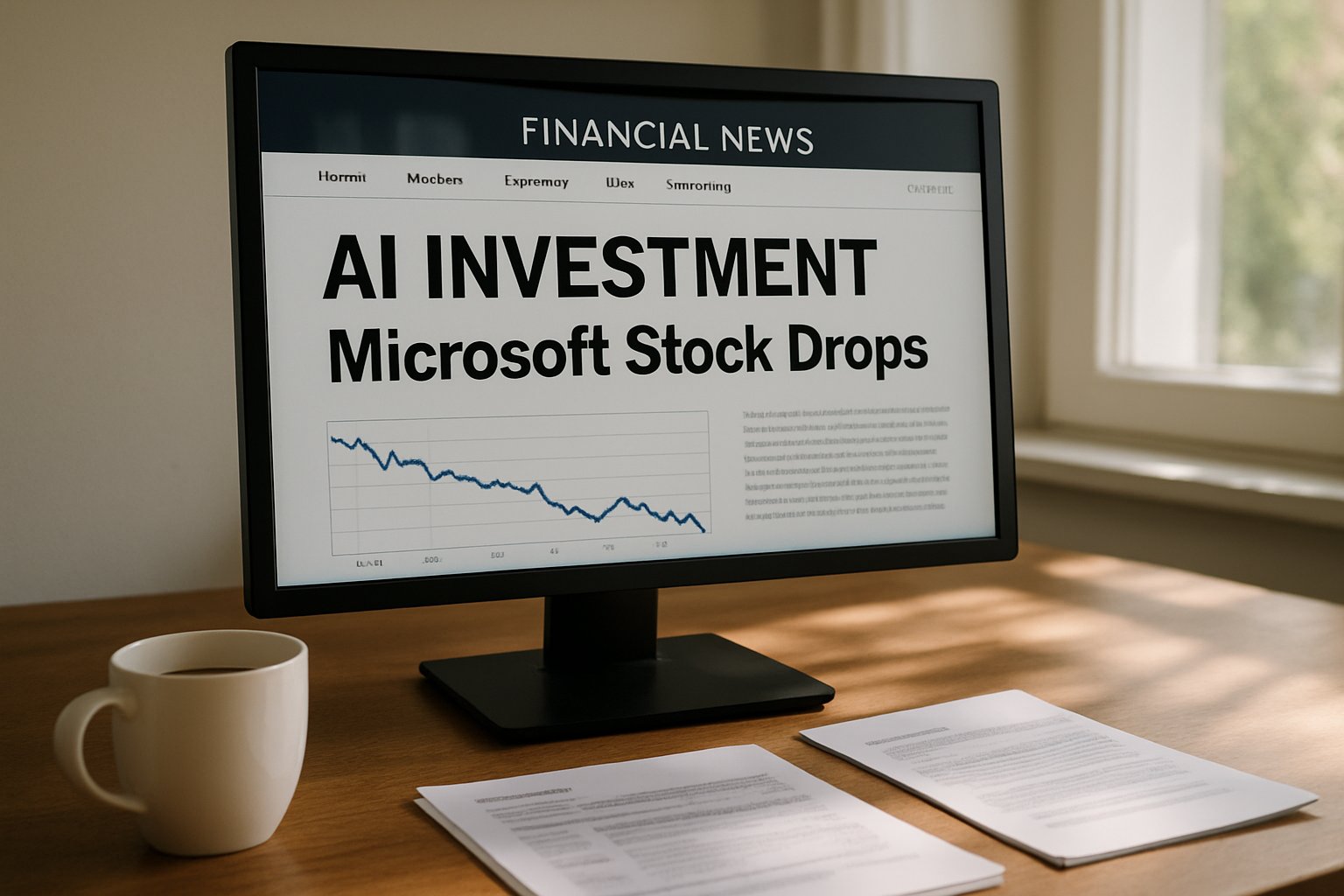
Before the bell on 29 January, futures signaled trouble for Microsoft shares. Moreover, the opening print confirmed the Crash, sending the stock down more than nine percent within minutes. Subsequently, algorithmic sellers accelerated losses, and the decline bottomed at roughly 11.9 percent intraday. Data from Nasdaq showed trading volume more than twice the 30-day average. Nevertheless, the broader indices also slid as investors reassessed aggressive AI Investment stories across mega-cap peers. The speed of the Crash underscored fragile sentiment. Therefore, understanding the fundamental triggers becomes essential.
Record AI Spending Pressure
At the center of the storm sat unprecedented CAPEX of $37.5 billion for the quarter. Furthermore, management clarified that most spending targeted short-lived GPUs supporting generative AI workloads. Such purchases inflate depreciation schedules and immediately dilute free cash flow. Moreover, investors worried that accelerated AI Investment could crowd out dividend hikes. In contrast, investors expected smoother spending curves when earlier AI Investment guidance emerged last year. CAPEX rose about 66 percent year over year, dwarfing the 17 percent revenue increase. Consequently, margins compressed despite headline Earnings beating consensus. Analysts warned that sustained high CAPEX could persist until supply constraints ease. These numbers illustrate how capital intensity can shock even seasoned portfolios. Next, we examine customer concentration risks amplifying volatility.
Concentration Risk Concerns Investors
Another surprise arose during the call when CFO Amy Hood revealed a 45 percent RPO exposure to OpenAI. Moreover, that single customer share exceeds many institutional risk thresholds. Analysts noted the disclosure magnifies dependency and could exaggerate future revenue swings. Meanwhile, OpenAI itself competes vigorously, adding an unusual strategic twist. Microsoft emphasised contractual protections, yet the market demanded clearer diversification plans. Consequently, the Crash deepened as algorithms flagged concentration keywords in transcript feeds. Such sensitivity shows how non-financial details now sway AI Investment sentiment. Customer mix clearly matters as much as numerical guidance. Therefore, expert opinions deserve close attention.
Expert Views Remain Divergent
University of Michigan professor Erik Gordon called the plunge an early warning of a potential AI bubble. Furthermore, several sell-side analysts described the underlying Earnings as fundamentally strong. Nevertheless, they trimmed price targets, citing CAPEX headwinds and concentration worries. Meanwhile, heightened AI Investment narratives across media fed volatility. Satya Nadella countered that long-term AI Investment returns demand upfront infrastructure. Additionally, CFO Hood stressed record Microsoft Cloud revenue and 39 percent Azure growth. GeekWire highlighted a $357 billion market-cap decline, the largest daily loss in corporate history. Opinions diverge because time horizons differ. Next, we explore competitive dynamics shaping those horizons.
Competitive Landscape Shifts Quickly
Alphabet, Amazon, and Anthropic all accelerated their own GPU deployments. However, each firm telegraphed clearer monetization timelines than Microsoft during recent briefings. In contrast, Meta’s disciplined disclosure helped its shares rally while Microsoft endured the Crash. Consequently, investors rewarded companies that balance AI Investment with near-term profit clarity. Meanwhile, GPU suppliers such as NVIDIA benefited from surging aggregate demand. Ultimately, sustainable digital spending will differentiate winners from speculative hopefuls. Peer behavior shows messaging and timing influence valuations. Therefore, corporate communicators should adopt transparent roadmaps.
Practical Lessons For Leaders
Technology executives navigating similar spending cycles can draw three immediate lessons. Firstly, align capital-expenditure trajectories with explicit monetization milestones to reassure boards. Secondly, diversify customer concentration to mitigate single-counterparty shocks. Finally, communicate AI Investment payback periods using plain metrics like free cash flow yield.
- Map hardware purchases to revenue recognition windows.
- Publish quarterly capacity utilization dashboards.
- Embed scenario planning in board reports.
Professionals can deepen strategic fluency through the AI Executive Essentials™ certification. These practices strengthen stakeholder confidence during volatile markets. Subsequently, we summarize the broader narrative and next steps.
Conclusion And Forward Outlook
Microsoft’s dramatic Crash reminded markets that capital does not guarantee immediate payoff. High-velocity capital outlays, concentrated RPO, and fierce competition amplified concerns. However, record Earnings and robust cloud demand show enduring franchise strength. Therefore, AI Investment remains essential, yet messaging and diversification will dictate valuation paths. Leaders should balance innovation ambition with transparent milestones and disciplined governance. Meanwhile, investors will track utilization metrics and margin recovery for confirmation. Take action today by exploring the certified program mentioned above and reinforcing your strategic edge.


