

AI CERTS
2 hours ago
Microsoft AI Spend: Decoding the $150B CAPEX Momentum
Throughout, we measure how Microsoft AI Spend aligns with revenue visibility, regional policy goals, and supply-chain limits. Business readers will gain context for boardroom discussions as AI Developer™ certification decisions loom.
Record Quarter Raises Concerns
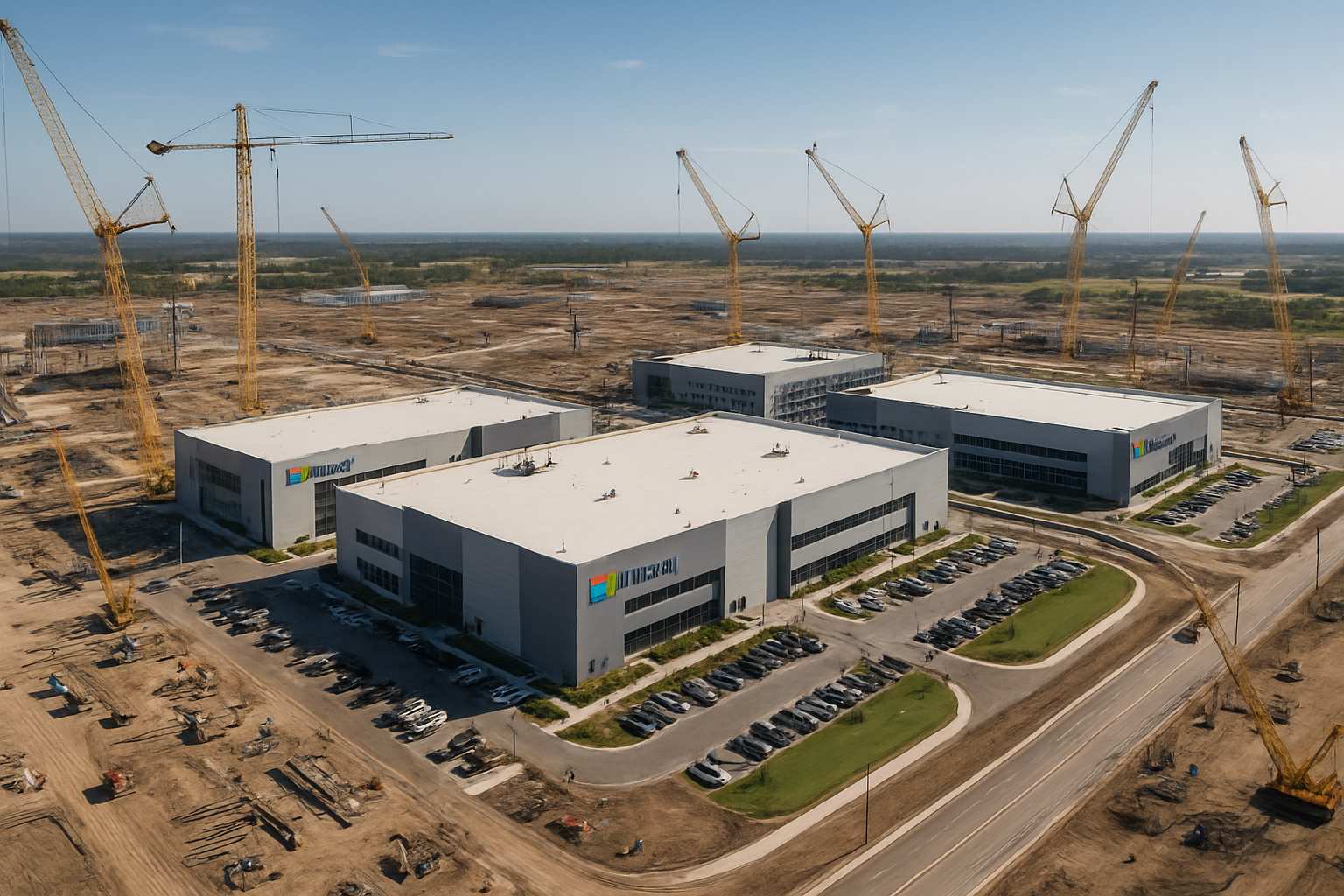
Microsoft posted $37.5 billion in CAPEX during fiscal Q2 2026. Subsequently, two-thirds funded short-lived GPUs and CPUs. Bloomberg, Fortune, and sell-side analysts quickly annualized the figure, projecting Microsoft AI Spend at about $150 billion. However, management never issued such guidance. Investors, therefore, feared margin pressure because cloud revenue rose only 28 percent. In contrast, first-half CAPEX jumped 58 percent year on year.
Key numbers underline the scale:
- $51.5 billion quarterly cloud revenue
- $625 billion remaining performance obligation
- $6.7 billion in finance leases for datacenter land and buildings
These metrics reveal demand exceeding supply. Nevertheless, the quarterly spike remains a snapshot, not destiny. These dynamics set the stage for deeper analysis. Consequently, we move next to the math behind the headline.
Demystifying Run Rate Math
Run-rate calculations, while convenient, risk exaggeration. Media outlets, including Bloomberg, multiplied one quarter by four to derive the famed $150 billion. Additionally, seasonality and delivery schedules distort simple extrapolations. Microsoft cautioned that Q3 2026 CAPEX should fall sequentially as supply stabilizes. Therefore, investors should compare rolling four-quarter averages rather than single-quarter peaks.
Furthermore, about two-thirds of quarterly spend bought depreciable GPUs. These assets amortize over shorter periods, aligning with multi-year customer contracts. Consequently, the mismatch between depreciation curves and revenue recognition narrows. Understanding these accounting rhythms clarifies Microsoft AI Spend risk. This clarity informs budget committees evaluating their own infrastructure roadmaps. So, let us consider strategic upside.
Strategic Benefits For Microsoft
Heavy investment secures scarce compute, locking in capacity for Azure AI services and Copilot products. Moreover, backlog data show 45 percent of RPO stems from OpenAI commitments. That pipeline converts into revenue as soon as hardware activates. CAPEX intensity also grows total addressable market by enabling industry-specific generative models.
Microsoft highlights several strategic payoffs:
- Supply stability amid GPU shortages
- Bargaining leverage with semiconductor partners
- Sovereign-ready clouds satisfying regional regulators
- First-mover advantage in enterprise AI platforms
Professionals can deepen technical expertise through the AI Developer™ certification, thereby capitalizing on new workloads. These benefits paint a bullish picture. Nevertheless, global infrastructure plans add further context.
Global Infrastructure Commitments Expand
During 2025-2026 Microsoft pledged multibillion-dollar packages across the UK, UAE, Canada, and India. Each deal blends datacenter construction, renewable energy, training, and local hiring. Additionally, the company launched a “Community-First AI Infrastructure” policy to address water, power, and tax impacts. Bloomberg reported regional governments welcoming the jobs yet scrutinizing resource usage.
The geographic spread diversifies risk. Furthermore, sovereign partners gain tailored compliance layers, boosting adoption. Consequently, local investment offsets some political headwinds. These expansions, however, lock Microsoft AI Spend into long-term obligations. The next section weighs investor reactions.
Investor Questions And Risks
Morgan Stanley warned CAPEX growth might outrun Azure revenue acceleration. Moreover, concentrated GPU procurement from NVIDIA exposes supply vulnerability. In contrast, Microsoft’s in-house Maia accelerators may ease dependence by late 2026. Power constraints also loom; the International Energy Agency projects US datacenter demand could triple by 2035. Therefore, grid upgrades must scale alongside hardware.
Regulatory scrutiny intensifies as antitrust bodies examine vertical integration. Bloomberg noted export-control questions around UAE deals. Additionally, short-lived asset depreciation raises earnings-quality debates. Despite these challenges, Microsoft AI Spend remains anchored by a vast backlog. These tensions shape coming quarters. Now, we explore broader market reverberations.
Supply Chain Ripple Effects
Hyperscaler CAPEX, led by Microsoft, pushes combined 2026 outlays beyond $600 billion, according to TrendForce. Consequently, GPU vendors, memory producers, and liquid-cooling specialists see unprecedented orders. Furthermore, construction firms secure long-term contracts for hyperscale campuses. Bloomberg Intelligence expects semiconductor packaging capacity to stay tight until 2027. Therefore, procurement teams face elevated costs and extended lead times. Microsoft AI Spend therefore functions as both catalyst and constraint for suppliers. These feedback loops will influence next-gen architecture roadmaps. The upcoming quarter offers early signals.
What Happens Next Quarter
Management guided to lower sequential CAPEX in Q3 2026 as deployments normalize. Nevertheless, analysts will watch Azure growth for re-acceleration. Additionally, any NVIDIA GB300 allocation announcements could reignite run-rate headlines. Bloomberg has flagged possible third-party capacity deals with specialized GPU clouds. Consequently, investors should track backlog conversion and regulatory filings. These indicators will refine forecasts for Microsoft AI Spend moving forward.
Conclusion And Takeaways
Microsoft’s outsized second-quarter outlay jolted markets, yet context tempers alarm. Moreover, backlog commitments, regional diversification, and strategic capacity suggest rational long-term planning. Risks persist around depreciation timing, supply concentration, and energy constraints. Nevertheless, Microsoft AI Spend appears aligned with projected demand and evolving cloud economics.
Consequently, tech leaders must monitor upcoming disclosures, vendor partnerships, and policy developments. Interested professionals should, therefore, fortify skills through the AI Developer™ certification and prepare for the next compute cycle.


