

AI CERTS
1 hour ago
Micron’s Rising Capex Deepens Memory Market Volatility
Meanwhile, analysts applauded the unwavering AI demand that has left the company’s high-bandwidth memory fully allocated through 2026. Therefore, industry professionals must balance enthusiasm with caution. This article unpacks the steeper Capex spending path, the forces behind it, and the risks that accompany aggressive expansion. Readers will gain actionable context for board discussions, risk modelling, and procurement scheduling.
Capex Curve Steepens Fast
The Capex curve for Micron steepened over three public events. First, management reported fiscal-2025 investment of $13.8 billion on 23 September 2025. In contrast, leaders warned at RBC’s November forum that the implied $18 billion run rate faced upside pressure. Subsequently, the December earnings deck confirmed a $20 billion target for fiscal-2026.
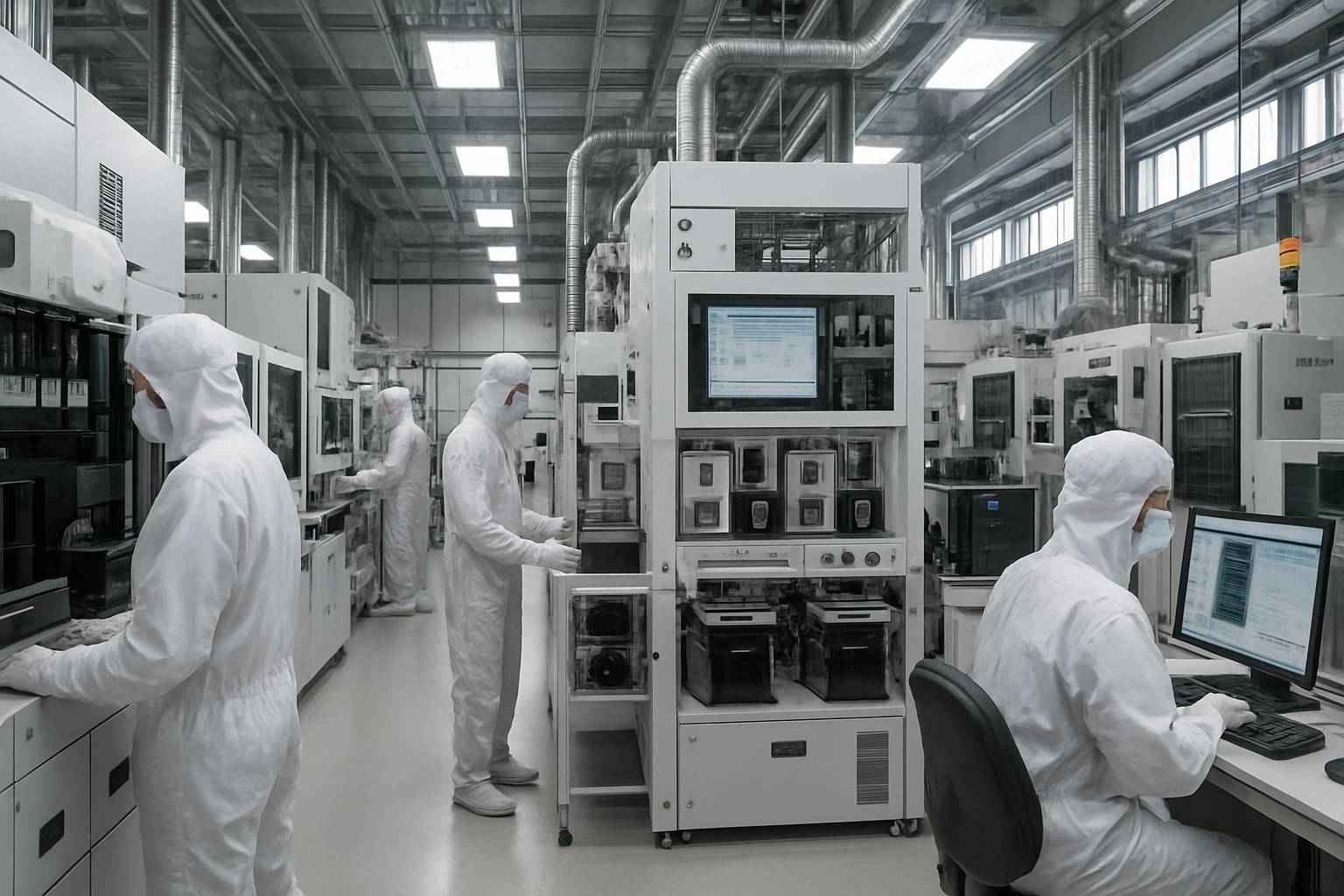
Management said accelerated HBM and 1-gamma DRAM ramps demanded earlier tool deliveries. Moreover, equipment orders are being pulled forward to shorten the revenue gap. That approach raises near-term outlays yet protects multi-year customer commitments.
These timeline shifts underscore aggressive Capex spending acceleration. Nevertheless, they also establish a higher execution baseline that frames the next discussion. Thus, Memory Market Volatility gains another accelerant.
AI Demand Fuels Spend
Relentless AI demand underpins the spending surge. Specifically, hyperscalers and GPU vendors locked in HBM supply through calendar 2026. Consequently, the company described its premium memory pipeline as "sold out." Higher density per server magnifies bit growth, thereby stretching existing capacity.
During the December call, executives noted that 79% of first-quarter revenue already stemmed from DRAM. Moreover, management emphasised that HBM carries higher average selling prices and margin potential. Therefore, aligning wafer starts with contracted volumes became non-negotiable.
- Rising model sizes increase memory per accelerator.
- Inference workloads move from CPUs to GPUs, boosting bandwidth needs.
- Emerging edge AI systems adopt HBM for thermal efficiency.
- Growing Memory Market Volatility keeps capacity decisions under constant review.
Such AI demand strengthens revenue visibility yet locks the firm into costly capacity additions. Consequently, Memory Market Volatility keeps investor sentiment divided, as the next section details.
Investor Reaction Remains Split
Wall Street greeted the capex revelation with conflicting moves. Shares fell after November’s remarks yet regained ground post-earnings. Nevertheless, intraday swings exceeded 5% on multiple occasions, underscoring Memory Market Volatility.
UBS and Wolfe Research boosted price targets, citing durable AI demand. In contrast, several independent funds trimmed exposure, citing elevated Capex spending and free-cash-flow risk. Mark Murphy admitted that the prior $18 billion assumption had become unrealistic.
- Bulls expect sustained pricing and high margins once capacity ramps.
- Bears foresee dilution of returns if supply outpaces demand.
Options data confirms hedging activity. Open interest in short-dated puts surged after the November conference. Conversely, call buyers re-entered positions once December guidance crystallised revenue potential for the stock.
These opposing viewpoints amplify daily trading noise within the stock. However, the financial mechanics behind cash flow provide clearer insight, as the following section explains.
Cash Flow Pressures Mount
Fiscal-2025 operating cash flow reached $17.5 billion, yet free cash flow stood at only $3.7 billion. Therefore, jumping to $20 billion in fiscal-2026 Capex spending threatens negative free cash flow without careful timing.
Management holds $11.9 billion in cash and investments. Additionally, tax incentives linked to U.S. fab construction may ease funding gaps. Nevertheless, higher leverage or equity issuance cannot be ruled out.
- Vendor financing for lithography systems reduces upfront cash needs.
- Convertible debt could exploit high stock valuations to limit interest expense.
- Operating expense discipline in legacy fabs frees internal funding.
Credit analysts model several leverage scenarios. For example, issuing $5 billion in bonds would lift net debt but preserve liquidity buffers. Additionally, partial project financing from regional development agencies could cut cash burn. Nevertheless, each instrument introduces covenants that may constrain future Capex spending.
An illustrative schedule shows cumulative outflows peaking in late-2026, while meaningful new bit supply arrives in 2027. Consequently, treasury teams must model scenarios where cash turns briefly negative.
Tight liquidity windows elevate execution stakes amid ongoing Memory Market Volatility. Accordingly, the next section reviews engineering and geopolitical variables that could stretch timelines.
Execution Risks Loom Large
Building advanced DRAM capacity is never trivial. Moreover, tool lead times stretch beyond twelve months for some lithography systems. Any customs, permitting, or workforce delay would quickly compound Memory Market Volatility.
Competitors Samsung and SK Hynix are also racing to add HBM lines. In contrast, oversupply from rivals could erode pricing before Micron’s new fab reaches volume. Hence, timing precision matters as much as absolute dollars.
Geopolitical shifts present extra exposure. Furthermore, export-control policies could impede equipment shipments, elongating project schedules. Therefore, contingency plans now consume more engineering hours than earlier phases.
Washington recently tightened advanced DRAM tool export licences to certain regions. Consequently, suppliers must reroute shipments through compliance gateways, adding weeks to delivery schedules. Meanwhile, geopolitical allies negotiate carve-outs, yet final rulings remain uncertain.
Execution headwinds amplify both cost and schedule uncertainty, intensifying Memory Market Volatility yet again. The following section explores strategic cushions that may offset these threats.
Strategic Upside Drives Support
Despite the turbulence, several structural forces bolster the thesis. Domestic fab projects align with CHIPS Act incentives, unlocking potential grants and tax credits. Moreover, closer proximity to U.S. hyperscalers reduces logistics risk and may temper Memory Market Volatility.
Boards also recognise scarcity value in leading-edge HBM expertise. Professionals can enhance their expertise with the AI Project Manager™ certification. Such programmes sharpen project-risk skills relevant to multi-billion-dollar ramps.
Sold-out HBM capacity locks revenue through 2026. Premium pricing expands margins despite rising costs. Early tool delivery also shortens payback periods.
Corporate learning budgets increasingly favour certifications with tangible project outcomes. Consequently, enrolment spikes whenever market turbulence dominates earnings calls. By bolstering interdisciplinary skills, managers can translate technical shifts into strategic advantage.
These buffers do not eliminate risk, yet they moderate worst-case scenarios. Next, a concise outlook summarises remaining unknowns and decision points.
Conclusion And Next Steps
Memory Market Volatility will likely persist while fabs rise from foundation to full yield. Micron has chosen an aggressive path, betting that AI demand will remain resilient. Consequently, outsized Capex spending compresses near-term cash yet may unlock durable earnings when supply ramps. Investors should watch tool deliveries, permitting milestones, and quarterly free-cash-flow swings. Moreover, tracking the stock against rival announcements offers real-time sentiment clues. Nevertheless, lingering geopolitical and execution hurdles mean scenario planning remains essential.
Industry leaders who refine project-risk competencies will navigate turbulence better. Therefore, consider enrolling in the AI Project Manager™ programme to strengthen decision frameworks amid ongoing Memory Market Volatility.


