

AI CERTS
4 hours ago
Michigan Data Center Infrastructure scales to 340 MW
Meanwhile, executives frame the project as a decisive pivot from earlier Bitcoin hosting toward high-density AI workloads. Milton “Todd” Ault III labeled the property “strategic” for courting hyperscale tenants needing GPU clusters. However, skeptics question financing, timelines, and environmental impacts. This article dissects the roadmap, utility deals, local reaction, and broader policy forces shaping the future of this Data Center Infrastructure play.
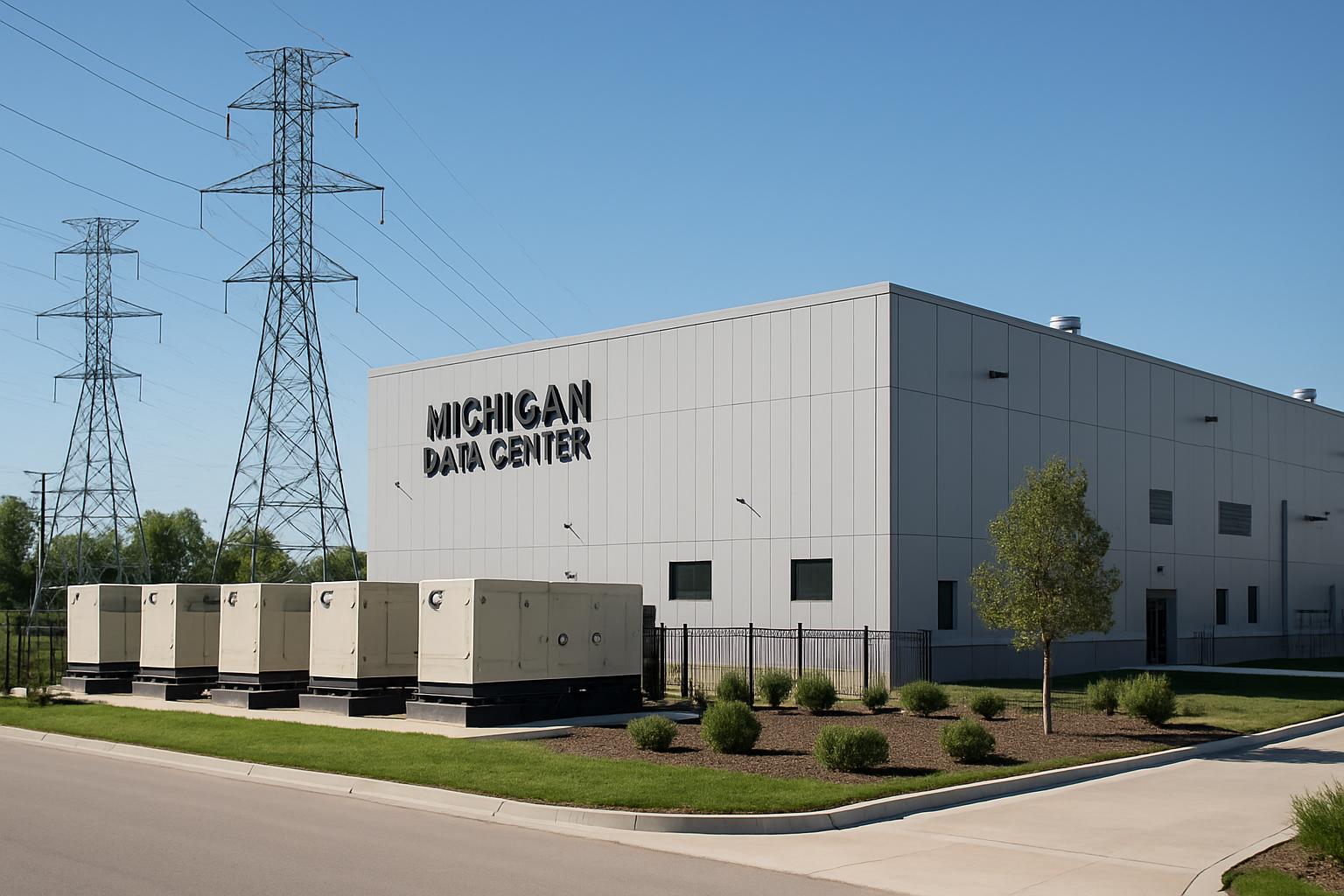
Data Center Expansion Roadmap
Hyperscale’s July 2025 release set a phased target. Additionally, the company detailed a mid-term 40 MW on-site increment by Q2 2027. Subsequently, a 270 MW grid upgrade would push total capacity to 340 MW by Q3 2029. The Michigan center currently delivers about 30 MW through repurposed industrial infrastructure.
CEO William Horne stressed scalability, stating, “We are building a scalable, AI-centric digital platform.” Therefore, the plan positions the campus to host cloud, AI, and HPC strategy tenants needing dense power and cooling. Investors welcomed the vision, yet forward-looking disclaimers acknowledged dependence on definitive agreements.
These staged goals underline Hyperscale’s shift away from legacy Bitcoin mining toward enterprise AI services. Nevertheless, execution risks remain significant. These factors set the stage for deeper analysis of supporting utility deals.
The phased roadmap signals bold intent. However, power sourcing details ultimately determine credibility.
Utility Agreements And Timelines
In February 2025, Alliance Cloud Services signed an agreement in principle with the unnamed local utility. Consequently, the deal would raise grid capacity to roughly 300 MW within 44 months of a Letter of Authorization. In contrast, a separate pact with SEMCO Energy enables 40 MW of behind-the-meter generation using natural gas, expected 18 months after final contracts.
The data-center industry often relies on such dual-track strategies. Moreover, on-site turbines can deliver faster energy while lengthy transmission upgrades proceed. This Data Center Infrastructure approach mitigates delay risk but introduces emissions scrutiny.
On-Site Gas Strategy Details
SEMCO’s engineering agreement launched pipeline design in July 2025. Furthermore, construction could finish 15 months after a formal build contract. William Horne stated, “Alternative power sources are critical in ACS’ plans.” Therefore, Hyperscale treats gas as a bridging resource supporting GPU clusters and HPC strategy commitments.
The table stakes are high. DOE figures show data centers used 176 TWh in 2023. Moreover, projections reach 325-580 TWh by 2028. Consequently, regulators will scrutinize every incremental watt.
Utility timelines create cascading risks. Nevertheless, successful coordination would unlock full site capacity.
Local Community Perspectives Debate
Dowagiac residents filed petitions seeking a moratorium on expansion. However, the City Council rejected the motion, noting that no formal application had arrived. Mayor Patrick Bakeman confirmed the city “awaits formal plans.” Meanwhile, activists like Gerik Maverick cite transparency, water, and emission worries. Charlotte Jameson of the Michigan Environmental Council urged “thoughtful development” during an Axios interview.
Economic incentives appeal to some locals. Moreover, Hyperscale touts construction jobs and property taxes. Yet, opponents fear large drawdowns on regional grids and aquifers. This tension mirrors national debates around Data Center Infrastructure siting.
Community voices reveal social license challenges. Consequently, Hyperscale must secure trust alongside permits.
Energy Demand National Context
Lawrence Berkeley Lab warns that data facilities could consume up to 12 percent of U.S. electricity by 2028. Consequently, states weigh reliability and decarbonization goals before approving major projects. In contrast, corporate buyers crave immediate availability for AI workloads and emerging HPC strategy needs.
The Michigan center illustrates this push-pull dynamic. Additionally, on-site gas offers speed but raises carbon intensity. Conversely, grid upgrades can integrate renewables but move slowly. Therefore, balanced planning becomes essential.
- Current power: 30 MW operational
- Gas-backed increment: 40 MW by Q2 2027
- Grid upgrade: 270 MW by Q3 2029
- Total footprint: 340 MW, 617,000 sq ft
These statistics underscore the scale. Nevertheless, financing still dictates feasibility.
Economic And Risk Factors
Hyperscale is a micro-cap issuer. Moreover, it has disclosed shelf registrations and private funding pursuits. Consequently, analysts question capital depth for a 300-MW grid project. Execution gaps could leave stranded assets, echoing earlier Bitcoin projects that faltered when power prices spiked.
Investors also seek tenant contracts. Meanwhile, the firm referenced limited racks for a West Coast cloud provider. However, no anchor leases for bulk capacity are public. This uncertainty keeps risk premiums elevated around the data-center plan.
Solid financing and customers remain pivotal. Therefore, transparency will shape market confidence.
Skills And Certification Path
Professionals eyeing roles in large builds need hybrid expertise. Furthermore, knowledge of power engineering, AI workloads, and sustainability reporting is valued. Candidates can boost credentials through the AI Cloud Architect™ certification. This program deepens understanding of scalable Data Center Infrastructure, renewable integration, and HPC strategy optimization.
Project owners increasingly demand verified skills. Consequently, certified talent enjoys improved hiring odds in the competitive data-center market.
Relevant certifications sharpen workforce readiness. Meanwhile, ongoing education supports responsible growth.
Key Takeaways List
- Hyperscale targets 340 MW by 2029, up from 30 MW today.
- Dual pathway blends 40 MW gas and 300 MW grid power.
- Community engagement remains contested in the Michigan center.
- National energy forecasts intensify regulatory oversight.
- Funding gaps and tenant deals still raise questions.
These points summarize essential issues. Nevertheless, ongoing filings will reveal whether ambitions translate into completed Data Center Infrastructure.


