

AI CERTS
3 hours ago
Meta’s Sprint Reshapes AI Engineering Strategy
However, details remain scarce, sharpening curiosity among technical executives worldwide.
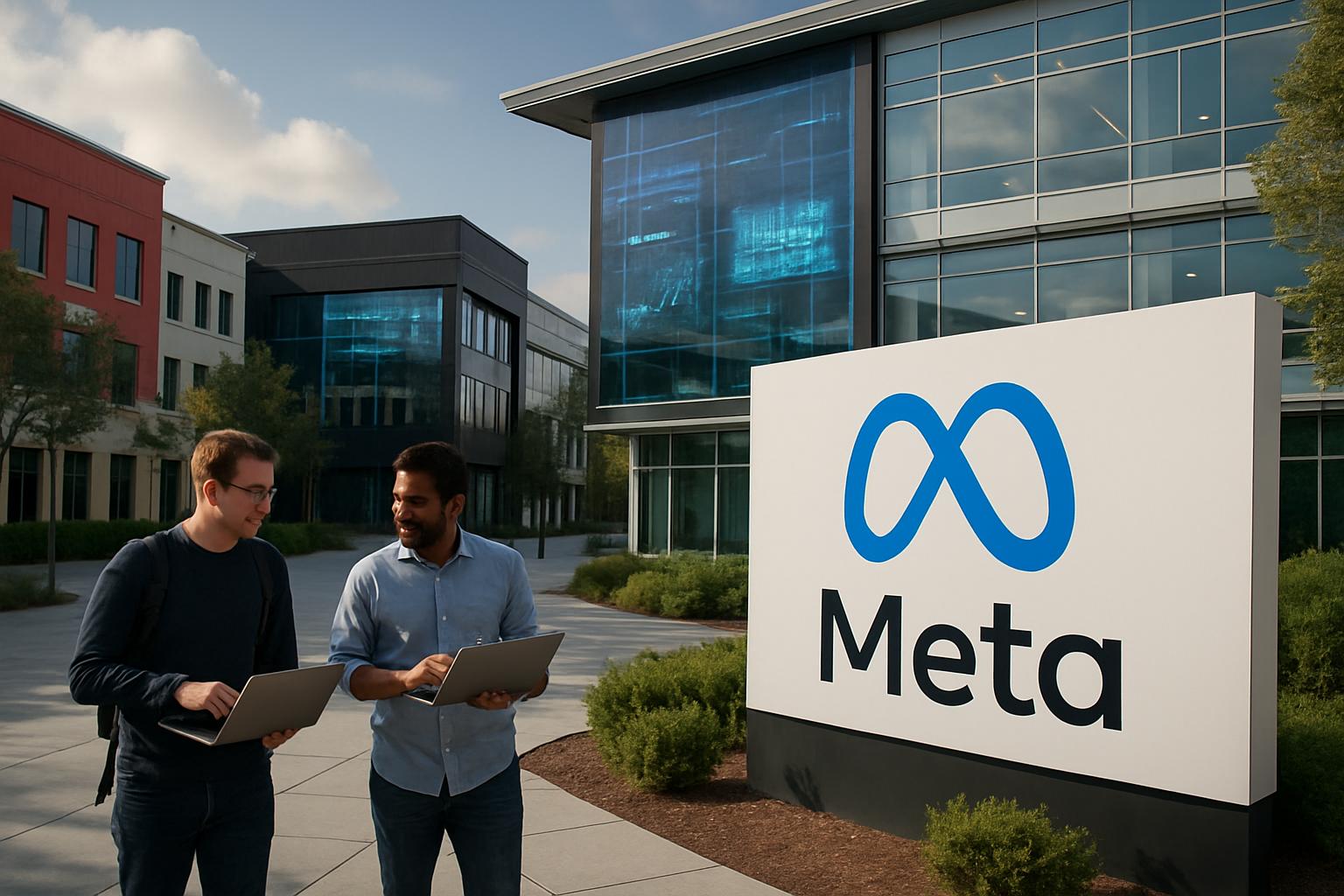
The company said the first high-profile models performed very well during private tests.
Consequently, investors cheered, while competitors recalibrated their release calendars.
Meanwhile, engineers wondered what the breakthrough means for compute demand and tooling choices.
In contrast, some researchers warned that secrecy could hamper safety oversight.
This article unpacks the announcement, financial context, competitive stakes, and technical unknowns.
Readers gain actionable insight for strategic AI Engineering roadmaps in 2026.
Meta's Rapid AI Acceleration
Meta's superintelligence unit reached internal delivery after only six months of focused work.
Such speed surprised observers in AI Engineering who expected a slower transition from research prototypes to production-ready architecture.
Furthermore, the parent company recently aligned roadmaps around two flagship projects, Avocado and Mango.
Additionally, coordination extends beyond research, linking product sprints directly to infrastructure budgeting cycles.
Consequently, product teams now test integration hooks for messaging, feeds, and future wearable interfaces.
Industry veterans remember longer gestation periods for earlier foundation models, highlighting the cultural shift.
These moves showcase disciplined execution and renewed urgency.
Therefore, investment dynamics merit closer inspection.
Investment Fuels Superintelligence Push
Capital expenditure rose from $72.2 billion in 2025 to projected $125 billion for 2026.
Moreover, Meta secured a $14.3 billion stake in Scale AI, gaining preferential access to labeled data pipelines.
Additionally, Scale's founder Alex Wang joined the superintelligence unit, bringing battlefield experience in data operations.
In contrast, rival labs rely on transactional labeling contracts without deep governance alignment.
Consequently, internal teams enjoy dense feedback loops between data curation, training, and deployment.
Analysts argue the spending spree narrows the resource gap against other frontier labs.
Furthermore, Capex intensity now equals nearly 60% of annual operating cash flow, an unprecedented ratio for the firm.
Therefore, finance chiefs will monitor return curves closely during upcoming earnings calls.
Financial muscle underpins technical ambition.
However, delivered Labs models remain the core measure.
Inside Delivered Labs Models
Reuters reported two internal projects, Avocado for text and Mango for image or video generation.
Meanwhile, official spokespeople refused to reveal parameter counts or training data composition.
Nevertheless, Bosworth called the private results very good, implying competitive capability against leading models.
Further leaks suggest Avocado targets a 400-billion-token corpus and mixture-of-experts routing.
Furthermore, Mango reportedly integrates diffusion layers with transformer backbones for improved temporal coherence in clips.
In contrast, technical specifications remain confidential until security audits finish.
Meanwhile, safety teams continue red-teaming to surface bias, hallucination, and cybersecurity weaknesses.
Subsequently, governance groups annotate critical capabilities for board risk committees.
Delivered artifacts include evaluation dashboards, inference endpoints, and alignment reports, according to secondary sources.
- Latency under 300 milliseconds during internal chat benchmarks
- Image prompts resolved at 1024×1024 pixels with crisp detail
- Code generation success rate exceeding 70% on HumanEval subset
Consequently, early adopters inside messaging products report smoother code suggestions and crisper media generation.
Therefore, launch timelines could advance if validation metrics stabilize across diverse geographic user cohorts.
Early metrics appear promising yet incomplete.
Subsequently, competitive context shapes external perception.
Competitive Landscape And Stakes
OpenAI, Google, and Anthropic plan multi-modal releases during 2026, intensifying comparison pressure.
Moreover, smaller firms like Mistral and DeepSeek push optimized lightweight systems for specific tasks.
Simultaneously, Meta's AI Engineering investments must deliver differentiated user stories to preserve attention economics.
Consequently, executives debate whether open-sourcing smaller variants can expand ecosystem goodwill without revealing crown-jewel weights.
In contrast, former chief scientist Yann LeCun advocates world models over scale-heavy language approaches.
Additionally, Google promotes Gemini Ultra while OpenAI finalizes GPT-5, keeping performance bars in flux.
Therefore, procurement teams demand clearer benchmarking to justify switching costs between competing stacks.
Competition forces strategic clarity and faster iteration.
Yet heightened speed introduces new risks.
Risks And Open Questions
Regulators scrutinize closed testing cycles, demanding independent audits before consumer deployment.
Additionally, benchmark controversies around previous Llama releases eroded developer trust.
Nevertheless, transparency plans remain vague, including whether full model cards will accompany launches.
Safety researchers request staged disclosure of system prompts and alignment methods.
Meanwhile, organizational churn created by leadership departures could slow progress or fragment knowledge.
Consequently, some investors fear sunk costs if regulatory mandates delay monetization windows.
In contrast, policy engagement initiatives, including sandbox collaborations, may accelerate approval pathways.
Governance gaps could stall adoption.
Therefore, professionals must evaluate engineering implications carefully.
Implications For AI Engineering
Technical leaders planning infrastructure must prepare for larger parameter counts and higher GPU utilization.
Moreover, distributed training patterns pioneered by the new unit will likely shape open source frameworks.
Consequently, AI Engineering teams should revisit memory management, mixed precision, and fault tolerance strategies.
In contrast, product managers need guardrail tooling to reduce compliance risk before public rollout.
Additionally, operations staff must forecast energy budgets, given escalating inference loads during peak usage.
Therefore, reference architectures now incorporate layer quantization and adaptive sampling to curb costs.
These technical changes demand proactive skill upgrades.
Therefore, skills frameworks deserve attention.
Strategic Skills And Certifications
Enterprise architects often struggle to recruit practitioners versed in frontier alignment methods.
Furthermore, professionals can validate competencies via the AI Engineer™ certification.
The program covers data pipelines, inference scaling, and responsible deployment, aligning with upcoming demands.
Consequently, AI Engineering leaders gain standardized vocabulary for board discussions and vendor evaluations.
Moreover, the credential signals commitment to ethical superintelligence stewardship, a priority for regulators.
- Understand superintelligence safety patterns
- Implement cross-modal evaluation suites
- Optimize serving costs under capex constraints
Targeted education accelerates organizational readiness.
Consequently, we return to the broader outlook.
Early delivery confirms that huge budgets and tight alignment can compress traditional research timelines.
Furthermore, Meta now holds critical ingredients—compute, data, and talent—required for sustained frontier advances.
Nevertheless, unresolved transparency questions, safety audits, and regulatory oversight could slow external launches.
Consequently, AI Engineering leaders must track documentation releases, governance frameworks, and performance benchmarks.
In contrast, competitors will exploit any hesitation by marketing verified evaluation suites.
Therefore, proactive skill development remains the safest hedge against market volatility.
Professionals should integrate lessons today and pursue advanced AI Engineering credentials before demand spikes.
Explore the certification link, update AI Engineering roadmaps, and position teams to harness forthcoming models responsibly.


