

AI CERTs
2 hours ago
Meta’s In-House Chip Strategy Speeds MTIA Rollout
Meta’s AI ambitions now hinge on silicon it designs itself. However, the company is not abandoning its partners. Instead, it is doubling down on an In-House Chip Strategy that promises faster iteration and lower costs. March 11, 2026 marked a milestone when Meta detailed four fresh MTIA generations. Consequently, analysts rushed to evaluate potential shifts in workload economics. Meta claims hundreds of thousands of MTIA 300 units already power feeds and ads. Moreover, future iterations will arrive roughly every six months. Such velocity raises questions about supply chains, performance parity, and Nvidia reliance within Meta’s fleet. This report explores how the roadmap, partners, and implications shape enterprise expectations. Readers will gain actionable insight into Meta chips and broader infrastructure trends.
Meta Silicon Gamble Unfolds
Initially, Meta bought mainstream GPUs for almost every AI task. However, exploding inference traffic forced leadership to question that dependency.
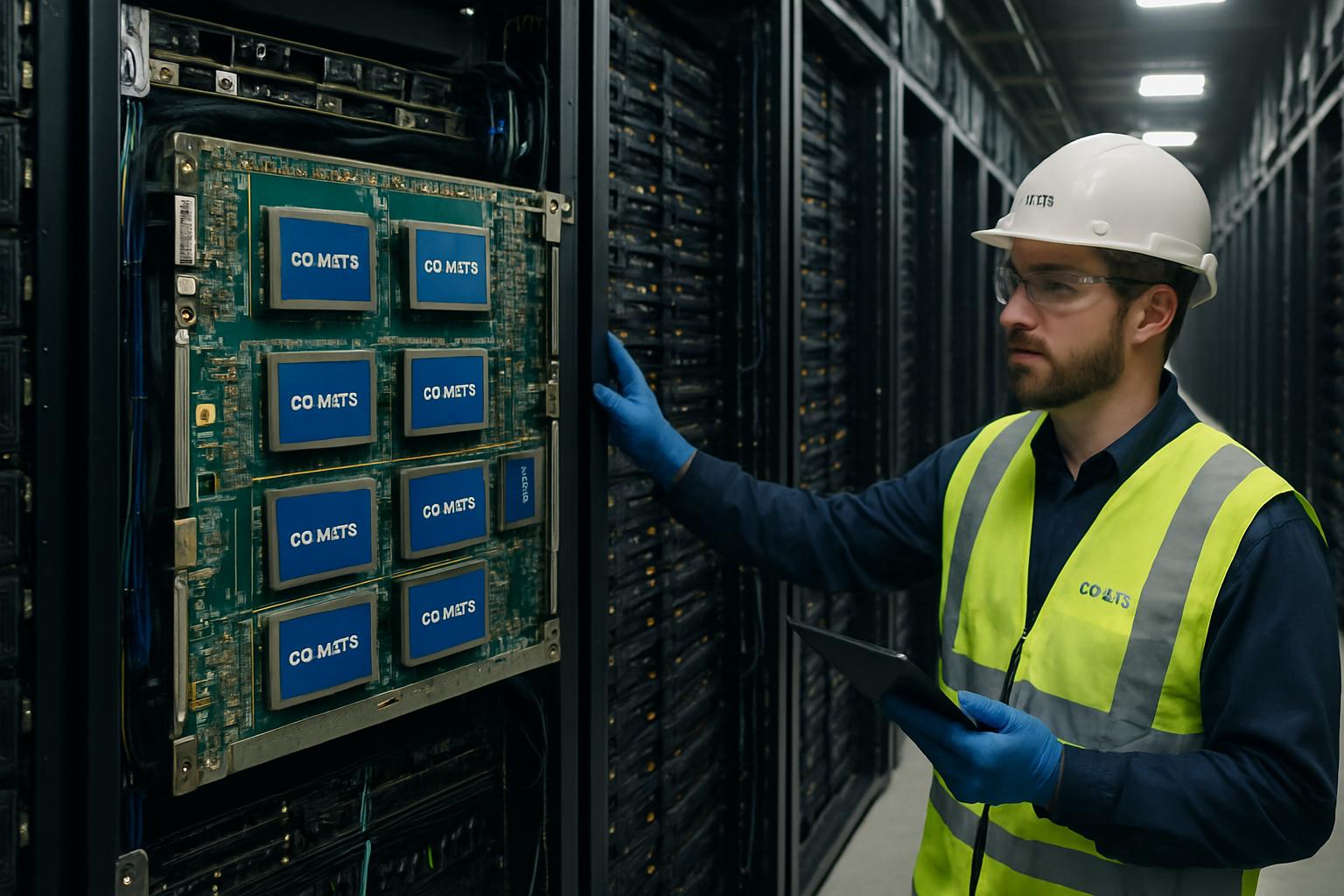
The In-House Chip Strategy emerged as a hedge against soaring component prices and supply shocks. Consequently, engineers started prototyping Meta chips tuned for recommendation bandwidth.
Yee Jiun Song’s team shipped the first MTIA silicon in 2025, yet performance lagged top GPUs. Nevertheless, power efficiency impressed internal finance groups.
Today, Meta claims the third generation beats prior records by doubling memory bandwidth per watt. Analysts view such gains as validation of a long term In-House Chip Strategy.
These developments demonstrate Meta’s resolve to own its stack. However, bigger milestones still lie on the horizon.
Roadmap Accelerates Every Six
March 11, 2026 unveiled four consecutive MTIA generations numbered 300 through 500. Furthermore, Meta promised a six month tape-out cadence supported by modular chiplets.
MTIA 300 already sits in production racks, handling ranking model training and inference together. Meanwhile, MTIA 400 undergoes final qualification for full data center deployment late 2026.
Subsequently, MTIA 450 will focus on generative AI decoding, doubling HBM bandwidth to 18.4 TB/s. MTIA 500 closes the roadmap with 10 PFLOPS of FP8 compute and 512 GB HBM.
In contrast, third-party GPUs rarely shift generations that quickly due to broader customer validation. Therefore, a rapid cycle strengthens the In-House Chip Strategy by aligning silicon with evolving models.
The roadmap illustrates relentless iteration and modular planning. Consequently, the schedule frames every strategic conversation that follows.
Specs Reveal Targeted Efficiency
Hardware tables expose why Meta chips emphasize memory over brute compute. This design philosophy reflects the In-House Chip Strategy’s inference-first bias. For example, MTIA 300 delivers 6.1 TB/s bandwidth from 216 GB HBM at 800 W. Moreover, MTIA 500 pushes 27.6 TB/s, dwarfing earlier designs.
- MTIA 400: 6 PFLOPS FP8, 9.2 TB/s bandwidth, 1,200 W TDP.
- MTIA 450: 7 PFLOPS FP8, 18.4 TB/s bandwidth, optimized for generative inference.
- MTIA 500: 10 PFLOPS FP8, up to 512 GB HBM capacity.
Consequently, Meta argues these ratios slash inference cost per token. Nevertheless, analysts caution comparisons against Nvidia’s latest Blackwell GPUs remain premature. Such tuning could reduce Nvidia reliance for feed ranking.
Yet, Meta still orders massive AMD Instinct volumes to complement house silicon. Therefore, flexibility remains central to the In-House Chip Strategy across diverse workloads.
Specification tables highlight efficiency gains and potential GPU displacement. Nevertheless, partnerships broaden the story beyond raw numbers.
Balancing Portfolio And Partners
Meta signed a February 24, 2026 agreement for up to 6 GW of AMD Instinct GPUs. Furthermore, Broadcom and TSMC assist fabrication and packaging of Meta chips across nodes.
Analysts view the portfolio as insurance against supply disruptions and excessive Nvidia reliance. In contrast, some hyperscalers pursue single vendor deals, accepting tighter coupling.
Meta’s executives stress that workloads will dynamically flow between MTIA, AMD Instinct, and external clouds. Therefore, procurement remains flexible, mirroring the adaptive In-House Chip Strategy.
Lisa Su called the partnership a move to "push AI boundaries at unprecedented scale". Meanwhile, Meta engineers welcome fresh competition among silicon suppliers.
This portfolio outlook diffuses risk while sustaining supply leverage. Subsequently, attention shifts to competitive dynamics and open risks.
Competitive Context And Risks
Independent reviewers note MTIA 300 trails Nvidia’s H100 in raw FLOPS. However, real-world inference favors memory bandwidth, blunting that disadvantage.
SemiAnalysis warns that cherry-picked vendor benchmarks mask shortcomings. Nevertheless, internal workloads can hide inefficiencies from public view.
Regulatory scrutiny also looms because custom hardware may deepen platform power over developers. Consequently, watchdogs could demand transparent performance data and open APIs.
Meta chips face manufacturing risks if TSMC experiences node delays. Therefore, contingency stockpiles and AMD inventory cushion unforeseen slips.
Outages at any data center could magnify these vulnerabilities. Analysts agree that sustained success depends on executing the In-House Chip Strategy without service disruption.
Competitors watch Meta’s experiments with equal curiosity and skepticism. Meanwhile, risk management will dictate lasting advantage.
Implications For Data Centers
Retrofitting racks for MTIA was simplified by adopting OCP form factors. Moreover, each chassis supports 72 devices with up to 1.2 Tb/s internal fabric.
Because dimensions stay constant, crews can swap MTIA 500 for 400 without new cooling. Consequently, deployment speed rises while capital expense falls.
Such traits matter when every data center hosts thousands of accelerators serving billions of queries. Additionally, efficient inference lessens grid strain and operational carbon.
External observers expect Meta chips to appear at greenfield campuses under construction in Ohio and Spain. Therefore, geographic diversity complements the broader In-House Chip Strategy.
In contrast, persistent Nvidia reliance would have required chartering new power feeds.
Facility retrofits illustrate practical payoffs from modular design. Nevertheless, scaling remains expensive and logistically complex.
Strategic Takeaways Moving Forward
Executives deploying large models should track three immediate lessons.
- Prioritize inference economics through custom silicon and software co-design.
- Maintain supplier diversity to hedge Nvidia reliance and supply shocks.
- Design facilities for hot-swap upgrades that minimize data center downtime.
Moreover, workforce upskilling remains essential for realizing these gains. Professionals can enhance their expertise with the AI Learning Development™ certification.
Consequently, organizations embracing an In-House Chip Strategy need engineers fluent in silicon validation, firmware, and model optimization.
Ultimately, Meta chips illustrate how vertical integration can unlock performance, cost, and differentiation. Nevertheless, transparent benchmarks and open ecosystems will decide long-term industry trust.
Therefore, monitor upcoming MTIA deployments and explore skills pathways to remain competitive. Start today by reviewing the linked certification and sharing this analysis with your infrastructure team.


