

AI CERTs
3 hours ago
Meta’s Davos Call: Ethics And Industry Collaboration
Davos buzzed when Dina Powell McCormick debuted as Meta’s incoming president and vice chair. During her first Axios interview, she framed artificial intelligence as humanity’s next defining infrastructure.
However, she insisted the technology must serve people before profit. Consequently, observers noted her persistent focus on Ethics despite Meta’s competitive zeal.
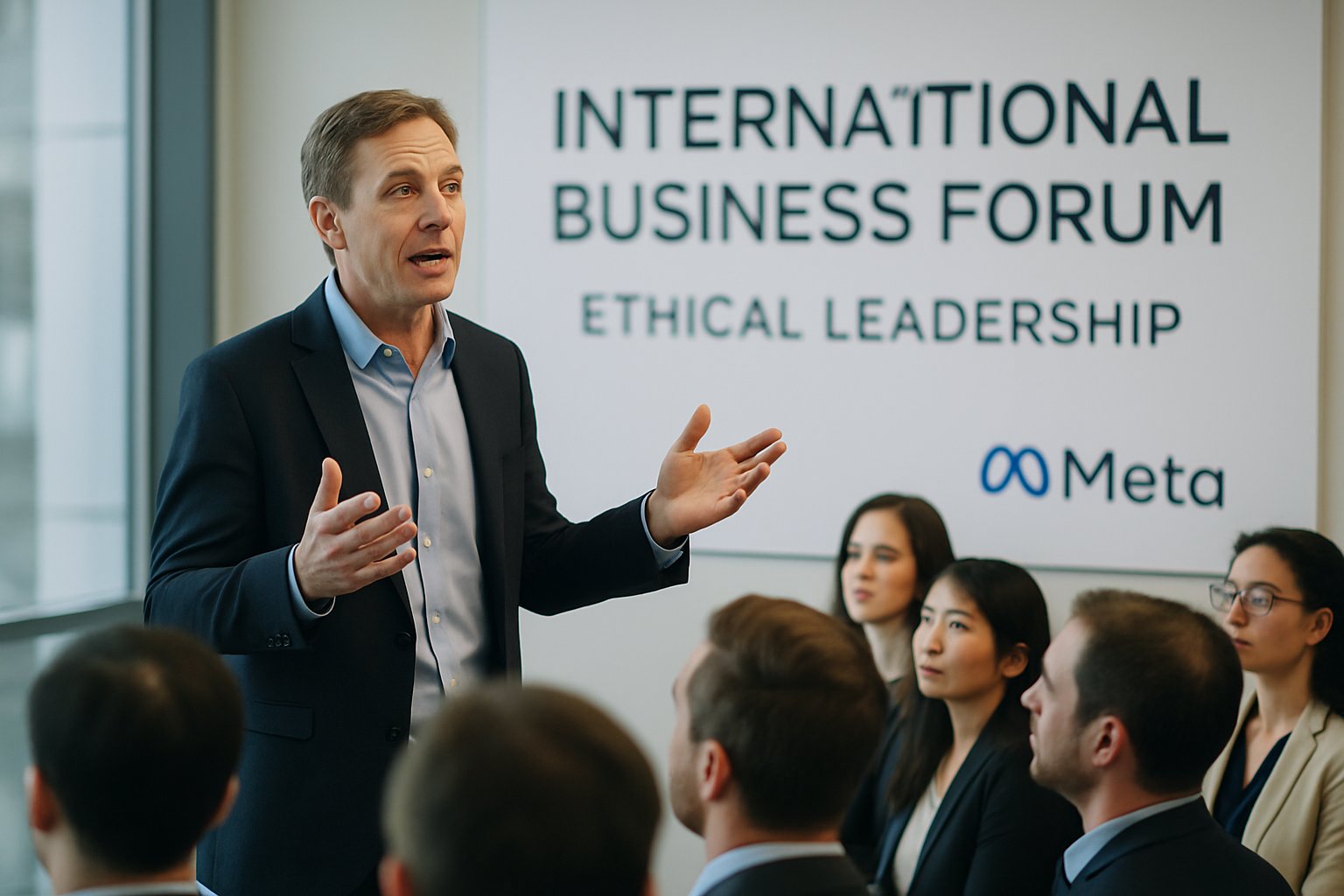
Powell labeled frontier AI a "group sport" requiring shared compute, energy, and governance. Furthermore, she urged rivals, regulators, and investors to align around common principles and responsible tooling.
Such Collaboration, she argued, would accelerate benefits while containing systemic hazards. Meanwhile, global policymakers already draft safety rules, amplifying her message’s urgency.
This article unpacks the speech, examines market implications, and assesses hurdles facing any broad alliance. Ultimately, readers gain a roadmap for strategic planning in an increasingly cooperative yet competitive AI landscape.
Powell's Davos Appeal Unpacked
Powell spoke only eight days after joining Meta, magnifying interest in her policy signals. Interestingly, she borrowed sports metaphors to underline interdependent challenges like energy provisioning.
Moreover, she cited meetings with BlackRock’s Larry Fink and labor leaders to illustrate interdisciplinary stakes. She declared, “You cannot accomplish it without all the hyperscalers coming together, without governments.”
Therefore, she framed AI scale as impossible without plural expertise and pooled resources. Observers interpreted the line as an invitation to rivals such as Google DeepMind and OpenAI.
In contrast, Meta’s recent restructuring into Meta Superintelligence Labs signals fierce acceleration, yet Ethics conversations continue internally. Nevertheless, Powell balanced ambition with repeated references to Ethics, underscoring her disciplined messaging.
The deliberate juxtaposition signaled a bid to anchor competitive positioning in perceived moral leadership. Subsequently, analysts predicted intensified diplomatic outreach from Meta across 2026 to translate sentiment into concrete pacts.
In short, Meta paired visionary ambition with explicit Ethics framing to cultivate trust. The infrastructure burden highlights why such rhetoric must translate into material cooperation.
Rising Infrastructure Demands Globally
Training frontier models consumes unprecedented compute, networking, and power. Gartner projects double-digit growth for data-center systems through 2026.
Meanwhile, Meta alone may spend up to $70 billion annually on AI infrastructure. Moreover, hyperscalers must secure vast supplies of renewable energy and cooling equipment.
Consequently, supply-chain coordination becomes as strategic as algorithmic innovation and foundational Ethics. Powell highlighted workforce needs, noting thousands of electricians and construction specialists will be required.
In contrast, many regions still face grid constraints and talent shortages. Therefore, cross-industry task forces could streamline permitting, training, and procurement.
Below are key capacity signals investors monitor:
- Meta forecasts $60–70B capital expenditure focused on AI compute during 2026.
- Industry-wide capex could exceed $300 billion across 2025-2026, according to analysts.
- McKinsey estimates generative AI could add up to $4.4 trillion yearly in value.
These indicators reveal scale pressures overshadowing individual company capabilities. However, joint infrastructure planning may prevent redundant builds and accelerate regional rollout.
Safety And Regulatory Momentum
Governments now draft binding rules for model testing, transparency, and deployment. For example, the EU AI Act introduces tiered obligations for foundational systems.
Meanwhile, a United States executive order mandates safety reporting for high-risk models. Moreover, multilateral bodies at Davos hosted alignment workshops involving companies and regulators.
Powell’s remarks echoed this momentum, stressing Ethics must guide every scaling decision. In contrast, critics warn voluntary pledges can mask competitive positioning without external audits.
Nevertheless, Collaboration with independent research institutes can provide credible red-teaming. Consequently, firms may pool datasets for evaluations while safeguarding proprietary training corpora.
Ethics oversight panels, if empowered, could impose ‘stop buttons’ for unsafe releases. These policy shifts create incentives for shared tooling, yet enforcement details remain fluid.
Subsequently, industry leaders will lobby for harmonized standards that minimize cross-border fragmentation. Collectively, these regulations push organizations toward measurable responsibility and transparent auditing.
Nevertheless, competitive pressures may complicate consensus, as the next section explores.
Competitive Tensions Persist Despite
Tech giants still vie for talent, data, and mindshare. Amazon, Google, Microsoft, and Anthropic pursue distinct model architectures and cloud lock-ins.
Moreover, antitrust regulators monitor information exchanges for potential collusion. Powell acknowledged these realities, stating competition would remain vigorous.
However, she insisted shared guardrails on Ethics need not erode product differentiation. In contrast, some executives fear that deep Collaboration could reveal proprietary research paths.
Consequently, negotiators must design forums that separate joint safety work from sensitive IP discussions. Public transparency reports may mitigate suspicion while protecting trade secrets through aggregated metrics.
Meanwhile, national security rules could restrict data sharing across borders, adding further complexity. These tensions underscore why any alliance will require flexible governance charters and clear dispute resolution mechanisms.
Overall, cooperation must complement rivalry, not extinguish it. The economic stakes explain why balanced incentives matter next.
Economic Upside And Risks
McKinsey estimates generative AI could unlock up to $4.4 trillion in annual productivity. Manufacturing, customer operations, and marketing stand to gain the largest absolute benefits.
Furthermore, early adopters may capture disproportionate margins due to automation advantages. However, poorly governed rollouts could amplify misinformation, bias, and job displacement.
Ethics frameworks, therefore, double as risk mitigation tools protecting both consumers and shareholders. Insurance providers already assess model liability, pricing premiums based on documented safeguards.
Consequently, investors reward firms that integrate responsible design and robust audit trails. Collaboration around shared safety benchmarks can reduce duplicated compliance costs across the ecosystem.
In contrast, fragmented rules would raise transaction costs and slow adoption. These financial dynamics motivate leaders to pursue collective standards without stifling innovative dynamism.
Bottom line, money flows toward trustworthy platforms. Next, we examine practical steps to institutionalize that trust.
Building Shared Accountability Frameworks
Several models for cooperative governance already exist in adjacent sectors. For instance, the aviation industry operates joint incident reporting under strict confidentiality.
Similarly, cybersecurity companies exchange threat intelligence through vetted platforms. Therefore, AI organizations can adapt these precedents to create neutral safety observatories.
Powell suggested convening rotating panels of engineers, ethicists, and policymakers to evaluate frontier releases. Ethics boards would publish risk ratings, while firms commit to remediate critical issues before launch.
Moreover, third-party certifications could strengthen accountability by offering independent validation. Professionals can enhance their expertise with the AI Prompt Engineer™ certification.
Consequently, workforce credentials ensure aligned incentives across technical and managerial roles. These concrete mechanisms pave the way for measurable progress toward systemic safety.
Yet, frameworks require sustained funding and executive sponsorship. The concluding section outlines immediate action items.
Conclusion And Next Steps
Dina Powell McCormick’s Davos debut reframed frontier AI as a shared responsibility. Her appeal linked safety, infrastructure, and profitability in one cohesive narrative.
Moreover, rising capital demands and mounting regulation create structural incentives for sincere partnership. Nevertheless, competitive friction and geopolitical constraints will test any voluntary compact.
Therefore, leaders should prioritize transparent metrics, neutral audit hubs, and certified talent pipelines. Readers aiming to influence upcoming standards should evaluate internal policies and join cross-industry working groups.
Finally, seize momentum by pursuing trusted credentials and tracking Meta’s forthcoming alliance announcements.


