

AI CERTS
2 hours ago
Meta Unveils Ray-Ban AI Glasses For Prescription Wearers
However, the launch is not just another gadget drop. Meta priced the optics at $499, undercutting earlier display variants by $300. Additionally, certified lenses can be added through Ray-Ban’s optical network, addressing long-standing prescription barriers. Investors, developers, and CIOs should therefore examine market signals, hardware design, and emerging software commitments.
Global Market Context Snapshot
Analyst firm IDC reported 9.6 million smart glasses shipped last year, of which Meta captured 76.1 percent. Moreover, shipments are forecast to hit 13.4 million in 2026, sustaining double-digit growth. In contrast, competing platforms from Snap and Google still target developers or limited creator pilots.
Ramon Llamas, research director at IDC, credits Meta AI investments for the share dominance. Meanwhile, investors view the move as a step toward what CEO Mark Zuckerberg calls “personal superintelligence” hardware. Ray-Ban AI Glasses therefore represent both a category leader and a bellwether for adoption curves.
- 9.6 million units shipped in 2025
- 76.1 percent share held by Meta
- 13.4 million units projected for 2026
- $499 entry price for the new optics
These figures illustrate a rapidly maturing market. Consequently, the next section explores how frame engineering supports that scale.
Ray-Ban AI Glasses Design
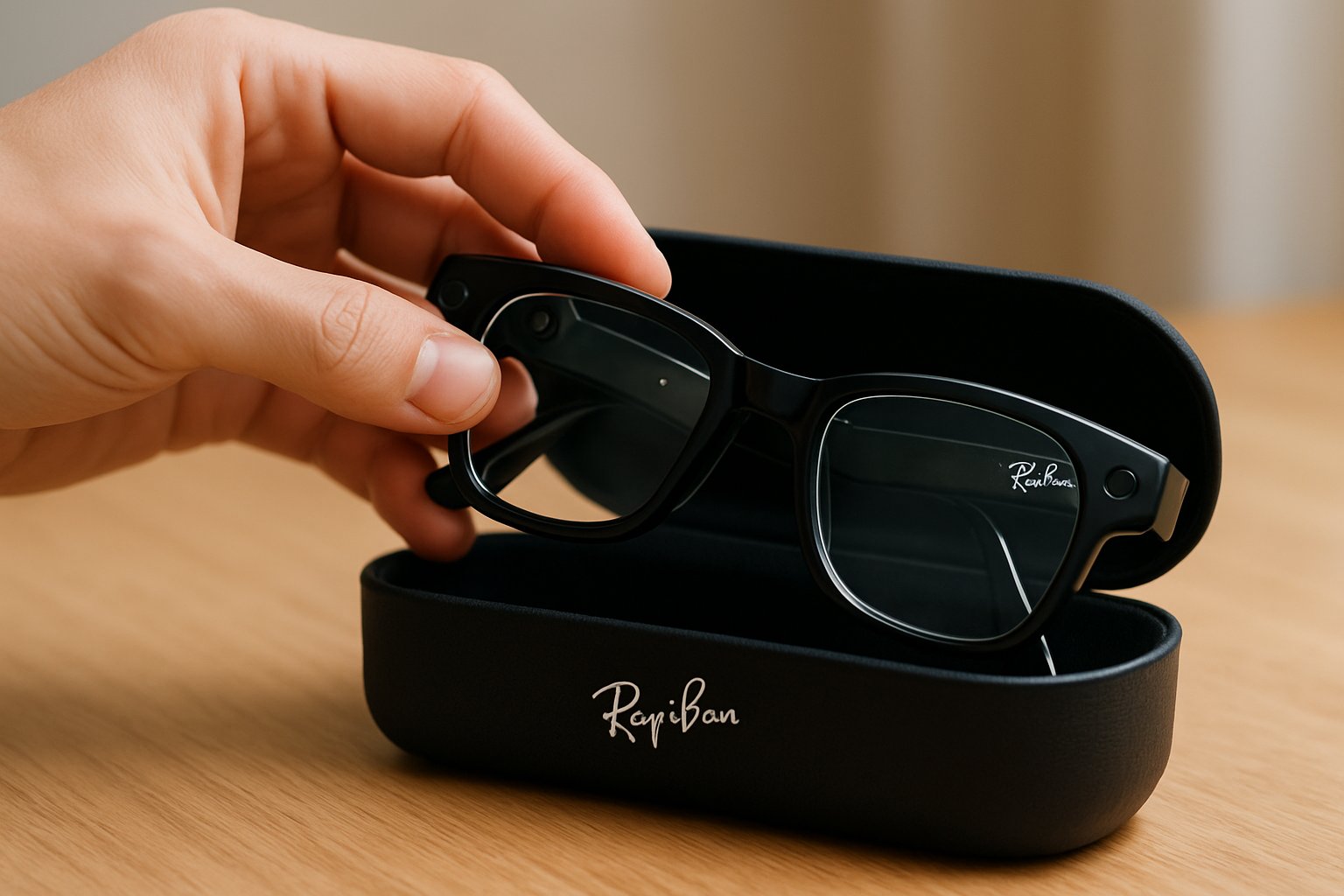
The Blayzer and Scriber frames introduce overextension hinges, interchangeable nose pads, and adjustable temple tips. Furthermore, those adjustments accept thicker Rx lenses without stressing microphones or speaker arrays. Meta AI engineers collaborated with EssilorLuxottica to balance weight, thermal output, and acoustic venting.
Consequently, the frames weigh within one gram of classic Wayfarer references, despite embedded cameras and batteries. Designers also released new colorways and lens styles aimed at fashion-conscious professionals. In contrast, first-generation models offered only four styles and limited fit options.
The eligible prescription range spans –6.00 to +4.00 diopters, covering most North American adults. Nevertheless, warranty coverage continues only when certified retailers install the lenses. These design moves align with Meta’s goal of blending computing into everyday attire.
Hardware refinements close the usability gap for vision-corrected users. However, the upcoming features roadmap must now prove lasting value.
Upcoming Software Features Roadmap
Meta pledged quarterly firmware drops to keep the devices fresh. Subsequently, the April update will add hands-free nutrition logging that captures meal images and classifies macros on device. Moreover, WhatsApp summaries will condense unread threads into short audio recaps piped through the glasses’ open-ear speakers.
Later updates bring Neural Handwriting recognition and expanded pedestrian navigation across twenty additional cities. Consequently, Ray-Ban AI Glasses will shift from passive recorders to active assistants. Each feature runs partially on-device, with heavier queries routed to Meta AI cloud endpoints for refinement.
Developers can already prototype voice or vision extensions through Meta’s XR SDK. Meanwhile, enterprise IT teams should evaluate data governance, because captured content may traverse external APIs. Professionals can deepen their market expertise with the AI Marketing Strategist™ certification.
Software differentiation drives recurring engagement. Therefore, privacy safeguards now take center stage.
Privacy And Compliance Concerns
Investigative reports have alleged contractor review of sensitive footage captured by earlier units. Nevertheless, Meta claims that blinking LEDs alert bystanders whenever recording occurs. Additionally, on-device processing reduces cloud exposure for some tasks.
However, plaintiffs argue that explicit content and private conversations were still surfaced to annotators. Regulators in California and Ireland are therefore scrutinizing Meta’s retention policies. Ray-Ban AI Glasses users should conduct internal risk assessments before workplace deployment.
Moreover, insurance carriers may demand proof of policy compliance when footage includes protected health information. Consequently, legal teams should map data flows, retention periods, and opt-out mechanisms. These steps help avoid litigation or brand damage.
Privacy debates remain unresolved. In contrast, retail logistics are already set for next month.
Key Retail Rollout Details
Pre-orders began 31 March on Meta.com and Ray-Ban.com. Furthermore, in-store availability at LensCrafters, Sunglass Hut, and other EssilorLuxottica outlets starts 14 April. Each kit includes a charging case, cleaning cloth, and basic safety guide.
The entry price remains $499 across both Blayzer and Scriber models. Additionally, retailers quote an estimated $200 lens upgrade for complex scripts. Consumers should therefore budget beyond the headline $499 when considering total cost.
Insurance reimbursement varies by provider. Meanwhile, flexible spending accounts may reimburse lenses but rarely cover electronics. The limited certified network also influences turnaround times, especially for uncommon styles.
Retail logistics determine early customer sentiment. Subsequently, competitive dynamics will influence longer-term momentum.
Broader Competitive Market Outlook
Apple, Snap, and Google continue prototyping or selling niche devices. However, none currently market prescription-ready frames at $499 scale. Moreover, Meta AI integration lets Ray-Ban AI Glasses field multimodal queries, outpacing rivals dependent on tethered phones.
In contrast, Apple is rumored to bundle neural input bands similar to Meta’s earlier Display package. Snap focuses on creative filters, while Google experiments with Warby Parker on limited pilot styles. Consequently, ecosystem depth, not hardware alone, will decide eventual winners.
Industry analysts expect enterprise pilots for field service, logistics, and telemedicine. Therefore, the final section distills strategic actions.
Key Strategic Takeaways Ahead
Enterprise value emerges when hardware, software, and channel execution align. Ray-Ban AI Glasses now combine sub-$500 pricing, mainstream prescription support, and expanding Meta AI capabilities. Consequently, early adopters can pilot use cases such as real-time training, remote audits, and contextual sales enablement.
Nevertheless, unresolved privacy questions demand diligent policy design. Additionally, supply chain monitoring remains vital because prior Meta drops encountered stock shortages. Professionals who upskill quickly will gain competitive advantage in this evolving spatial computing arena.
In summary, these launches reframe smart glasses from novelty to productivity platform. Therefore, strategic teams should track feature rollouts, legal developments, and consumer sentiment before scaling deployments.
Ray-Ban AI Glasses stand at a pivotal juncture for wearable computing. Moreover, executives who pilot Ray-Ban AI Glasses during this launch window can shape future workplace norms. Consequently, now is the moment to study privacy frameworks, negotiate certified lens partnerships, and draft usage policies. Meanwhile, ambitious leaders can solidify expertise through the AI Marketing Strategist™ credential. Therefore, early certification can accelerate go-to-market plans and improve return on innovation budgets. In contrast, late adopters may struggle with policy hurdles and fragmented integration costs. Seize the momentum before competitors define the workplace baseline.


