

AI CERTS
1 hour ago
Memory Code Red Disrupts AI Supply Chain Globally
This article unpacks the crisis, explores price signals, and outlines strategic responses for professionals. Throughout the discussion, the AI Supply Chain will remain our focal lens for analysis. Moreover, we will track how Infrastructure constraints and Logistics realities magnify the shortage. Readers will gain actionable insight and links to executive certifications for deeper preparation.
In contrast, earlier cycles balanced quickly, but current Global Demand for AI workloads changes the timeline. Therefore, understanding underlying Hardware economics is essential for any technology leader.
Market Turns Code Red
TrendForce data shows the oversupply of 2024 flipped dramatically during late 2025. Furthermore, hyperscalers locked multi-quarter HBM contracts, vacuuming capacity from commodity lines. Reuters reports that Samsung executives label the situation a “code red” for downstream customers. Consequently, contract negotiations shortened, and spot markets witnessed daily price gaps exceeding 10%.
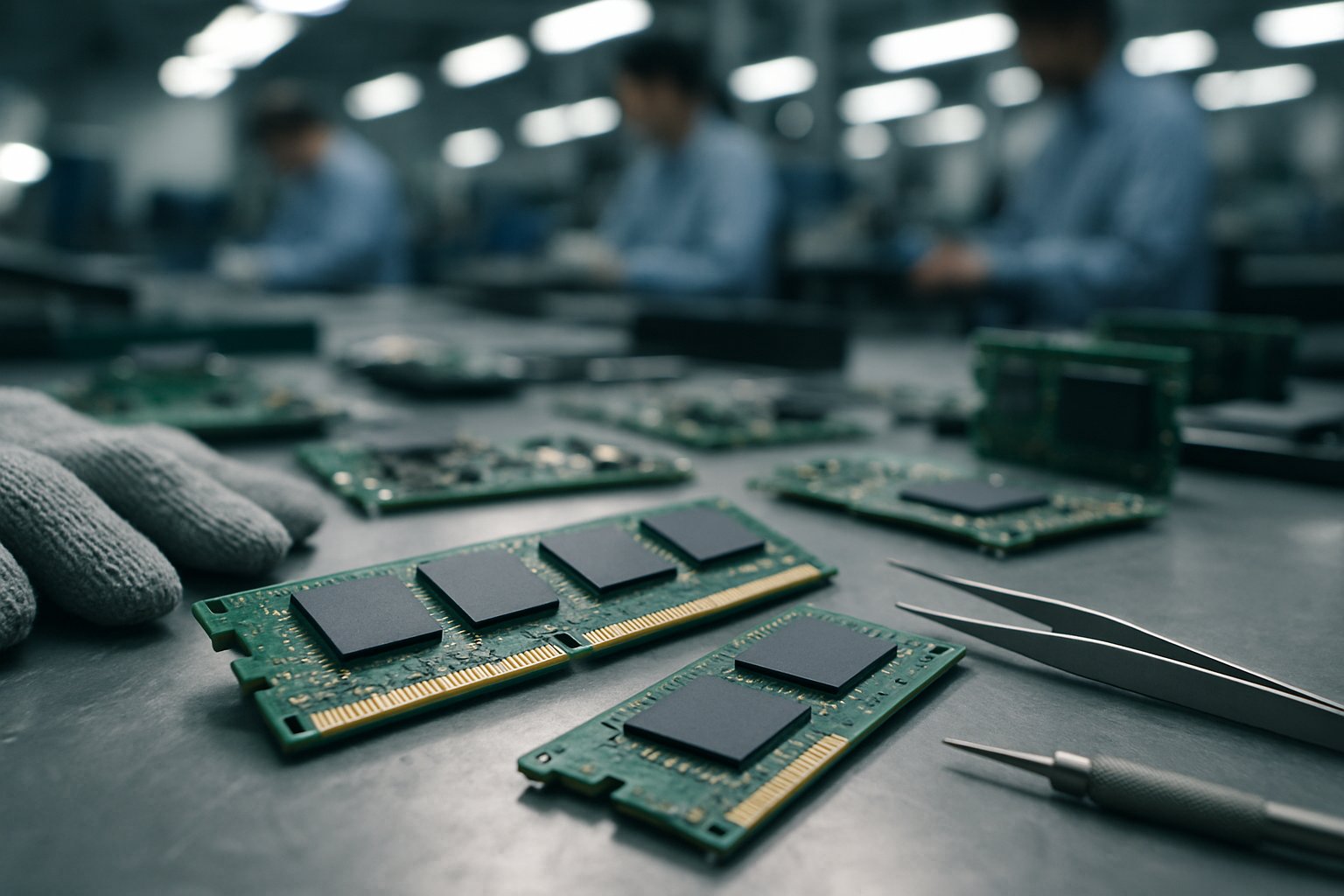
The market shift is historic and deeply disruptive. However, drivers behind the memory crunch explain why relief remains distant.
Drivers Behind Memory Crunch
Primary demand now stems from GPU clusters training foundation models inside hyperscale campuses. Moreover, each Nvidia H200 board ships with up to 192GB of HBM, magnifying wafer requirements. SK Hynix holds roughly 57-61% HBM share, according to Macquarie and Counterpoint estimates. Additionally, suppliers reallocate wafer starts toward server DDR5 and LPDDR5X, starving legacy DDR4 lines. Infrastructure limitations at advanced packaging facilities further slow expansion despite record capital budgets.
Intense AI workloads, limited Infrastructure, and strategic capacity shifts fuel the shortage. Consequently, price signals have escalated at an unprecedented pace, as the next section details.
Pricing Data And Forecasts
TrendForce forecasts Q1 2026 DRAM contracts rising 55-60% quarter over quarter. Meanwhile, NAND contracts should climb 33-38%, squeezing SSD builders reliant on tight Logistics timelines. Korean press cites DDR5 spot prices jumping 90% within one month, while NAND surged 65%. Therefore, OEMs face immediate bill-of-materials inflation, with some smartphone makers delaying launches.
- Server DDR5 contract price: +58% QoQ (TrendForce)
- NAND contract price: +35% QoQ (TrendForce)
- HBM supplier share: SK Hynix 57-61% (Macquarie range)
Analysts warn the AI Supply Chain remains constrained through 2027 unless multiple new fabs accelerate. In contrast, spot traders observe intraday swings unseen since the 2017 crypto mining boom.
Price tables confirm severe inflation across every memory grade. Nevertheless, impacts cascade beyond cost charts, as the ecosystem discussion illustrates next.
Impacts Across Tech Ecosystem
High memory bills squeeze PC, phone, and console margins. Moreover, Apple flagged pressure on gross margin during its January earnings call. Samsung mobile leadership warned Galaxy S26 pricing may rise if DRAM tightness persists. Micron reportedly scales back the Crucial consumer brand to prioritize enterprise AI Supply Chain orders. Consequently, consumers confront higher shelf prices and possible product shortages during holiday seasons. Meanwhile, suppliers enjoy record profitability, funding advanced Hardware nodes and HBM4 pilot lines. Delayed container arrivals compound costs as manufacturers chase scarce air freight slots.
The squeeze redistributes value toward upstream suppliers while stressing downstream brands and buyers. In contrast, proactive mitigation strategies can moderate exposure, as the next segment shows.
Mitigation Paths For OEMs
OEM procurement teams renegotiate shorter contracts with volume flexibility. Additionally, companies diversify suppliers, mixing Micron, Samsung, and SK Hynix allocations. Some device engineers adjust Hardware specifications, accepting lower densities or switching to LPDDR4X where possible. Furthermore, strategic inventory buffers cover Logistics disruptions caused by spot market volatility. Professionals can deepen situational awareness through the AI Executive Essentials™ certification. The program examines AI Supply Chain risks, Governance, and cost control frameworks.
Effective levers include contractual agility, multisourcing, and targeted upskilling. Therefore, companies that act early will buffer shocks discussed in the forthcoming outlook.
Strategic Outlook To 2028
TrendForce expects the memory supercycle to persist until late 2027. However, announced fabs in the United States and Korea could ease shortages by 2028. Subsequently, pricing may normalize, yet Infrastructure for advanced packaging will remain a gating factor. Analysts caution that rapid capacity crashes could follow if Global Demand cools suddenly. Nevertheless, long-term AI Supply Chain visibility appears stronger than during past PC cycles. Consequently, suppliers signal disciplined capital expenditure to avoid oversupply.
- HBM4 ramp schedules and yield
- Regulatory reviews of merger activities
- Energy and water resource constraints
Executive teams should monitor these items quarterly while refining Logistics models. Supply discipline may prolong elevated pricing yet support innovation funding. Finally, leaders must align strategy with cyclical realities, as our conclusion reinforces.
Key Takeaways
The memory crunch reshapes every aspect of the AI Supply Chain, from wafers to wallets. Moreover, high prices demonstrate how tightly Infrastructure and Logistics tie technology ambition to physical limits. Global Demand for generative models shows no sign of slowing. Consequently, stakeholders must audit Hardware roadmaps, negotiate flexible contracts, and nurture collaborative supplier relationships. Leaders who master AI Supply Chain dynamics will protect margins and secure scarce components.
Professionals can accelerate readiness through the linked executive certification, gaining governance and forecasting tools. In contrast, passive observers risk project delays, budget overruns, and competitive erosion. Therefore, act today by mapping vulnerabilities across your AI Supply Chain and launching targeted upskilling. Subsequently, revisit the plan quarterly to align with emerging Infrastructure projects and shifting supplier guidance. Finally, share insights company-wide to build a resilient, cost-effective AI Supply Chain for 2026 and beyond.
Ready to grow your impact? Become a partner and access structured AI enablement resources.


