

AI CERTS
2 hours ago
Medical AI Reduces Interval Breast Cancers and Radiology Burden
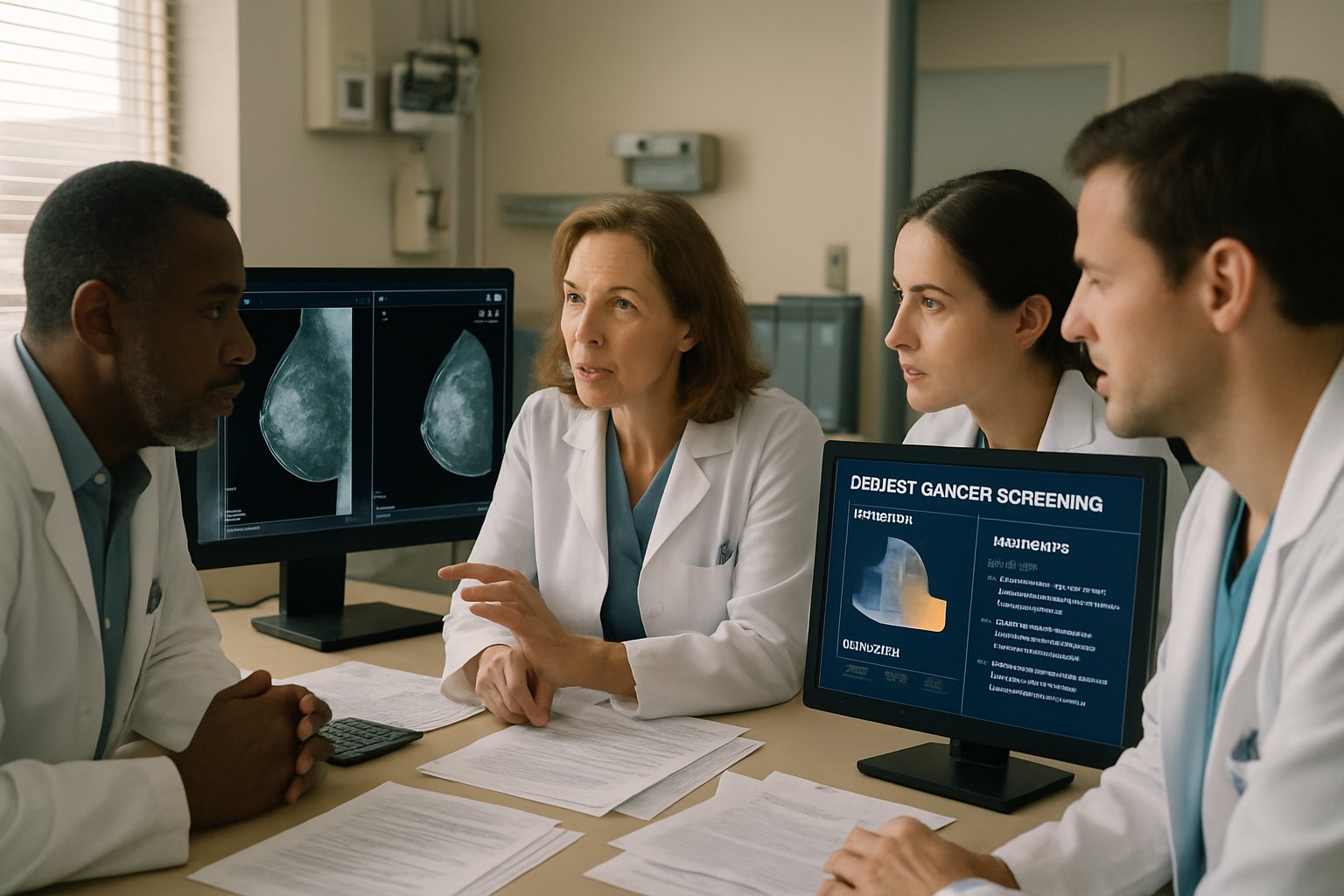
In January 2026, Sweden’s MASAI trial reported fewer interval cancers when algorithms guided mammography readers. Meanwhile, comparative data from UCLA and upcoming UK and US mega-trials suggest enormous international interest. Nevertheless, questions remain about test performance across diverse populations and imaging hardware. Therefore, this article distills the latest evidence, explores workflow implications for Radiology teams, and maps the implementation road ahead.
Latest Breast Trial Evidence
The MASAI randomized trial enrolled about 106,000 women between 2021 and 2022. Moreover, participants were randomly assigned to standard double reading or AI-supported reading using the Transpara platform. The Medical AI triaged low-risk studies for single reading and flagged high-risk images for double assessment.
Results published in The Lancet showed a detection rate of 6.4 per 1,000 screens in the AI arm. The control group recorded 5.0 cancers per 1,000 screens. Additionally, 81 percent of cancers surfaced at screening in the AI arm compared with 74 percent without the algorithm. Researchers observed similar recall and false-positive rates, indicating strong Screening Efficacy without excess harm.
These figures confirm that Medical AI can uncover additional malignant lesions missed by human readers alone. Consequently, the next question is whether earlier detection translates into fewer dangerous interval cancers.
Interval Cancer Reduction Findings
Interval cancers are tumors detected between scheduled mammograms and often signal aggressive disease. In MASAI, Medical AI cut interval cancers by 12 percent, dropping to 1.55 per 1,000 women. Conversely, the control arm recorded 1.76 cases per 1,000.
The reduction aligns with a retrospective UCLA JNCI study, where Transpara flagged 76 percent of prior images linked to interval tumors. Moreover, authors estimated a 30 percent potential decline in mammographically visible interval cancers if algorithms were used prospectively. Nevertheless, they emphasized the need for prospective Screening Efficacy trials across varied demographics.
These data suggest Medical AI may shift the Diagnosis timeline, catching tumors when treatment is simpler. Therefore, understanding workforce impact becomes essential before national rollouts.
Workflow And Resource Impact
Clinician shortage pressures Radiology departments worldwide. MASAI’s interim analysis revealed 44 percent fewer screen readings when Medical AI triaged images. Consequently, radiologists focused on complex studies, potentially cutting fatigue-related errors.
False-positive rates remained nearly unchanged at roughly 1.5 percent, preserving Screening Efficacy while safeguarding patient trust. Additionally, stable recall rates reduce unnecessary biopsies and anxiety.
These workflow gains appeal to health-system planners facing rising service volumes. However, benefits will vary with local staffing, hardware, and reader expertise, demanding cautious adaptation.
Efficient resource use strengthens the economic case for algorithmic support. Nevertheless, leaders must balance incremental benefits against overdiagnosis and equity concerns.
Balancing Benefits And Risks
Higher detection can inadvertently increase overdiagnosis, identifying lesions that never threaten life. Experts warn that Medical AI might amplify this issue if not carefully monitored. Moreover, most published data originate from high-income Scandinavian cohorts, limiting generalisability.
Regulators therefore demand longitudinal mortality and quality-of-life outcomes, not just immediate Diagnosis metrics. Researchers plan extended MASAI follow-up to evaluate survival and metastatic progression. Subsequently, biological characterization of extra lesions will clarify clinical relevance.
Diverse population studies also remain scarce. Consequently, EDITH in the UK and PRISM in the United States will enrol vast participant numbers. These pragmatic trials will measure Screening Efficacy, Radiology workload, and psychosocial outcomes.
Transparent evidence on harms and benefits will guide reimbursement and medico-legal frameworks. Meanwhile, stakeholders are already preparing for scaled deployment.
Global Research Momentum Builds
International collaboration accelerates technology validation. Furthermore, the RSNA, ECR, and WHO host task forces reviewing Medical AI standards and data-sharing protocols. Academic-industry partnerships aim to harmonize performance metrics for Diagnosis and workflow.
Notable ongoing initiatives include:
- EDITH trial: 700,000 NHS screening episodes testing algorithmic double reading.
- PRISM trial: multi-state US study evaluating Screening Efficacy across diverse centres.
- Pan-European registries tracking Radiology outcomes and equity indicators.
This momentum signals broad confidence that regulated algorithms can complement skilled clinicians. Consequently, attention is shifting toward practical implementation.
Implementation Roadmap Moves Ahead
Health systems often pilot new software within limited clinics before expansion. Moreover, MASAI investigators advocate phased rollout with real-time audit dashboards. Medical AI vendors are integrating cloud deployment, encryption, and automatic reporting to simplify adoption.
Cost-effectiveness analyses will guide procurement. Early modelling suggests savings from reduced repeat imaging and streamlined Diagnosis pathways. Additionally, reallocated Radiology hours could ease backlogs in other imaging modalities.
Professionals can enhance expertise with the AI Healthcare Specialization™ certification. Consequently, certified leaders can oversee safe governance, algorithm validation, and equity audits.
Structured training, robust governance, and continuous performance monitoring form the backbone of sustainable adoption. Therefore, industry observers are watching early national pilots closely.
Overall, current evidence indicates that Medical AI raises detection and cuts dangerous interval cancers. It also relieves workforce strain without eroding specificity. However, longer follow-up and broader demographics are critical before routine replacement of double reading. Furthermore, pragmatic mega-trials will furnish the survival and cost data that policymakers require. Nevertheless, early adopters can already begin structured pilots, armed with governance frameworks and specialized training. To lead those initiatives, readers should consider earning the AI Healthcare Specialization™ and staying engaged with emerging trial results.


