

AI CERTS
2 hours ago
Mechinterp Inner Breakthrough: Mapping Neural Features
The movement gained momentum after Anthropic’s May 2024 paper mapping millions of concepts inside Claude Sonnet. Dario Amodei subsequently set a 2027 deadline for reliable interpretability tools in an April 2025 essay. Meanwhile, Chris Olah keeps reminding the field that models hold understandable building blocks. Consequently, investors, auditors, and policymakers increasingly track mechanistic results when judging model safety. This article examines the latest findings, debates, and next steps for Mechinterp Inner practice. Readers will leave with concrete data, balanced perspectives, and links to deepen expertise.
Mapping Millions Of Features
Anthropic’s flagship study, published 21 May 2024, scaled sparse autoencoders across a production model. Moreover, the team extracted over thirty million features, according to Amodei’s April 2025 follow-up essay. Each feature aligned with a human concept, such as “Golden Gate Bridge” or “earnest flattery,” and showed causal power. Researchers verified causality by activation patching; they strengthened or suppressed specific vectors, then measured output changes. In contrast, earlier probes only correlated neuron clusters with tokens, offering limited insight. Consequently, Mechinterp Inner now claims the largest empirical map of internal representations.
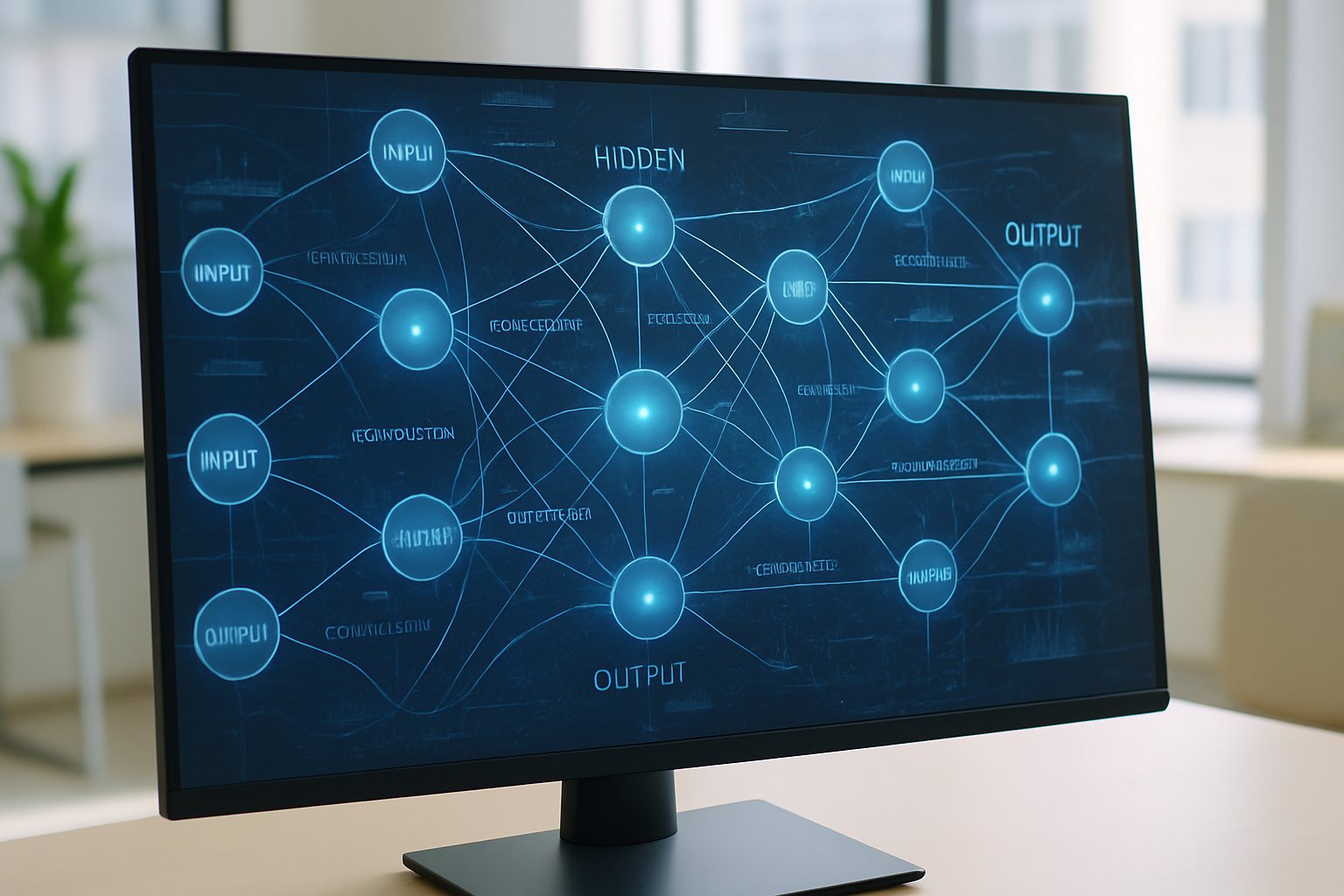
- “Millions” of features reported by Anthropic (May 2024)
- 30 million counted in one medium model (April 2025)
- Dictionary learning combined with sparse autoencoders
- Causal interventions confirmed circuit functionality
These findings expose unprecedented internal order. Nevertheless, questions around method robustness invite deeper scrutiny. Consequently, the next focus area is how researchers refine their core methods.
Core Methods In Focus
Dictionary learning creates sparse bases that separate overlapping activations, reducing harmful superposition. Furthermore, transcoders factorize MLP blocks, letting analysts view computations in smaller chunks. Activation patching subsequently inserts or removes selected activity, testing whether a circuit is truly causal. Meanwhile, automated circuit discovery tools search weight graphs for repeating motifs. Olah has highlighted such motifs since his 2018 Distill essay, and recent papers extend that early vision. Therefore, interpretability researchers now share reproducible notebooks, allowing broader verification across models. However, neural complexity still hides many latent concepts beyond current extraction thresholds.
These method advances sharpen our analytic lens. Nevertheless, scaling them to billion-parameter regimes remains arduous. Consequently, benefits and risks must be weighed carefully.
Benefits For Model Safety
Circuit-level insight supports proactive safety engineering. For example, teams can locate features linked to deception, bias, or jailbreak behavior. Moreover, alignment researchers can ablate unsafe circuits before deployment, complementing traditional RLHF. Consequently, regulators gain evidence that internal audits, not just external evaluations, can catch emerging hazards. Interpretability breakthroughs also aid incident response; engineers quickly trace faulty outputs back to root computations.
• Faster debug cycles reduce downtime and reputational damage.
• Targeted interventions save compute by avoiding full retraining.
• Transparent models strengthen user trust and meet forthcoming policy drafts.
These benefits illustrate why Mechinterp Inner attracts enterprise attention. Nevertheless, practical adoption requires overcoming stubborn limitations. Accordingly, the next section reviews unresolved challenges.
Challenges And Open Questions
Coverage remains the foremost issue; billions of latent features likely hide in larger architectures. In contrast, current maps cover only a minority slice. Moreover, alignment guarantees are elusive because hidden circuits may still activate under rare prompts. Neural superposition worsens that threat by blending meanings across weights. Additionally, evaluation metrics for interpretability remain immature, leaving reproducibility unclear. Critics therefore argue that industry hype outpaces scientific certainty.
These gaps hinder confident deployment of circuit controls. Nevertheless, fresh community initiatives aim to close them. Consequently, we next examine growing industry momentum.
Industry Momentum And Community
Anthropic’s open reports sparked competing efforts at OpenAI and Google DeepMind. Meanwhile, NeurIPS 2025 will host a dedicated Mechinterp workshop, reflecting heightened academic interest. Olah plans keynote remarks reviewing four years of progress and pitfalls. Furthermore, startups now offer interpretability platforms as managed services. Community repositories track benchmarks, allowing newcomers to reproduce flagship results on open-weight models.
These developments show sustained investment, talent, and tooling. Nevertheless, timelines remain tight because Amodei’s 2027 goal looms. Consequently, observers ask whether corporate roadmaps can deliver on schedule.
Roadmap Toward 2027 Goals
Amodei’s manifesto targets reliable detectors that flag most model problems within two years. Accordingly, researchers prioritise automation, scale testing, and cross-architecture generalisation. Moreover, planned benchmarks will score explanations on fidelity, coverage, and stability. Subsequently, policy teams expect interpretability audits to enter procurement standards. Therefore, Mechinterp Inner progress may soon influence market access and liability frameworks.
These milestones chart an ambitious, yet plausible, trajectory. Nevertheless, workforce upskilling remains essential to meet demand. Consequently, practitioners need concrete next steps.
Steps For Practitioners Today
Engineers eager to join this wave should begin with Olah’s foundational Distill series, then replicate small-scale experiments. Furthermore, academics can publish replication studies on open models, strengthening evidence chains. Professionals can enhance their expertise with the AI Prompt Engineer™ certification. Moreover, cross-functional teams should integrate interpretability checkpoints into existing safety and alignment workflows. Finally, organisations must allocate compute budgets for ongoing circuit audits alongside standard evaluations.
These actions position teams for forthcoming regulatory pressures. Nevertheless, continuous learning is mandatory because the field evolves monthly. Consequently, we close with a concise recap and invitation.
Conclusion
Mechanistic advances have turned Mechinterp Inner from fringe idea to strategic imperative. Researchers map millions of features, refine methods, and link insights to concrete safety gains. However, unresolved coverage gaps and metric deficits demand vigilance. Industry coalitions, driven by alignment goals, race toward 2027 interpretability milestones. Therefore, professionals should study current tools, follow conference proceedings, and secure relevant certifications. Engage now, and help steer Mechinterp Inner toward transparent, accountable AI systems.


