

AI CERTs
5 hours ago
Maryland’s Ban Sparks Consumer Algorithm Wage Protections Debate
Shoppers in Maryland may soon see fewer secret price jumps at the grocery aisle. Governor Wes Moore has fast-tracked the Protection From Predatory Pricing Act through both chambers. The emergency bill blocks AI systems from tailoring shelf prices using real-time data or personal attributes.
Consequently, large food retailers above 15,000 square feet would face civil fines for violations. Lawmakers call the measure a cornerstone of Consumer Algorithm Wage Protections. Meanwhile, industry voices warn that legitimate discounts and inventory tools could be handicapped.
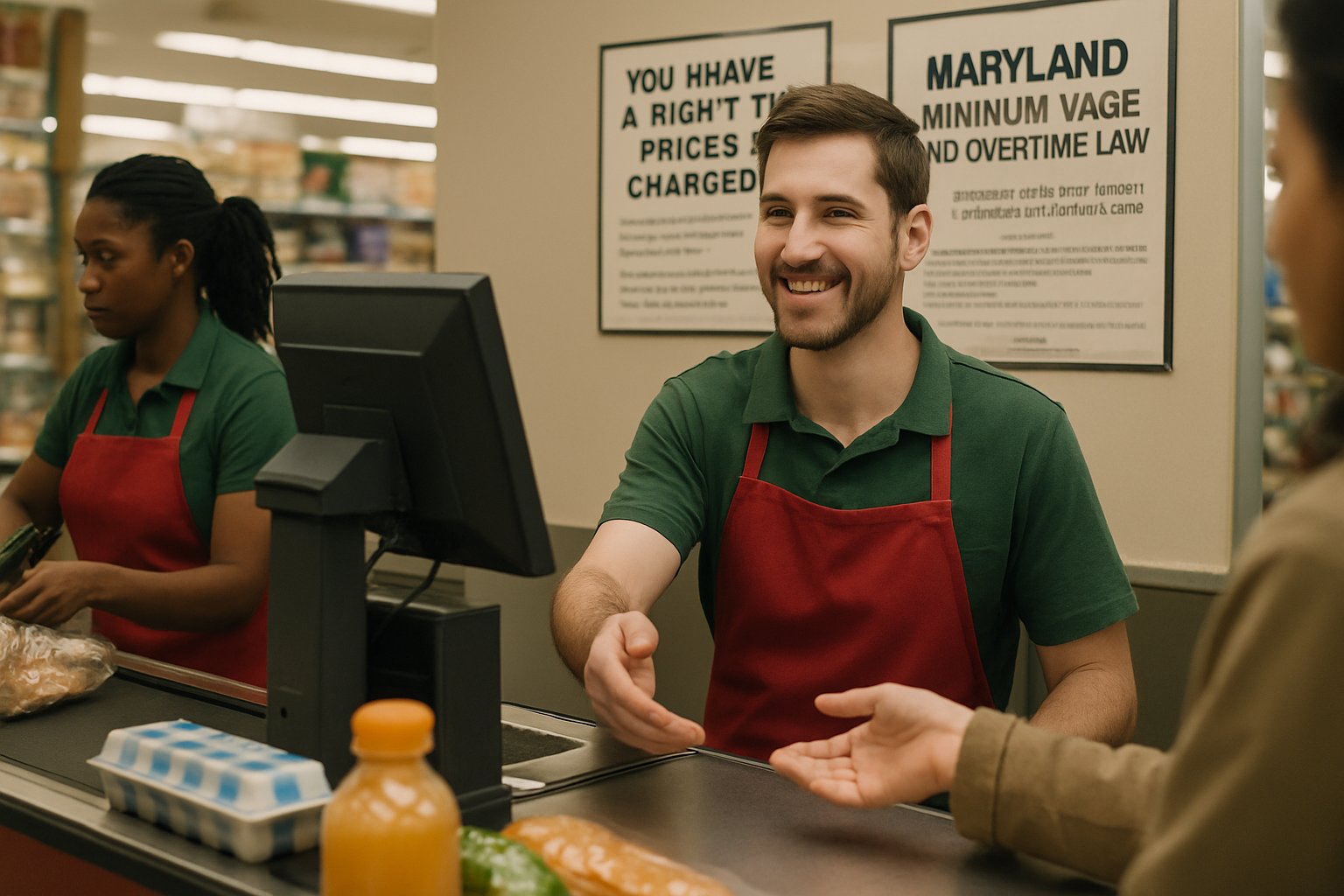
This article unpacks the legislation, technology drivers, and potential ripple effects for retailers and workers. Moreover, it compares Maryland’s proposal with earlier bills like HB 148 and national trends. Readers will leave with strategic steps and certification resources for staying compliant.
Lawmakers Target AI Pricing
On 20 January 2026, Governor Moore unveiled Senate Bill 387 alongside House Bill 895. The pair forms the Protection From Predatory Pricing Act, classified as emergency legislation. Consequently, the statute becomes effective immediately once signed.
Sponsors framed the proposal as a direct response to escalating AI Surveillance tools in food retail. In contrast, Senate President Bill Ferguson stressed fairness over technological experimentation. House Speaker Joseline Peña-Melnyk echoed that sentiment during testimony on HB 895.
Notably, analyst Dr. Elisa Vogel compared this bill with earlier consumer protection models, including HB 148. She argued that the emergency designation signals unprecedented political urgency. Therefore, stakeholders should assume a compressed comment period.
The bill’s fast track underscores leadership commitment. Nevertheless, deeper technical questions remain; the next section explores those mechanics.
Technology Drives Rapid Shifts
Electronic shelf labels let managers swap thousands of digital tags within seconds. Moreover, machine-learning engines can scrape basket data, weather, and social events to recommend fresh margins. Those recommendations feed automated scripts that write new shelf values without human review.
In contrast, Maryland lawmakers fear that such speed hides discriminatory Surveillance price shifts from regulators. Consumer Reports has documented mobile checkout experiments where identical items cost users up to 23 percent more. Consequently, investigators argue that algorithmic opacity erodes trust and household budgeting.
Dr. Vogel notes that HB 148 suffered because it ignored the hardware layer driving adjustments. She warns that compliance teams must now audit both software outputs and device logs. These technical realities complicate enforcement planning.
The following section reviews how different stakeholders interpret that challenge.
Stakeholders Debate Fairness Claims
Unions hail the ban as a safeguard for working families squeezed by invisible markups. UFCW spokespeople argue that buyer behavior Surveillance could also undermine collective bargaining leverage. Moreover, Governor Moore stresses that grocery staples deserve stable tags regardless of algorithmic mood swings.
Retailers respond that dynamic pricing lets them clear soon-to-expire produce responsibly. Additionally, the Maryland Retailers Alliance claims uniform ceilings could inflate baseline costs for every shopper. Industry lobbyists cite economist Mark Vogel — no relation — to substantiate efficiency losses.
Nevertheless, consumer advocates counter that voluntary disclosures have failed across markets covered by HB 148 clones. The clash reveals real tension between transparency and competitive agility. Consequently, understanding enforcement is critical, as the next section explains.
Enforcement Details And Risks
The Attorney General will treat violations as unfair trade practices under the Consumer Protection Act. First offenses may draw civil fines up to $10,000; repeat breaches could reach $25,000. Moreover, courts can order restitution for harmed shoppers.
Maryland’s Consumer Algorithm Wage Protections coalition urged auditors to inspect algorithm outputs quarterly. Dr. Vogel advises capturing hashed transaction logs before and after each rule deployment. Additionally, the bill forbids reducing union benefits without renegotiation, adding employment complexity.
In contrast, retailers question how inspectors will detect covert Surveillance adjustments made by third-party vendors. Enforcement hinges on data retention and vendor transparency. Subsequently, observers look beyond state borders for comparable guardrails.
National And Global Context
New York adopted disclosure rules for personalized pricing in late 2025. California is studying HB 148 style bans modeled on the state framework. Moreover, the Federal Trade Commission has opened inquiries into algorithmic collusion scenarios.
Internationally, the European Union’s AI Act includes transparency duties but stops short of outright prohibitions. Consequently, firms with cross-border operations must juggle divergent compliance maps. Advocates argue that harmonized Consumer Algorithm Wage Protections would ease vendor auditing costs.
External precedents offer cautionary tales and cooperative templates. Therefore, proactive readiness remains essential; the final section outlines practical steps.
Preparing For Compliance Now
Compliance begins with a comprehensive data inventory across sensors, platforms, and suppliers. Moreover, teams should benchmark current dynamic rules against Consumer Algorithm Wage Protections checklists. Internal auditors must flag every instance where Surveillance attributes influence basket calculations.
Additionally, engineers ought to install kill-switches that freeze price changes during investigations. Vogel recommends including algorithm summaries within board risk reports to meet investor demands. Consequently, leadership can prove adherence to Consumer Algorithm Wage Protections before regulators ask.
Training programs should integrate ethical AI modules alongside labor law refreshers. Professionals can enhance their expertise with the AI Marketing Professional™ certification. The curriculum aligns directly with forthcoming Consumer Algorithm Wage Protections audits.
Subsequently, certified managers can update protocols swiftly when HB 148 style amendments surface. Robust governance, training, and documentation form the compliance triad. Nevertheless, ongoing public scrutiny will likely intensify, as the next conclusion addresses.
Final Thoughts And Action
The state’s experiment marks a decisive pivot in algorithm oversight. Moreover, high civil penalties signal that passive monitoring will no longer suffice. Firms that embed Consumer Algorithm Wage Protections across engineering, legal, and operations will minimize shock. Meanwhile, shoppers gain confidence that digital shelves will not discriminate silently.
Consequently, early movers securing certified talent stand to convert compliance into competitive trust capital. Professionals embracing the recommended credential align their careers with upcoming Consumer Algorithm Wage Protections audits. Take action today; review data flows, retrain models, and pursue certification before enforcement begins.


