

AI CERTS
3 hours ago
Managing AI Mental Fatigue in High-Velocity Workplaces
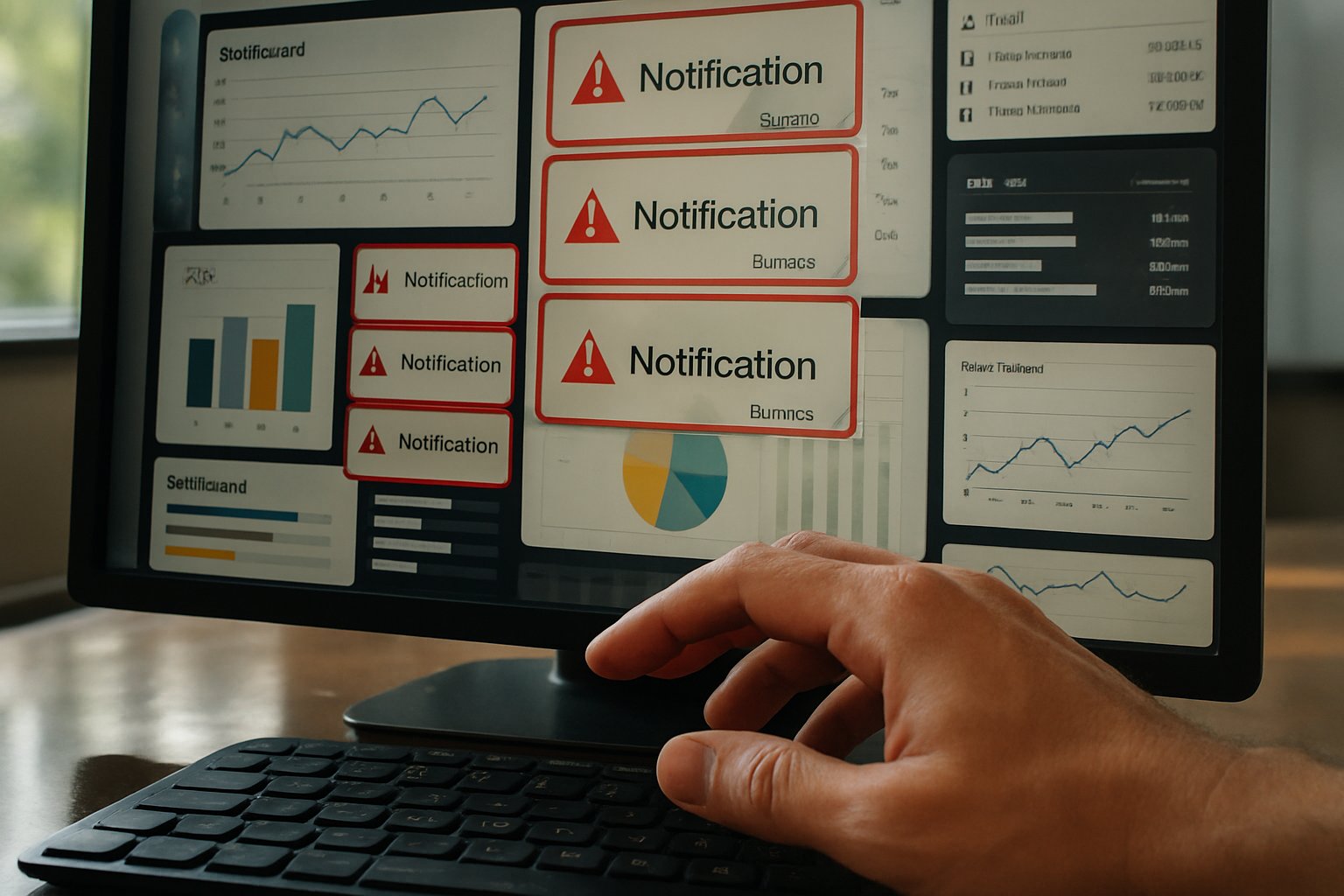
However, many executives now ask a harder question: does oversight overload cancel the promised efficiency dividend of generative systems?
This article unpacks the study, contextualizes key numbers, and offers evidence-backed remedies for leaders and practitioners.
Consequently, readers will gain practical guidance to safeguard teams while harnessing AI innovation responsibly.
Moreover, the piece links each recommendation to emerging certification opportunities that bolster organizational readiness.
Therefore, consider this your concise field guide to navigating the cognitive costs of modern algorithmic teammates.
New Study Defines Syndrome
Harvard Business Review published “When Using AI Leads to ‘Brain Fry’” on 5 March 2026.
The article combines Boston Consulting Group surveys with University of California, Riverside analysis.
Researchers labeled the overload effect AI Mental Fatigue, framing it as a specific subset of broader digital exhaustion.
Moreover, coauthor Julie Bedard told Axios, “We still have the same brain we had yesterday.”
That quote captures the central tension: technological velocity outpaces biological limits.
The study establishes vocabulary and initial prevalence metrics.
However, deeper understanding demands a closer look at the numbers themselves.
Review Key Data Points
Survey respondents numbered 1,488 full-time U.S. employees actively using AI tools each week.
Fourteen percent reported AI Mental Fatigue symptoms, including fog, slower decisions, and headaches.
Additionally, heavy oversight roles correlated with a 12% incremental fatigue increase.
Participants experiencing the syndrome showed 33% higher decision fatigue and more major errors.
Moreover, intention-to-quit scores spiked among affected workers, alarming HR leaders tracking retention.
Conversely, roles where AI removed repetitive tasks saw burnout indices fall roughly 15%.
- Sample size: 1,488 full-time U.S. AI users across diverse industries.
- Incidence: 14% confirmed AI Mental Fatigue through self-report.
- Oversight effect: heavy supervisors show 12% extra fatigue.
- Performance impact: decision fatigue up 33%, errors jump significantly.
- Benefit: true automation lowers Worker Burnout by 15%.
These statistics provide managers with a clear risk snapshot.
Consequently, attention now turns to the underlying causes.
Primary Drivers Behind Overload
Researchers tie overload primarily to relentless context switching and verification of AI outputs.
Furthermore, each hallucination check forces micro-decisions, draining limited Cognitive Capacity reserves.
Oversight tasks often stack on top of existing deliverables, rather than replacing them.
In contrast, tool proliferation demands workers remember varied interfaces, accelerating AI Mental Fatigue through sheer fragmentation.
Psychologists describe the strain as extraneous cognitive load, distinct from intrinsic task difficulty.
Nevertheless, the workplace rarely measures Cognitive Capacity objectively, relying on self-report instead.
These mechanisms illustrate why fatigue appears concentrated in oversight heavy roles.
Managers must therefore tackle overload sources, not only symptoms.
Consequently, the next section quantifies the business stakes involved.
Critical Business Impact Metrics
Lost focus translates directly into slower cycle times and expensive rework.
Moreover, the study links AI Mental Fatigue to 33% higher major error rates.
Decision reversals also rose, compounding missed deadlines.
Additionally, affected employees reported 39% stronger intent to quit, raising recruitment costs.
Persistent Worker Burnout weakens employer brands, discouraging top applicants.
Consequently, CFOs face both direct productivity loss and indirect talent acquisition expense.
A quick financial model illustrates the stakes:
- One error per week can cost $1,200 in rework, according to BCG benchmarks.
- A 5% attrition rise costs mid-size firms about $3.2M annually in hiring and onboarding.
- Delayed launches shorten first-mover advantage, eroding market share within months.
These numbers underscore urgent intervention needs.
However, evidence-based strategies already exist.
Practical Mitigation Strategies Detailed
Researchers propose redesigning jobs so AI replaces, not augments, repetitive microtasks.
Furthermore, teams should limit concurrent agent windows to reduce context switching frequency.
The article offers a triage checklist:
- Map repetitive tasks and automate them fully.
- Set review checkpoints instead of continuous monitoring.
- Limit active AI tools per role to three.
- Rotate oversight assignments weekly.
In contrast to simple wellness perks, these structural fixes address root causes of AI Mental Fatigue.
Certification Based Upskilling Path
Skill gaps exacerbate oversight burden because workers improvise safeguards rather than follow consistent playbooks.
Professionals can enhance their expertise through the AI Essentials for Everyone certification.
Moreover, standardized training streamlines governance, preserving Cognitive Capacity for creative analysis.
Consequently, upskilled teams experience lower Worker Burnout and fewer escalations.
These capability boosts pave the way for healthier processes.
Therefore, the final section turns to workflow design.
Designing Healthier AI Workflows
Healthy workflows blend automation, human review triggers, and clear responsibility matrices.
Additionally, leaders should monitor Cognitive Capacity indicators, like reaction time or prompt iteration count.
Schedule protected focus blocks so employees can process AI outputs without interruptions.
Meanwhile, rotate oversight duties to prevent chronic exposure and related AI Mental Fatigue.
Firms adopting these patterns consistently report less Worker Burnout and steadier deliverable quality.
These workflow choices tackle overload before it manifests.
Consequently, organizations safeguard productivity while sustaining employee wellbeing.
Conclusion And Next Steps
AI Mental Fatigue has moved from anecdote to quantified threat.
However, data show the phenomenon remains manageable when leaders redesign work and invest in skills.
By guarding Cognitive Capacity, firms reduce errors, curb Worker Burnout, and sustain competitive speed.
Moreover, limiting agent sprawl directly lowers AI Mental Fatigue incidence, preserving focus hours.
Consequently, profits rise as attrition and rework costs shrink.
Professionals eager to lead this change should pursue the AI Essentials for Everyone certification and champion healthier workflows.
Commit today, and transform AI Mental Fatigue into sustainable advantage.


