

AI CERTs
2 months ago
Local Infrastructure Opposition slows Pennsylvania data hub plans
Sirens over booming server farms now echo across Pennsylvania town halls. Meanwhile, municipal boards are inundated with applications for hyperscale facilities. Residents fear rising bills, increased noise, and water stress. Consequently, Local Infrastructure Opposition has hardened into a statewide movement. Debate now pits global cloud ambitions against neighborhood comfort. Furthermore, state regulators scramble to model unprecedented electricity demand. Developers highlight billions in investment and construction jobs. Nevertheless, voters pack hearings, waving printed charts on rate impacts. This feature unpacks the forces driving Pennsylvania’s escalating clash. It also examines how decisions here could signal national trends. In contrast, utility executives promise innovative tariffs to shield existing customers. Advocacy groups counter that such promises lack enforceable guarantees. Therefore, every township vote becomes a proxy battle over digital growth. The following analysis maps grievances, economic claims, and policy experiments shaping the state’s future.
Pennsylvania Pushback Trends Review
Hazle Township supervisors set the tone on 18 November 2025, rejecting NorthPoint’s Project Hazelnut outright. Subsequently, similar denials surfaced in Plymouth, Clifton, and Montour counties within weeks. Analysts now track at least six significant votes against data center rezonings during 2025. Such momentum reflects persistent NIMBYism energized by social media groups. Moreover, Local Infrastructure Opposition has grown more sophisticated, employing zoning attorneys and energy consultants.
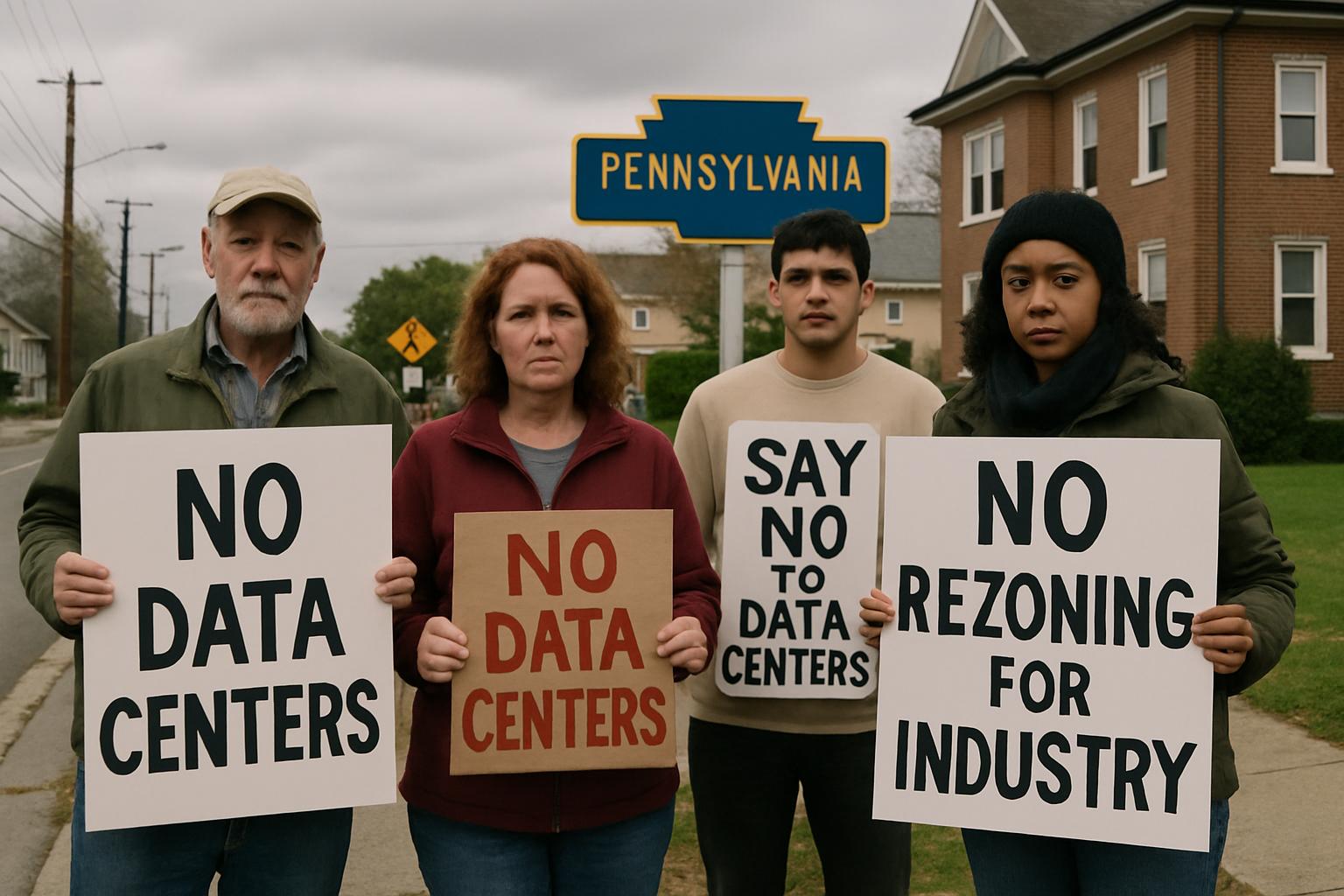
Organizers coordinate talking points focused on water draws and modest permanent job counts. Community coalitions distribute model resolutions to planning boards statewide. Meanwhile, statewide nonprofits such as Food & Water Watch provide rapid-response research kits. Consequently, elected officials increasingly prefer safe rejections over procedural approvals. This grassroots capacity marks a turning point in Pennsylvania’s infrastructure politics.
Local votes show organized resistance is accelerating. However, escalating pressure on utilities moves the conflict beyond town borders. Next, the grid consequences demand scrutiny.
Grid Strain Concerns Rise
Utility filings illustrate the scale of unprecedented load requests. PPL disclosed an advanced-stage queue of 14 gigawatts tied to Data Centers alone. Consequently, planners warn the company’s peak demand could multiply eighteenfold by 2034. Exelon, serving parts of southeastern counties, lists 33 gigawatts of national interest. These forecasts eclipse many renewable generation targets on similar timelines.
Therefore, the Pennsylvania PUC convened an April 2025 hearing on large-load integration. Commissioners now craft a model tariff covering interconnection costs, standby rates, and exit fees. Chair Stephen DeFrank argues the framework balances innovation with bill protection. Nevertheless, consumer advocates fear stranded assets if speculative campuses never materialize. Local Infrastructure Opposition cites those stranded cost risks in township testimony.
Grid planners face a time crunch unlike any prior episode. Further debate centers on economic promises versus reality. That economic argument follows next.
Economic Promises Versus Reality
Developers highlight billions in capital investment to win local support. Amazon cites a twenty-billion dollar commitment, while CoreWeave touts six billion for Lancaster. In contrast, permanent staffing projections hover between seventy and 175 roles per campus. Consequently, taxpayers question return on abatements and subsidies.
- Hazle Township proposal promised 200 jobs for a 1.2-gigawatt load.
- CoreWeave expects 600 construction roles but under 100 full-time technicians.
- Average job per megawatt ratio remains below one across proposals.
Moreover, studies show water and electricity footprints dwarf payroll line items. Local Infrastructure Opposition leverages those figures to sway undecided council members. Communities argue revenue projections ignore potential rate hikes from grid upgrades.
Economic scrutiny exposes a mismatch between promotional claims and measurable benefits. Next, environmental risks amplify those fiscal concerns.
Water And Environmental Footprint
AI workloads intensify server heat, elevating cooling needs. Subsequently, certain designs withdraw millions of gallons annually from municipal systems. Advocacy groups reference national studies projecting doubled water use by decade’s end. Springdale residents, for instance, flagged a 565,000-square-foot Data Centers plan requiring evaporative towers. Noise from massive cooling fans also dominates public comment sessions.
Furthermore, backup generators often run on diesel or gas, raising air quality alarms. The PUC is evaluating emissions offsets within future tariff conditions. Nevertheless, Local Infrastructure Opposition views such measures as insufficient. Communities argue prevention beats mitigation when health impacts loom.
Environmental stress adds another decisive factor for township boards. Regulatory and legal clashes therefore intensify.
Regulatory And Legal Battle
Talen Energy’s dispute with FERC over an Amazon co-located site underscores federal stakes. Federal regulators have limited precedent for clustering Data Centers with merchant gas plants. Meanwhile, municipalities rely on Zoning codes to defend denials. Some developers threaten litigation, alleging arbitrary or discriminatory rulings. However, Pennsylvania case law often supports broad municipal discretion on land use.
At the state level, model tariffs may clarify cost allocation, limiting courtroom fights. Nevertheless, unclear grandfathering rules could trigger future appeals. Zoning boards therefore wait for PUC guidance before revisiting stalled applications. Local Infrastructure Opposition interprets the delay as a tactical victory.
Courtrooms remain a parallel front in this infrastructure dispute. Attention now turns to grassroots organization methods.
Organizing At Local Level
Facebook groups, door-to-door canvassing, and yard signs shape public sentiment quickly. Protect PT and Food & Water Watch supply downloadable comment templates. Moreover, volunteer experts translate utility filings into clear talking points for Community meetings. In Montour County, residents rehearsed testimony two nights before the planning vote.
These coordinated tactics embody modern NIMBYism, blending local passion with data-driven advocacy. Consequently, township supervisors face packed chambers and extended sessions. Local Infrastructure Opposition gains legitimacy when technical consultants accompany citizen speakers. Professionals can enhance their expertise with the AI Prompt Engineer™ certification.
Well-organized messaging narrows developers’ defensive options. Finally, stakeholders look ahead to likely outcomes.
Future Outlook And Steps
Governor Josh Shapiro continues courting hyperscale investors despite local turbulence. Exelon and PPL explore joint generation projects to meet projected Data Centers load. Meanwhile, community coalitions prepare statewide workshops on Zoning strategy. Therefore, Pennsylvania may pioneer a hybrid approval model linking tariffs, permits, and sustainability metrics.
Local Infrastructure Opposition will remain a decisive force through 2026. Nevertheless, developers equipped with transparent impact studies could secure selective wins. Community engagement early in site selection may reduce confrontations. NIMBYism likely evolves into negotiated oversight rather than outright bans.
Combined policy and market shifts will determine whether compromise replaces confrontation. The conclusion synthesizes these intertwined dynamics.
Pennsylvania’s data-center surge offers a revealing case study for digital infrastructure governance. Stakeholders now understand that electricity, water, and land decisions intersect directly with household economics. Moreover, municipalities have shown that targeted research and disciplined messaging can rebalance negotiating power. Utilities and developers, consequently, must deliver transparent impact models rather than glossy slide decks. Meanwhile, regulators continue pursuing tariffs that shield ratepayers while preserving growth capacity. Readers seeking deeper technical fluency can explore the linked certification to strengthen analytical credibility. Finally, sustained dialogue among industry, government, and Community voices will decide whether compromise outpaces confrontation. Engage now, because tomorrow’s grid will reflect choices made today.


