

AI CERTS
1 hour ago
Living Intelligence Tech Fuels Biotech and AI Convergence
This feature clarifies the technology, tracks the money, and highlights looming governance questions. Moreover, it offers concrete steps for professionals preparing their next strategic move. Investors forecast double-digit growth across sensor networks and algorithm-driven Biotech platforms. Meanwhile, the first commercial biocomputer, Cortical Labs' CL1, has arrived in researchers' hands.
Therefore, the Living Intelligence Tech narrative has shifted from speculative idea to operational roadmap. The following sections unpack market signals, milestones, risks, and opportunities that shape this accelerating field.
Convergence Trend Explained Simply
Living Intelligence Tech frames three technology streams as one adaptive stack. First, embodied robots provide the physical interface with unstructured environments. Secondly, multi-modal Sensors feed continuous data resembling a nervous system. Thirdly, Biotech breakthroughs like neuron-powered organoids supply unconventional compute that learns with minimal energy. Consequently, the system senses, decides, and acts in tight, self-optimizing loops.
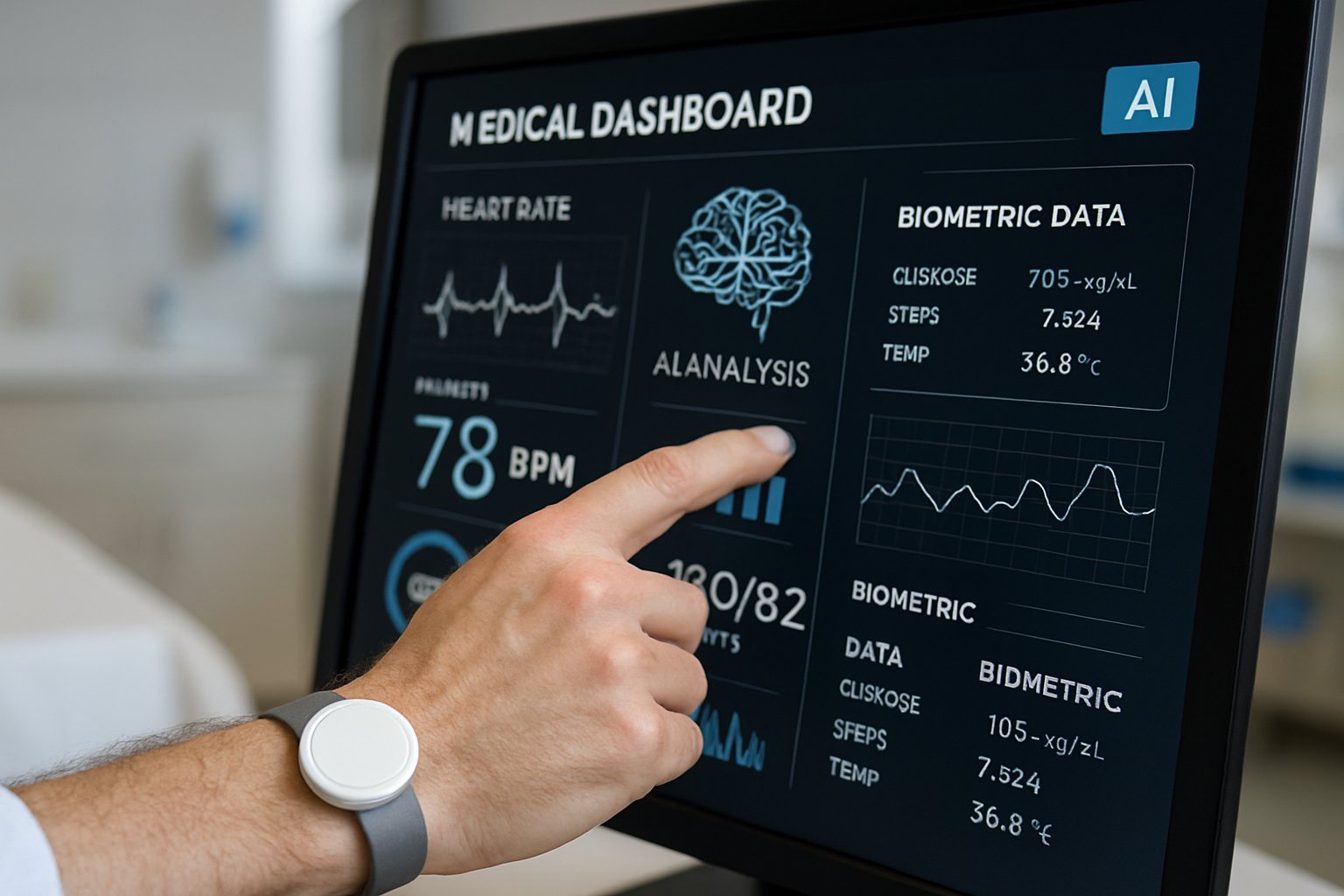
Analyst Amy Webb popularized the phrase during the 2025 SXSW trend reveal. She projected a 2030 maturity horizon for mainstream deployment. Furthermore, Webb positioned the convergence as strategic for healthcare, manufacturing, and service robotics. Her Future Today Institute report now guides many corporate foresight teams.
Living Intelligence Tech therefore denotes more than marketing jargon. Nevertheless, practical definitions rest on measurable integration of bodies, Sensors, and bio-compute. Next, we examine market growth indicators.
Market Growth Indicators Rise
Capital is following the promise. MarketsandMarkets pegs AI in Biotech at USD 4.1 billion this year. Moreover, the firm forecasts USD 22 billion by the mid-2030s, a 18 percent CAGR. Meanwhile, biosensor revenues could double to nearly USD 60 billion over the same window. Consequently, Sensors suppliers like Bosch and STMicroelectronics expand production lines for edge deployments.
Investors also chase organoid intelligence startups despite tiny current revenues. FinalSpark and Cortical Labs both closed multi-million seed rounds within twelve months. Furthermore, NVIDIA advertises Jetson modules as perfect companions for neuron-driven coprocessors. However, analysts warn hype may outpace supply-chain readiness.
Growing numbers validate commercial traction across hardware, software, and wetware. In contrast, the next section highlights concrete product milestones that ground these projections.
Emerging Commercial Milestones Showcase
Cortical Labs stole headlines with its CL1 desktop biocomputer announced March 2025. The device embeds 800,000 living neurons on electrode arrays controlled by a biological operating system. Consequently, researchers can run closed-loop learning tasks using real human cells. IEEE Spectrum quoted neuroscientist Karl Friston calling the platform "a little brain in a vat".
Roboticists already test CL1 alongside embodied AI drones for adaptive flight control. Additionally, pharma groups explore neuron-powered assays to predict neurotoxicity earlier than animal models. Furthermore, startup FinalSpark revealed prototypes designed for edge inference in constrained power envelopes. Nevertheless, shipment volumes remain modest, and no independent benchmarks exist yet.
These early landmarks demonstrate tangible progress for Living Intelligence Tech beyond conference slides. However, ethical and governance questions intensify as capabilities expand.
Ethical And Governance Debates
Brain-derived computers trigger unusual moral dilemmas. Nature Reviews Bioengineering authors argue organoids might develop rudimentary sentience under prolonged stimulation. Therefore, they recommend oversight committees, donor consent clarity, and public engagement programs. Meanwhile, the International Neuroethics Society prepares voluntary guidelines for commercial deployments.
In contrast, some engineers dismiss these concerns as premature. However, governance frameworks could decide funding access and market acceptance. Consequently, enterprises adopting Living Intelligence Tech should embed ethics-by-design from day one. Regulators already scrutinize data provenance, biological waste, and cross-border sample transport.
Robust ethics planning will shape public trust and investment flows. Subsequently, we examine technical barriers that intersect with these governance threads.
Technical Hurdles And Risks
Scaling neuron cultures beyond small dishes remains difficult. Temperature, nutrient flow, and cellular variability affect computation stability. Moreover, integration with conventional silicon introduces latency, noise, and packaging issues. Power budgets also limit mobile robots hosting wetware modules.
Meanwhile, Sensors suites can overwhelm embedded processors with raw data. Consequently, engineers must design efficient fusion algorithms and edge inference pipelines. AI accelerator shortages further complicate prototypes that pair biological and digital networks. Nevertheless, open-source communities iterate quickly, sharing microfluidic designs and calibration scripts.
Technical bottlenecks slow momentum but also inspire creative cross-disciplinary research. Consequently, strategic planning becomes essential for organisations eyeing first-mover advantages.
Strategic Moves For Stakeholders
Executives must map capabilities against real business pain points. Moreover, pilot projects should target narrow, measurable tasks such as adaptive quality inspection. Investors should balance lofty forecasts with due diligence on supply chains and ethics readiness. Meanwhile, procurement teams should audit vendor roadmaps for interoperability across hardware, Biotech, and sensor modules.
Professionals can enhance expertise with the AI for Everyone certification. The credential introduces foundational concepts vital for cross-functional Living Intelligence Tech initiatives. Consequently, teams gain common language when integrating biological substrates with software ecosystems.
Strategic education and staged pilots reduce risk and accelerate value capture. Next, we explore how professionals can track the field’s rapid Evolution.
Preparing Workforce For Evolution
Rapid convergence creates interdisciplinary talent gaps. Universities now launch hybrid programs blending neuroscience, robotics, and computational biology coursework. Meanwhile, corporate academies add micro-credentials covering sensor engineering and organoid handling. Therefore, continuous learning becomes mandatory for engineers, ethicists, and product managers.
Industry watchers recommend three concrete actions:
- Subscribe to peer-reviewed organoid intelligence journals for evidence over hype.
- Attend robotics conferences where CL1 demos appear on stage.
- Monitor regulatory consultations to anticipate compliance changes.
Nevertheless, information overload can hinder clear decision making. Consequently, curated dashboards tracking Living Intelligence Tech patents and funding help leadership focus.
Workforce readiness determines whether companies lead or lag during this technological Evolution. Finally, we summarise key insights and outline immediate next steps.
Conclusion And Forward Outlook
Living Intelligence Tech now advances from slides to laboratories and pilot factories. Markets show promising numbers, yet hype cycles remain volatile. Moreover, ethical guardrails must accompany each experiment and shipment. Technical barriers regarding scaling, sensor integration, and power require sustained collaborative research. Nevertheless, early milestones like CL1 prove that bio-digital platforms can deliver differentiated capabilities.
Consequently, enterprises that educate teams and invest responsibly can capture first-mover advantage. Explore certifications, monitor policy debates, and join pilot consortia to stay ahead. Visit our newsroom regularly for deeper Living Intelligence Tech coverage and practical implementation guides.


