

AI CERTS
3 months ago
Legislative Action on AI: Congress Faces Mounting State Pushback
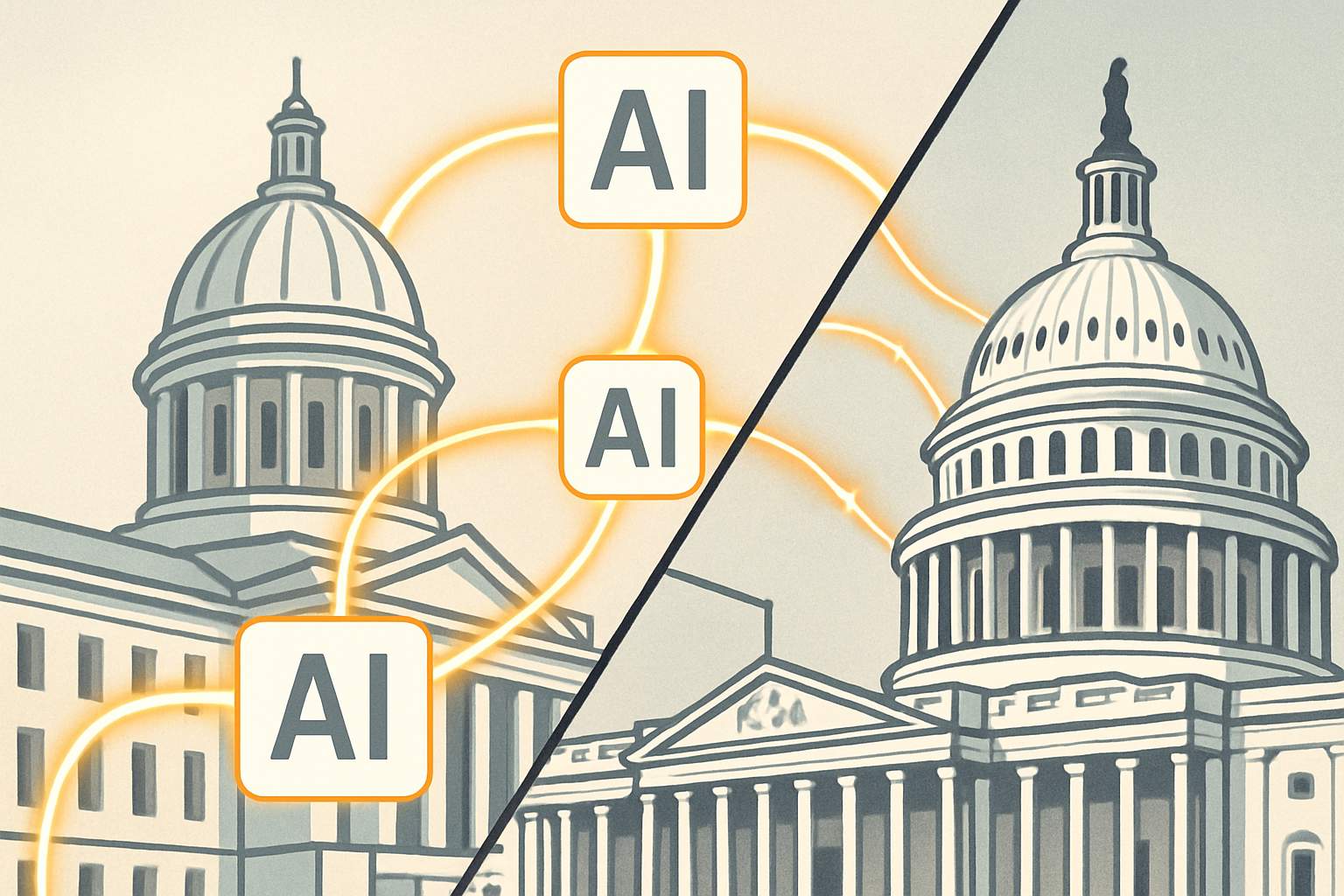
Legislative Action sits at this crossroads, framing every negotiation in the 119th Congress. This article dissects the battle, key numbers, and practical next steps.
Moreover, state attorneys general warn that federal preemption would produce disastrous consequences for voters. In contrast, executives claim heavy rules would slow progress and invite Chinese dominance.
Therefore, the stage is set for historic decisions with global resonance. Stakeholders agree on one point: delay is no longer an option.
Consequently, committees hold hearings almost weekly, while draft bills multiply across chambers. Analysts expect final text to determine investment flows and civil-rights protections through 2035.
Additionally, the preemption debate could redefine federal and state power on technology oversight. Understanding the landscape is essential for executives, lawyers, and civic leaders mapping strategy.
Capitol Hill Showdown Today
May’s Senate Commerce hearing crystallized the fault lines. Moreover, OpenAI CEO Sam Altman warned that the United States has limited time before China matches frontier models.
Microsoft President Brad Smith echoed the plea for nimble governance. In contrast, several senators pressed for tougher safety standards and mandatory audits.
Following the testimony, committees accelerated drafting around risk assessments and licensing regimes. Legislative Action language surfaced in working groups as policymakers weighed compromise paths.
Nevertheless, industry lobbyists kept arguing that overlapping state mandates threaten scale economies. Those claims will dominate summer markups unless new scandals shift momentum.
The hearing established speed versus safety as the central narrative. Consequently, the next chapter belongs to state officials demanding a voice.
State Leaders Push Back
On November 25, thirty-five attorneys general issued a blistering letter to leadership. They warned that broad preemption would exacerbate election Threats and consumer harms.
Moreover, New York AG Letitia James argued that every state deserves authority to police misconduct. Reuters described the message as a “rare bipartisan revolt.”
Consequently, several senators signaled reluctance to support sweeping moratoria in coming votes. Legislative Action opponents presented the letter as fresh evidence that ground-level regulation already works.
The AGs reframed the debate around present harms rather than hypothetical futures. Therefore, industry advocates must counter with detailed mitigation plans next.
Industry Seeks Uniform Rules
Corporate giants push for one national standard to avoid fragmentation. Furthermore, they highlight McKinsey’s $2.6-$4.4T projection to emphasize growth potential.
The same Report appears in almost every briefing slide shared on Capitol Hill. CEOs insist that overlapping state disclosure rules will raise compliance costs and slow hiring.
In contrast, civil groups reply that profits should not trump safety. Legislative Action proponents inside industry now draft template language limiting state lawsuits.
Independent economists caution that headline numbers mask uneven productivity gains across sectors. Consequently, small manufacturers fear displacement without protective training funds.
Policy analysts advise tailored tax credits linking adoption to worker reskilling programs. Economic optimism remains persuasive, yet public skepticism persists.
Consequently, data-driven analysis sets the stage for the numbers ahead.
Numbers Driving AI Urgency
Reliable metrics clarify the scale of opportunity and risk. Moreover, legislators cite these figures while negotiating amendments.
- McKinsey estimates generative AI can add up to $4.4 trillion yearly worldwide.
- NCSL tracked roughly 100 AI bills across 38 states during 2025 alone.
- The House proposal includes a controversial ten-year preemption clause affecting every state.
- Senate Commerce held eight AI oversight hearings between January and October 2025.
These numbers fuel Legislative Action debates by quantifying both stakes and momentum. Nevertheless, figures alone cannot resolve competing values.
Therefore, attention turns to concrete Recommendations that bridge interests. Statistics anchor discussions yet leave open critical design questions.
Subsequently, proposed solutions enter the spotlight. In contrast, cyber-security officials emphasize that existing breach statistics likely undercount AI-driven incidents.
Evaluating Proposed Solutions
Draft bills vary from narrow transparency rules to sweeping federal preemption. Additionally, several lawmakers explore a hybrid model combining baseline standards with state opt-ins.
The Center for AI Policy urges mandatory national-security audits and public incident logs. A bipartisan working group released a Report outlining risk tiers and proportional oversight.
Moreover, it suggests sunset clauses to revisit rules every three years. Legislative Action advocates claim such periodic reviews keep regulation aligned with evolving Threats.
Experts also propose stronger enforcement capacity for the Federal Trade Commission. Meanwhile, others recommend a standalone agency focused on AI safety.
Recommendations differ, yet each requires careful funding formulas.
Key Action Points List
- Create tiered risk assessments for frontier systems.
- Fund state enforcement partnerships with federal agencies.
- Mandate transparent provenance and watermarking for AI outputs.
- Review preemption language every three years through sunset clauses.
Collectively, these steps embody balanced Legislative Action capable of addressing immediate Threats. Nevertheless, success depends on coordinated oversight and sustained resources.
A blended framework appears increasingly plausible. Consequently, attention shifts toward strategic execution pathways.
States like Colorado already pilot algorithm registries tracking deployment in public benefits systems. Furthermore, early audits uncovered eligibility errors affecting thousands of residents.
Those findings strengthen Recommendations for proactive testing before procurement.
Strategic Steps For Congress
Implementing reforms will test institutional stamina and political will. Moreover, committee chairs must reconcile budget limits with expansive mandates.
Legislative Action can advance if negotiators sequence milestones across fiscal cycles. Experts recommend immediate investments in technical capacity for congressional staff.
In contrast, lobbyists insist external advisory boards will suffice. Report backlogs already delay critical votes, yet streamlined workflows could mitigate friction.
Professionals tracking these developments can deepen expertise through the Chief AI Officer™ certification.
Additionally, the credential aligns with forthcoming Policy requirements on governance. Consequently, graduates gain credibility during Legislative Action hearings and consultations.
Execution hinges on people, processes, and political capital. Therefore, the conclusion distills core insights and next moves.
Congress can draw lessons from Europe’s phased AI Act rollout. Nevertheless, American frameworks must respect constitutional federalism principles.
Consequently, negotiators contemplate trigger clauses that restore state autonomy if federal deadlines slip.
The 2025 debate reveals a complex calculus of economics, ethics, and federalism. Legislative Action will dictate who benefits and who bears risk.
Moreover, stakeholders increasingly agree that neither blanket preemption nor patchwork chaos serves society. Experts urge calibrated safeguards, realistic timelines, and periodic Report cards to sustain trust.
Consequently, readers should monitor committee markups and state statutes for fresh signals.
Professionals aiming to influence outcomes can upgrade credentials through the Chief AI Officer™ certification, gaining technical fluency and legislative literacy.
Additionally, sharing insights with local representatives accelerates pragmatic Recommendations adoption. Actively engaging now ensures balanced Policy emerges before crises strike.
Therefore, take the next step and contribute to resilient AI governance.


