

AI CERTS
3 months ago
Legacy Code AI Accelerates Mainframe Modernization
Consequently, enterprises expect accelerated timelines and measurable cost reductions. This article unpacks market momentum, technical features, benefits, and risks for decision makers. Meanwhile, professionals will discover governance tips and certification resources to strengthen modernization programs. Moreover, we benchmark AWS claims against independent research and alternatives from IBM and specialist vendors. By the end, readers can gauge whether agentic modernization fits their unique risk profile. Therefore, prepare for a concise, data-driven exploration of the next mainframe frontier.
Market Momentum Accelerates Globally
Global modernization spending reached about $8 billion in 2025, according to MarketsandMarkets research. Furthermore, forecasts suggest expansion toward $13-18 billion by early 2030s, reflecting 6-10 percent annual growth. Kyndryl’s 2024 survey showed 86 percent of enterprises already pilot AI to shrink modernization timelines. Legacy Code AI momentum therefore aligns with clear budget allocations and top-level executive mandates.
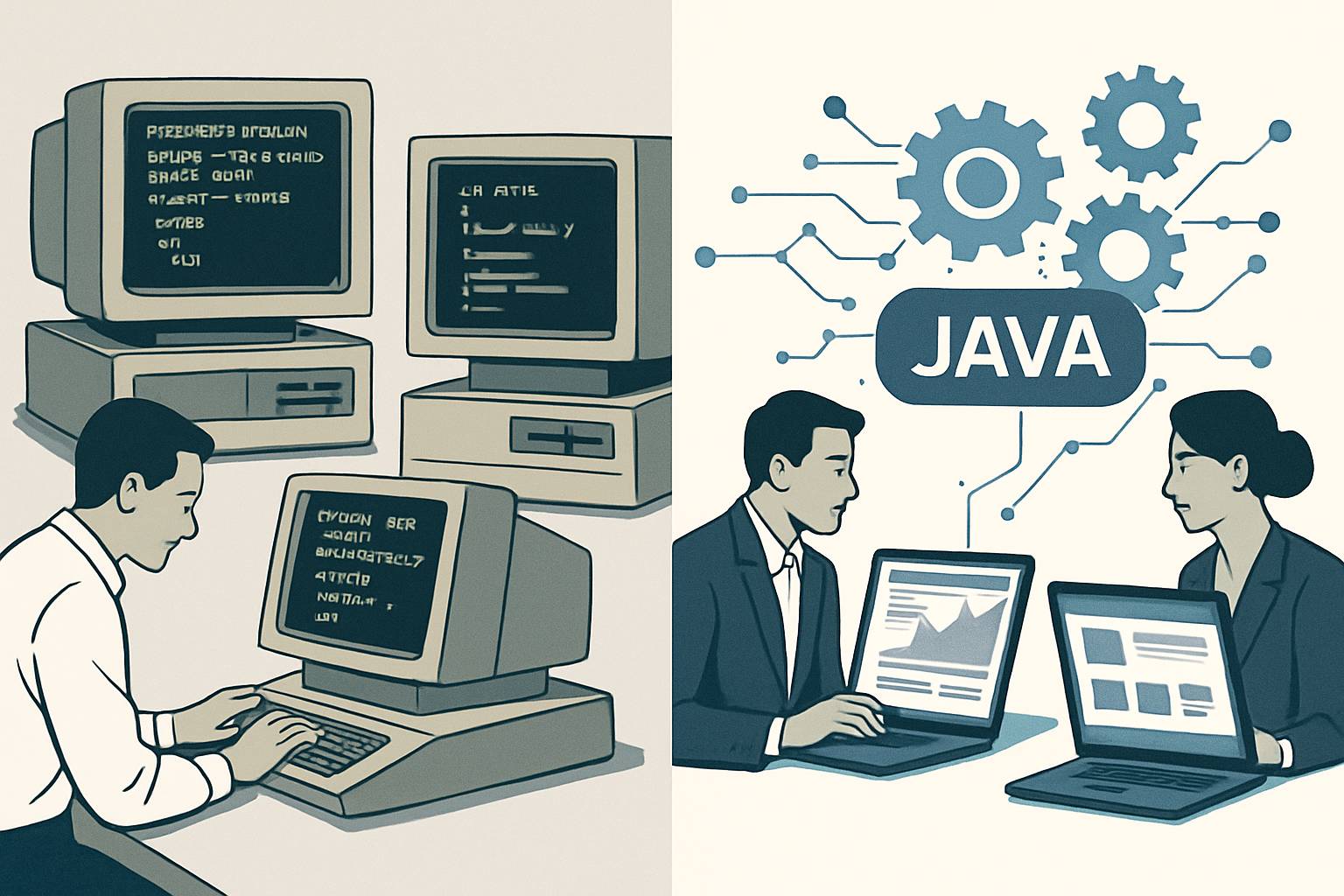
Reuters reported AWS forming an agentic AI unit, illustrating strategic investment behind the service. Moreover, CEO Matt Garman predicted a multibillion-dollar opportunity, underscoring competitive stakes. Competitors, notably IBM, push watsonx tooling, while niche firms offer targeted conversion utilities.
The numbers confirm rapid interest and capital flow toward agent-driven modernization. However, understanding technical underpinnings remains critical before executives commit further funds. The next section breaks down AWS Transform’s architecture.
Agentic AI Service Overview
AWS Transform bundles multiple autonomous agents that collaborate across discovery, analysis, refactoring, and testing phases. Consequently, the workflow covers domain decomposition, business-logic extraction, and functional equivalence checks in a single pipeline. One agent parses code; another drafts blueprints, while others generate test suites and data comparisons. Legacy Code AI capabilities inside Transform orchestrate these agents and surface rationale for every automated change. Furthermore, integration with AWS Mainframe Modernization Application Testing supplies record-and-replay validation for functional parity. Typical patterns include cobol to java transformations supported by open-source libraries.
The service currently launches in US East, with plans for broader regional coverage. Organizations run agents against COBOL, PL/I, and assembler, targeting cloud-native Java or .NET Core. In addition, Transform Custom allows enterprise-specific constraints and private models for regulated workloads.
These mechanics place the platform beyond simple chat assistants. However, correct adoption demands disciplined pipelines and skilled oversight, explored later. First, we compare AWS against other vendors to contextualize innovation.
Competitive Landscape And Responses
IBM counters with watsonx Code Assistant for Z, emphasizing on-premises modernization and hybrid cloud integration. Moreover, specialist ISVs like Micro Focus focus on rule-based code conversion and rehosting services. Deloitte, Accenture, and Capgemini package playbooks around each platform, seeking differentiation through industry templates. Nevertheless, AWS boasts analyzed 1.1 billion lines and 810,000 saved labor hours, impressing early adopters. In contrast, independent auditors still await public defect benchmarks before declaring a clear winner.
Overall, vendor competition accelerates tool maturation and pricing creativity. Next, we quantify user benefits and cost impacts.
Benefits, Speed, Cost Metrics
AWS marketing claims Legacy Code AI agents cut manual effort by up to 4x for mainframe workloads. Moreover, QAD cited 60-70 percent productivity gains after automated cobol to java conversion and test generation. Grupo Tress Internacional reported 70 percent effort reduction during .NET porting, validated by functional equivalence tests. Furthermore, AWS customers describe licensing and maintenance cost drops approaching 70 percent following full-stack migration. A 2024 Kyndryl study observed 225 percent ROI within a year for AI-assisted refactoring journeys.
- Vendor figure: 1.1 billion lines analyzed across AWS modernization engagements.
- Labor savings: 810,000 developer hours avoided, according to AWS marketing claims.
- Time acceleration: up to 4x faster code conversion and 5x faster Windows migration.
- Cost impact: up to 70 percent lower mainframe licensing after final cutover.
These statistics paint an optimistic picture, yet they originate mostly from vendor or partner publications. Consequently, leaders should demand independent audits before projecting internal savings. Still, the early evidence suggests material gains when Legacy Code AI agents run within disciplined pipelines.
In summary, automation reshapes timelines and budgets for many customers. However, adoption stories reveal nuances beyond headline numbers. The following section distills those lessons.
Adoption Stories And Lessons
Air Canada, Thomson Reuters, and Experian pilot AWS agents across separate, low-risk applications first. Subsequently, teams graduated toward larger mission-critical portfolios after validating functional parity. Legacy Code AI dashboards tracked agent actions and flagged ambiguous business rules for human review. Additionally, partners like Kyndryl embedded domain experts to interpret obscure batch schedules and data-format nuances. In contrast, one financial institution paused its cobol to java pilot after discovering performance regressions.
Engineers identified indexing misalignments within translated SQL, requiring targeted refactoring and extra test cycles. Nevertheless, follow-up sprints restored service levels without customer impact. Therefore, case studies highlight both productivity and the indispensability of rigorous governance.
Adopter stories confirm value yet expose latent operational risks. Accordingly, organizations must weigh benefits against governance challenges next.
Risks, Gaps, Governance Challenges
Automated translation can introduce subtle logic drift, especially during large-scale refactoring of intertwined legacy modules. Therefore, functional equivalence testing remains non-negotiable. AWS provides record-and-replay tooling, yet independent verification ensures regulatory compliance. Data privacy also arises; feeding proprietary code into shared clouds can breach internal policy. Transform offers private model hosting, but risk owners must validate retention and encryption settings.
Vendor lock-in represents another concern, because generated microservices often rely on AWS constructs. Moreover, multi-cloud ambitions may suffer when code is tightly bound to platform libraries. IBM urges hybrid strategies, arguing modern mainframes already support container hosting and integrated AI accelerators. Besides technology, skills gaps persist; most survey respondents still hire third-party experts for intricate migration tasks.
Legacy Code AI adoption thus requires change management, upskilling, and robust release governance frameworks. These issues underscore the importance of transparent metrics and phased rollout plans.
Consequently, prudent leaders ask targeted questions before signing enterprise contracts. The next section proposes practical next steps and certification resources.
Guidance For Next Steps
Begin with a portfolio assessment that scores applications by complexity, compliance sensitivity, and business value. Subsequently, select one medium-critical workload for a controlled pilot using skilled refactoring partners. Ensure coverage metrics exceed 90 percent before expanding agent usage. Moreover, negotiate contractual clauses for defect remediation, data handling, and service-level objectives before broader migration phases.
Teams should cross-train mainframe engineers on cloud deployment and observability tooling. Professionals can validate skills via the AI Cloud Professional™ certification. Additionally, establish dashboards that expose agent actions, exceptions, and rollback triggers for auditors.
Legacy Code AI governance should include monthly retrospectives where metrics inform model fine-tuning decisions. Meanwhile, align architecture reviews with enterprise architecture boards to avoid uncontrolled sprawl.
These steps lay a structured foundation for scaled modernization. Finally, we conclude with strategic takeaways.
AWS Transform showcases how agentic automation shifts mainframe thinking from incremental tweaks to bold reinvention. Early metrics indicate tangible speed and cost wins, particularly in cobol to java scenarios. However, success depends on disciplined testing, transparent governance, and measured portfolio expansion. Legacy Code AI promises scale, yet leaders must temper expectations with independent verification and hybrid contingency plans. Furthermore, rivals like IBM will continue improving on-premise tooling, keeping strategic options open. Consequently, enterprises that embrace structured pilots, robust oversight, and certified talent will convert potential into sustained value. Legacy Code AI adoption, paired with proactive skill development, positions teams for next-generation transformation. Take the first step now and explore the linked certification to future-proof your modernization journey.


