

AI CERTs
2 months ago
Larry Ellison AI Strategy: Private Data, Public Debate
Investors, engineers, and policymakers all watched Oracle’s December earnings call for strategic signals. Consequently, chairman Larry Ellison delivered more than numbers. He restated his stark thesis: public-data models have become interchangeable, and only private data unlocks real value. This claim shapes Oracle’s spending, partnerships, and political lobbying. Moreover, it provokes heated arguments about privacy, economics, and technical feasibility. The following analysis unpacks the controversy, examines supporting metrics, and highlights unresolved risks. Industry leaders need clarity because spending decisions and regulatory agendas hinge on these narratives. Therefore, understanding the 'Larry Ellison AI problem' offers insight into next-generation enterprise architecture. Throughout this article we reference verified disclosures, independent commentary, and contextual statistics. Finally, professionals seeking structured upskilling can benchmark their knowledge against the industry-recognized AI Security Level 2 certification.
Larry Ellison AI Problem
Ellison’s framing is disarmingly simple. All major language models rely on the same publicly scraped internet corpus. Consequently, output quality converges, prices fall, and differentiation erodes. In contrast, proprietary enterprise or national datasets remain scarce and valuable. Therefore, whoever enables secure reasoning across those datasets can capture superior margins. The Larry Ellison AI narrative positions Oracle as that enabler through its ubiquitous database footprint. Nevertheless, critics argue that architecture tweaks, fine-tuning, and retrieval pipelines also create competitive edges. Moreover, they caution that Ellison underplays looming AI model limitations involving bias and hallucination. These challenges expose cracks in the sweeping commoditization claim. However, the sound-bite has resonated because it offers boardrooms a clear investment compass.
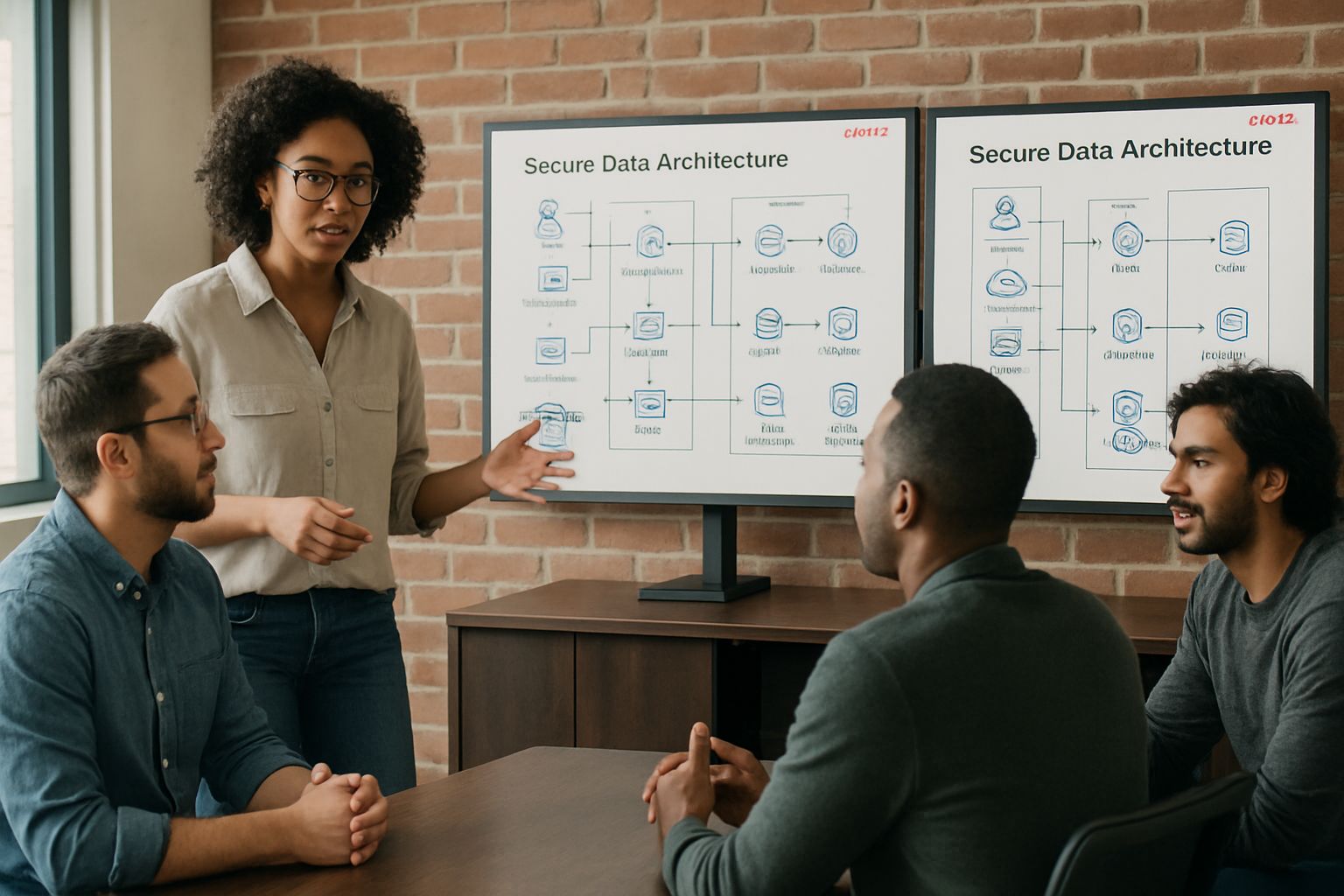
Key quotation summaries reinforce the point. He said, “All the large language models are basically the same” during Oracle’s Q2 FY2026 call. Subsequently, media outlets amplified the line, turning it into a market talking point. Yet exact transcript wording remains debated, illustrating how quickly narratives harden once repeated. Regardless, the phrase now shapes customer questions about long-term roadmaps.
These observations explain why the Larry Ellison AI thesis dominates recent enterprise workshops. However, deeper analysis demands attention to private data economics, technical mechanisms, and financial bets. The following sections address those elements in detail.
Private Data Advantage Case
Enterprises store troves of structured records, invoices, logs, and sensor streams inside regulated systems. Moreover, compliance rules usually forbid exposing such data to external clouds. Consequently, organizations struggle to harness generative models without breaching policy. Ellison argues that Oracle’s database heritage offers a native bridge. With built-in retrieval-augmented generation support, customers can vectorize tables and feed only relevant context to an inference endpoint. Therefore, answers remain accurate while confidential rows never leave the perimeter. Analysts call this architecture a “bring the model to data” approach.
Several metrics support the promise: Oracle reported vector database adoption across 30,000 Autonomous Database instances in December. Additionally, GPU-related revenue jumped 177% year over year. Those numbers suggest early traction, yet caveats remain. AI model limitations around domain shift, hallucination, and latency still challenge production rollouts. Nevertheless, boardrooms see proprietary data as the next moat, especially after repeated demonstrations of identical public-data chatbots.
The Larry Ellison AI story thus moves from catchy quote to business case. In contrast, rivals like Snowflake and Google also pitch secure retrieval stacks, indicating fierce competition ahead.
Oracle Vectorization Push Explained
Vectorization converts text, images, or rows into numerical embeddings that capture semantic relationships. Subsequently, retrieval engines find similar vectors within milliseconds. Oracle embedded this function directly into its flagship database last summer. Therefore, developers can issue SQL queries that retrieve vector matches alongside traditional columns. The Larry Ellison AI roadmap treats this capability as the linchpin for retrieval-augmented generation workflows.
Key milestones announced during the Q2 FY2026 call include:
- Vector search available across Oracle Exadata Cloud@Customer deployments
- Integration with OpenAI, Anthropic, and Meta models through OCI endpoints
- Encryption-in-use protections leveraging confidential computing hardware
- Multi-cloud support spanning Azure, AWS, and Google Cloud regions
Furthermore, Ellison highlighted partnerships within the $100 billion Stargate buildout that will expand GPU capacity for vector workloads. However, engineers still report AI model limitations when embeddings drift or when retrieval hits noisy records. Consequently, Oracle plans automatic vector re-indexing features in upcoming releases.
These enhancements address latency and governance pain points. Nevertheless, success depends on sustained developer adoption, which the next section’s capital expenditure outlines will influence.
Capex And Stargate Bet
Oracle’s financial disclosures reveal unprecedented capital intensity. December guidance lifted fiscal-year capex to roughly $50 billion. Moreover, the company spent $12 billion in the latest quarter alone. These funds finance GPU clusters, photonic networking, and on-site renewable power.
Meanwhile, the Stargate consortium aims to funnel up to $500 billion into domestic AI infrastructure over four years. Oracle supplies database, cloud, and operational tooling for several planned sites. Consequently, Remaining Performance Obligations soared to $523 billion, up 438% year over year.
Investors responded harshly, pushing Oracle shares down more than 11% after the earnings release. Nevertheless, Ellison insists the Larry Ellison AI data thesis warrants the spend because private inference margins will offset early cash burn. However, skeptics warn that demand forecasts may not justify multi-decade depreciation schedules.
The following bullets summarize finance highlights:
- Total revenue: $16.1 billion (Q2 FY2026)
- Cloud revenue: $8 billion, up 34% YoY
- OCI revenue: $4.1 billion, up 68% YoY
- GPU-related services growth: 177% YoY
These figures illustrate scale yet underline execution risk. Therefore, privacy implications deserve equal scrutiny, addressed next.
Privacy And Surveillance Concerns
Civil-liberties groups recall Ellison’s 2024 remark praising constant monitoring. Consequently, proposals to “unify national data” revive surveillance fears. In contrast, Ellison argues centralization allows better fraud detection and public-health analytics. Nevertheless, critics highlight breach scenarios, mission creep, and authoritarian misuse.
Furthermore, security researchers observe that concentration raises systemic risk: a single compromise could expose entire populations. Therefore, resilient design, granular access control, and zero-trust architectures become mandatory. Organizations can validate their readiness through the AI Security Level 2 program.
Regulators have not endorsed the proposal, yet parliamentary committees in three countries have scheduled hearings. Meanwhile, technical debate over AI model limitations intersects with policy because retrieval pipelines may inadvertently leak sensitive embeddings. Consequently, anonymization and differential privacy techniques are gaining momentum.
These dialogues show that the Larry Ellison AI vision collides with democratic oversight demands. However, the market also weighs balance-sheet realities, covered next.
Market Reaction And Risks
Wall Street analysts praised cloud growth but questioned free cash flow trajectories. Moreover, they noted debt issuance may climb if capex persists. Rating agencies currently maintain investment-grade outlooks. However, negative guidance revisions could prompt downgrades.
Some investors accept the Larry Ellison AI thesis and treat RPO as a revenue guarantee. In contrast, others remember earlier boom-bust infrastructure cycles. Consequently, valuation multiples compressed following the December report.
Additionally, competition intensifies. Microsoft couples Azure OpenAI Service with internal data connectors. Google expands Vertex AI search functions. Therefore, Oracle must prove superior latency, cost, and governance outcomes. AI model limitations will influence these benchmarks, especially as synthetic traffic burden models.
These dynamics create a volatile setting. Nevertheless, clear strategic lessons emerge, summarized in the final section.
Strategic Takeaways Moving Forward
Three lessons stand out:
- Data moats matter, yet architecture still differentiates beyond corpus overlap.
- Infrastructure bets require balanced financial discipline and demand validation.
- Privacy safeguards must evolve alongside retrieval and vectorization pipelines.
Therefore, technology leaders should audit their data estates, pilot retrieval-augmented generation, and develop cost models for GPU workloads. Meanwhile, compliance teams need to map emerging regulations on centralized citizen data.
The Larry Ellison AI discourse will continue shaping boardroom agendas. Consequently, professionals who master security, governance, and vector search command premium influence. Aspiring specialists can demonstrate competence via the AI Security Level 2 credential.
These conclusions integrate technical, financial, and ethical views. Hence, forward-looking enterprises can align investments with realistic upside and acceptable risk.


