

AI CERTS
2 hours ago
Land Bid Rejection: Farmers Push Back on Data Centers
Hyperscalers need thousands of acres and gigawatts, yet many owners refuse to sell. In contrast, local officials chase tax revenue and new jobs promised by data center builders. This article unpacks the economics, culture, and infrastructure behind the Land Bid Rejection movement. Additionally, it examines responses from investors, planners, and conservation groups. Professionals will gain data-driven insight into emerging risks and opportunities. Therefore, read on to understand why farmers and hyperscalers remain miles apart.
Rising Offers, Firm Refusals
Developers now dangle record sums for fertile acreage near transmission corridors. However, many families see more than price tags. Mervin Raudabaugh declined about $15 million for 261 Pennsylvania acres. Subsequently, he sold conservation rights to protect his farm indefinitely. In Kentucky, offers reportedly surpassed $33 million for 650 contiguous acres. Nevertheless, Ida Huddleston’s relatives refused, citing stewardship and heritage.
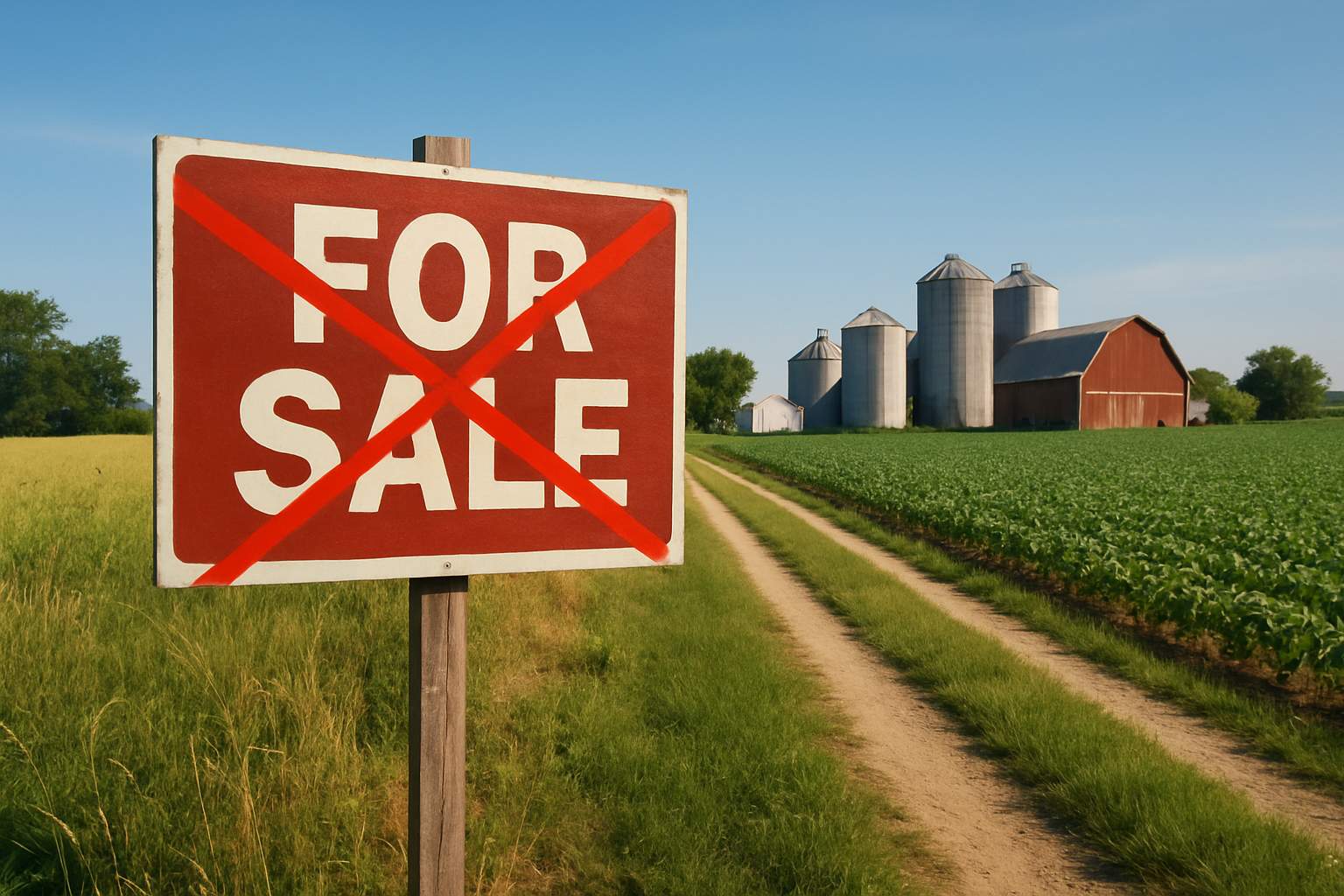
- Offer range: $60,000-$120,000 per acre in recent negotiations.
- Record Northern Virginia sale: $700 million for 97 acres in 2025.
- Hines projects 40,000 additional powered acres by 2030.
These figures illustrate the financial lure behind each Land Bid Rejection decision. Consequently, community meetings remain emotionally charged. Sky-high offers have not silenced preservation voices. Therefore, we must explore what drives industry hunger for powered land next.
Drivers Behind Powered Land
Cloud and AI workloads require dense compute clusters fed by reliable megawatts. Moreover, design norms place average capacity near 3.5 MW per acre. That metric means a 2.2 GW campus spans roughly 630 operational acres. Additional buffer, substation, and road space pushes total needs higher. Consequently, speculators scour rural grids for parcels adjacent to high-voltage lines. Investors call such property "powered land" because entitlement and electricity access are solved. Hines Research frames powered land as a foundational asset class for coming AI growth. Furthermore, the firm estimates global demand will absorb 40,000 acres within five years. These fundamentals underpin aggressive bidding and subsequent Land Bid Rejection encounters. Massive compute growth directly converts to land hunger. In contrast, farmers weigh economics against culture, creating complex tradeoffs detailed below.
Economic Gains, Cultural Costs
County officials tout construction wages, diversified tax bases, and infrastructure upgrades. However, permanent staffing at hyperscale sites often remains surprisingly small. IEA analysts also note unresolved grid costs frequently shift back to customers. Meanwhile, residents fear noise, diesel testing, and possible water withdrawals. Mary Hendrickson warns farmland conversion is effectively irreversible for future generations. Consequently, every Land Bid Rejection becomes a statement of identity as well as economics.
Local voices repeat the phrase US Farmers Infrastructure Data Centers during hearings to contrast priorities. Farmers argue grain feeds people, whereas racks of servers feed algorithms. These cultural narratives resonate across agricultural states. Economic models alone cannot capture heritage values. Therefore, tension shifts toward electricity and water infrastructure, the next battleground.
Infrastructure And Energy Strain
Large campuses draw hundreds of megawatts, dwarfing many municipal loads. For example, PJM filings show Mason County’s request ramping to 2.2 GW by 2031. Subsequently, planners propose multi-hundred-million-dollar transmission upgrades billed to the customer. Moreover, grid lead times extend beyond five years, delaying community benefits. IEA tracking finds global data centers consumed up to 340 TWh in 2022. Furthermore, AI training could accelerate demand despite efficiency wins.
Water usage depends on cooling design; some evaporative systems need millions of gallons annually. Consequently, opposition coalesces whenever utilities discuss eminent domain for line corridors. These factors frequently trigger another Land Bid Rejection stance among neighboring farmers. US Farmers Infrastructure Data Centers tension again surfaces during environmental hearings. Grid pressure amplifies local fears and delays approvals. Nevertheless, market forces remain strong, fueling speculative land trades discussed next.
Market Speculation Ripple Effects
Powered land scarcity in Northern Virginia sets dramatic price benchmarks. Consequently, flippers resell rezoned parcels for hundreds of millions within months. Investors mirror that strategy in Kentucky, Ohio, and Georgia. Meanwhile, secrecy agreements mask the ultimate hyperscaler behind each option contract. Lack of transparency frustrates planners and fuels rumors. Furthermore, some counties now preemptively limit data center zoning overlays. Every speculative surge increases offer sizes and, paradoxically, strengthens the Land Bid Rejection movement.
- Northern Virginia average sale: $6.3 million per acre in 2025.
- Kosciusko County rezoning defeat halted a 500-acre proposal.
- Several Kentucky parcels remain unsold after repeated bids.
US Farmers Infrastructure Data Centers debates thus influence real-estate capital flows nationwide. Speculation accelerates prices and public pushback concurrently. Next, we examine emerging policy levers shaping future negotiations.
Policy Responses Taking Shape
States and counties are drafting guidelines to balance growth with preservation. Moreover, some jurisdictions require third-party fiscal impact audits before approval. Lancaster Farmland Trust demonstrates another tool: selling conservation easements to preserve acreage. Additionally, planners impose water stewardship conditions and renewable energy targets. Professional upskilling also matters; officials now explore specialized credentials. Consequently, many planners pursue the AI+ UX Designer™ certification for data-centric design insight.
Legislators also study farmland loss caps and tiered tax incentives. Nevertheless, consistent federal guidance on siting remains absent. Without clarity, each county faces another potential Land Bid Rejection showdown. US Farmers Infrastructure Data Centers friction will persist until frameworks mature. Policy innovation may align economic and cultural priorities. Finally, let us consolidate lessons and consider next steps for stakeholders.
Conclusion And Outlook
Land Bid Rejection cases reveal deep clashes between global cloud demand and local values. Farmers weigh legacy, water, and grid impacts against life-changing windfalls. Meanwhile, investors chase powered land premiums driven by AI expansion. Consequently, zoning boards become battlegrounds for US Farmers Infrastructure Data Centers debates. Robust data, transparent negotiations, and realistic fiscal models can reduce polarization.
Moreover, conservation easements and targeted incentives offer middle-ground solutions. Professionals equipped with modern certifications can navigate future Land Bid Rejection negotiations effectively. Therefore, explore the AI+ UX Designer™ credential to sharpen strategic planning skills today. Rural communities, grids, and clouds all depend on informed action.


