

AI CERTS
2 hours ago
Labor Protests Rise Amid AI Job Security Fears
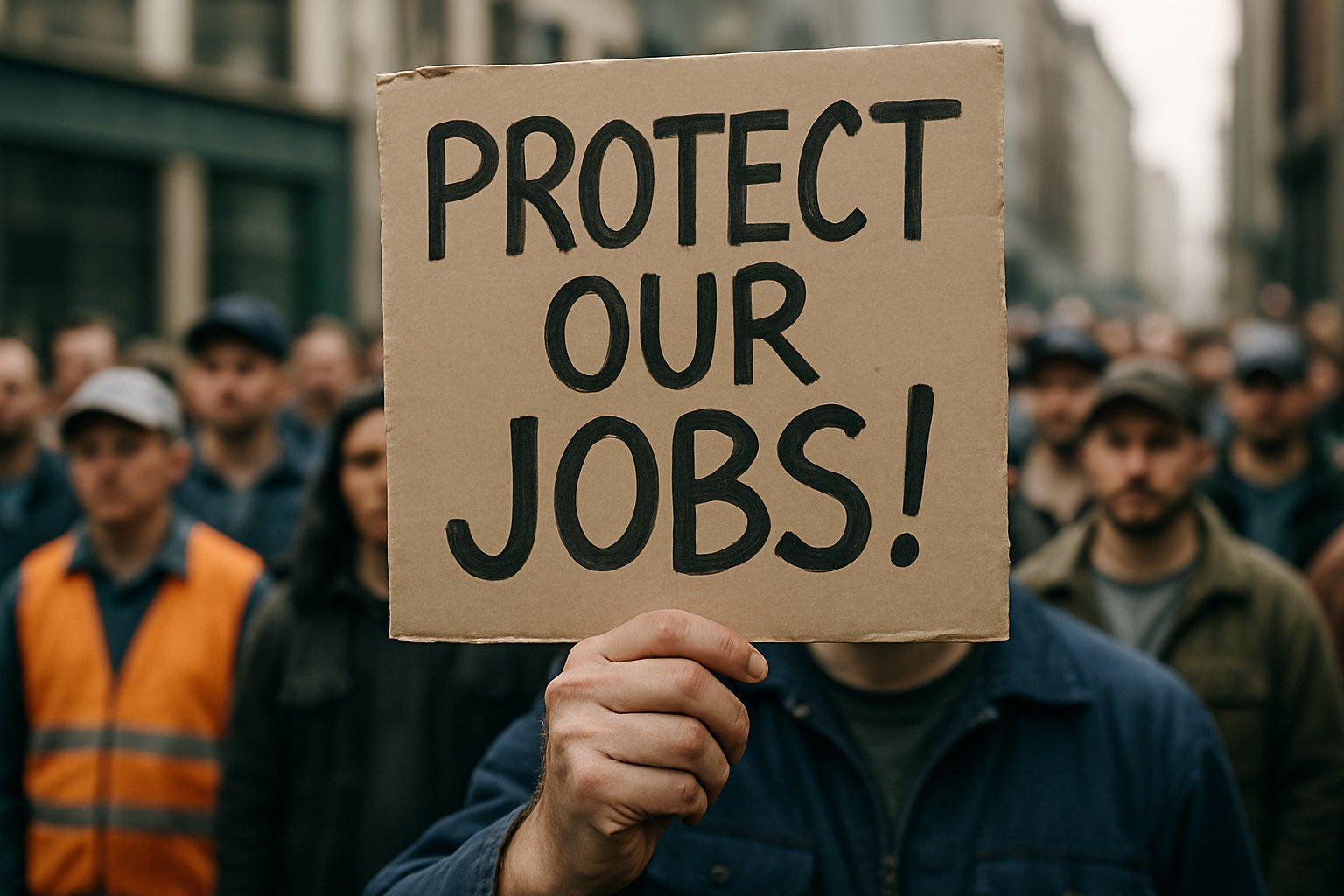
White-collar professionals picket outside newsrooms, IT campuses, and social platforms demanding transparency and protection. However, executives insist artificial intelligence will augment talent, create new opportunities, and boost productivity. Regulators, unions, and consultancies now publish conflicting forecasts, turning the employment debate into a global flashpoint.
This article examines recent demonstrations, economic data, and strategic responses shaping the future of office work. Readers will gain insights and learn where professional certifications can strengthen individual Security against disruption. Moreover, pragmatic steps for workforce reskilling will be highlighted. Therefore, leaders can anticipate protest dynamics and craft humane transition plans.
Global AI Workforce Shifts
PwC’s 2025 Global AI Jobs Barometer reviews one billion postings across industries. In contrast, the World Economic Forum surveys employers on planned automation. Together, the reports highlight uneven exposure, higher wage premiums, and accelerated revenue per employee. Furthermore, Anthropic’s Dario Amodei warned that half of entry roles could disappear within five years. Geoffrey Hinton echoed similar alarms, predicting severe losses by 2026.
Key data points clarify the stakes:
- AI-skilled workers earned a 56% wage premium in 2024 (PwC).
- AI-exposed industries posted 27% higher revenue per employee 2018-2024 (PwC).
- 59% of workers will need reskilling by 2030, WEF projects.
Consequently, demand for advanced AI capability rises even while redundancy fears spread. These indicators reveal simultaneous growth and vulnerability. However, the statistics also kindle Labor Protests demanding clearer futures, a theme explored next.
Rising Labor Protests
NewsGuild pickets outside U.S. newsrooms started a wave that soon crossed continents. Meanwhile, TikTok moderators in Berlin launched a full-day strike after hearing about 150 planned replacements. UNITE organized marches in Chennai and Pune, alleging 30,000 terminations at TCS despite company denials. Moreover, Indian demonstrations coordinated online with European colleagues, showcasing digital solidarity. Workers share layoff spreadsheets, legal advice, and Security checklists within encrypted channels. Such coordination amplifies each local Protest into a global story.
Labor Protests also appear in quieter forms, including internal employee Q&A sessions that challenge executives. Nevertheless, companies often label the sessions as innovation dialogues rather than acknowledging underlying grievance. This framing gap widens distrust and pushes unions toward more disruptive tactics. Collective action is scaling alongside automation plans. Therefore, understanding displacement risk perceptions becomes essential.
Job Displacement Risk Debate
Economists disagree on causality between current layoffs and AI. Some argue macro factors still dominate, while others cite direct algorithmic substitution. Consequently, messaging confusion fuels every Protest as each side cites convenient data. Amodei’s 50% projection receives viral attention, yet Jensen Huang counters that new creative roles will emerge. In contrast, WEF data shows both possibilities depending on reskilling speed and policy support. Corporate statements rarely clarify which scenario informs their roadmap. Moreover, absence of forward headcount disclosures intensifies Labor Protests across sectors. Debate without transparency locks stakeholders in opposition. Subsequently, productivity gains become politically fragile, leading to wider wage anxiety.
Productivity And Wage Divide
Numbers from PwC quantify the growing divide between augmented and automated workers. AI-exposed financial services enjoyed revenue per employee growth triple that of low-exposed agriculture. Meanwhile, employees who mastered prompt engineering captured the lion’s share of the 56% wage premium. Nevertheless, entry clerks lacking such skills experienced hiring freezes and early exits.
The clearest contrasts appear in these headline figures:
- AI exposure correlates with 27% productivity gain since 2018.
- Yet U.S. tech layoffs exceeded 141,000 in 2025.
- 61% of surveyed staff expect replacement within three years.
Therefore, individual career Security now depends on rapid skill acquisition and strategic role selection. Professionals can enhance their expertise with the AI Security Architect™ certification. Consequently, certified specialists often transition into governance or risk teams rather than face automation. Productivity rewards appear real yet uneven. However, unequal distribution accelerates Labor Protests focused on fairness.
Union Strategies Emerging Globally
Unions adapt by combining classic pickets with modern open-source intelligence gathering. For example, ver.di crowdsources payslip data to counter management narratives. Additionally, NewsGuild negotiates clauses that compel disclosure of training data used for newsroom models. UNITE builds alliances with European counterparts to align bargaining deadlines. Consequently, employers face synchronized Protest waves across multiple legal jurisdictions.
Common demands now include severance floors, redeployment funds, and mandatory upskilling budgets. Moreover, some charters require third-party audits verifying algorithmic bias and Security controls. These measures aim to convert uncertainty into negotiated certainty. Union innovation mirrors technological change itself. Therefore, upcoming contract seasons will test whether Labor Protests secure meaningful guarantees.
Policy And Reskilling Paths
Governments explore incentives for employer funded bootcamps and tax credits tied to retained headcount. Meanwhile, the European Commission studies severance harmonization to reduce relocation cliffs. In contrast, Singapore links grant eligibility to demonstrable productivity gains and reduced turnover. WEF urges public-private partnerships that convert displaced clerks into cyber defense Jobs. Furthermore, city colleges launch micro-credentials for prompt design, agentic orchestration, and privacy assurance. Such initiatives can calm Labor Protests when workers see visible learning pipelines. However, success requires timing investments before mass notices arrive. Policy momentum is building yet remains fragmented. Subsequently, scenario planning becomes critical, as described in the final section.
Forward Looking Scenarios
Analysts outline three plausible short-term outcomes. Scenario one forecasts rapid augmentation where productivity gains outpace headcount reduction. Scenario two predicts a jobless boom with deep entry level cuts and soaring executive bonuses. Scenario three envisions regulated automation, balancing efficiency with enforced reskilling quotas. Consequently, corporate choices today will determine which path dominates. White-collar communities monitor signals such as capital expenditure, hiring freezes, and algorithm audit transparency. Moreover, vocal investors increasingly weigh brand risk from escalating Labor Protests. Brands hit by high profile Protest often see delayed product launches and regulatory inquiries. Nevertheless, firms integrating transparent roadmaps and certified talent pipelines report steadier share prices. Future scenarios depend on choices, not fate. Therefore, proactive reskilling backed by data can transform confrontation into collaboration.
Conclusion And Action Steps
Stakeholders now stand at a crossroads shaped by data, emotion, and accelerating machines. Labor Protests have spotlighted the stakes, reminding leaders that human capital remains their core advantage. Moreover, workers gain leverage when they pair clear demands with future-ready skills. White-collar teams that complete targeted courses and earn respected certifications will pivot faster than peers. Professionals should track new Jobs dashboards, join industry forums, and pursue structured upskilling immediately. Consequently, executives must align automation roadmaps with protected redeployment pipelines to preserve critical Jobs. In contrast, ignoring collective signals will invite fresh Labor Protests and damage employer reputation. White-collar networks can instead co-create change by measuring impact, sharing lessons, and celebrating saved Jobs. Act now: explore the linked certification, audit personal skill gaps, and lead your organisation beyond disruption.


