

AI CERTS
2 hours ago
Korea’s National AI ‘Squid Game’ Contest: Stakes, Teams, Impact
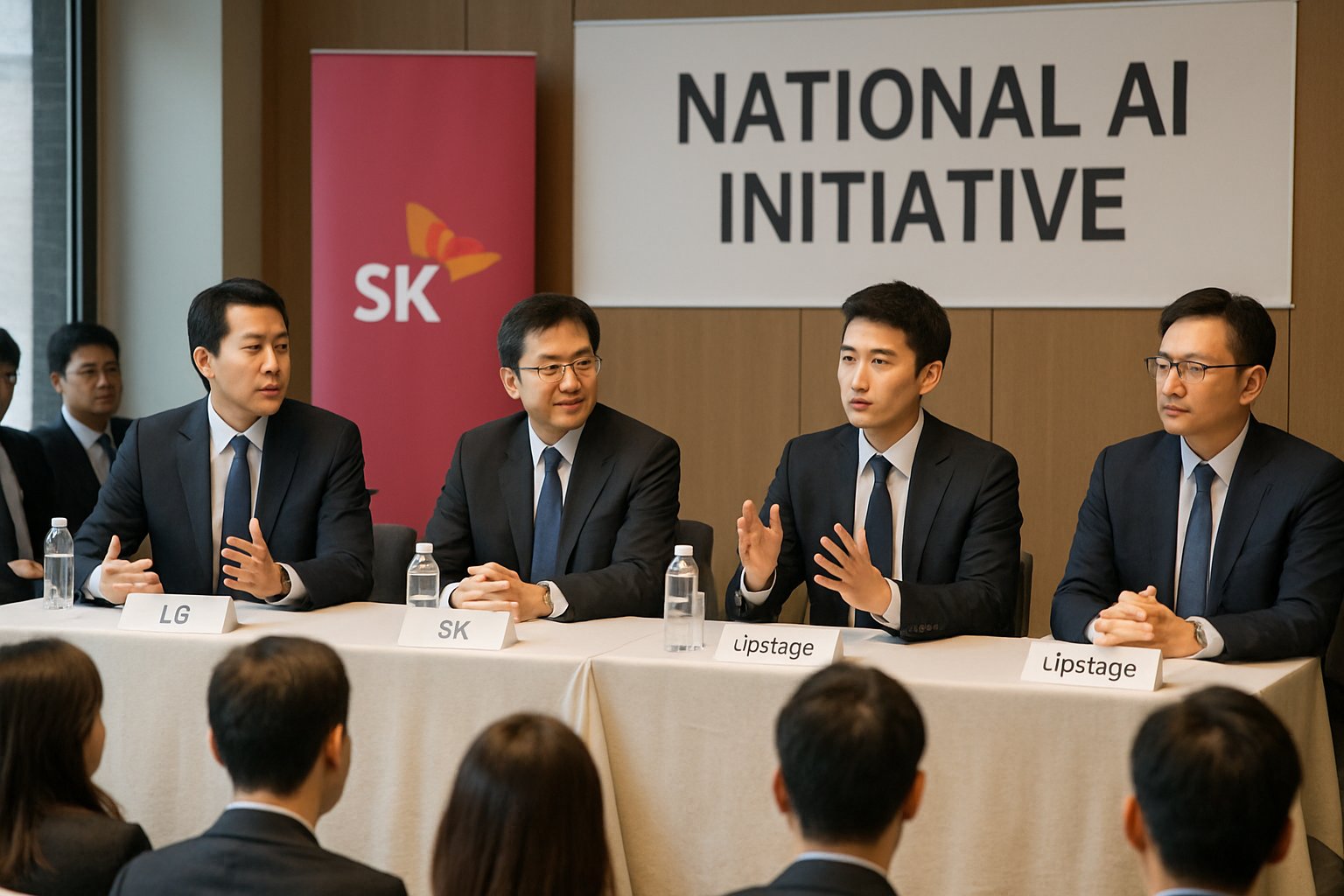
Moreover, the project aims to birth a truly sovereign model rather than rely on foreign stacks. Three consortia remain: LG AI Research, SK Telecom, and Upstage. Their systems must prove original, powerful, and culturally aligned with Korea’s needs. This article dissects the policy logic, technical hurdles, and strategic impact of the bold initiative.
Policy Stakes Intensify Now
Korean policymakers frame the contest as industrial policy, not entertainment. Therefore, the program sits inside a ten-trillion-won 2026 technology budget. Deputy Prime Minister Baek Kyung-hoon promises a top-10 National AI model by 2027.
Furthermore, the ministry links compute subsidies to compliance with independence rules. Teams receive GPU credits only while they remain in contention. In contrast, eliminated companies lose server time and public visibility overnight.
Sovereignty arguments dominate news conferences and parliamentary hearings. Officials insist domestic control over weights and data will shield critical sectors. Consequently, some commentators call the project a digital moonshot for Korea.
- Budget: KRW 9.9-10.1 trillion for 2026
- GPU target: 37,000 units next year
- Final winners: two by early 2027
The stakes marry national pride with strategic security. However, understanding the contest structure clarifies why tensions run high.
Contest Format Explained Fully
The National AI competition follows a reality-show cadence. Firstly, five consortia presented baseline models on December 30, 2025. Secondly, expert panels scored originality, benchmark accuracy, and compute efficiency.
Subsequently, two teams, Naver Cloud and NC AI, were removed on January 15, 2026. Meanwhile, LG, SK, and Upstage advanced with government funding for Phase Two. The ministry may insert a wild-card startup before the next elimination.
Each round halves the field until two champions remain by early 2027. Benchmarks combine multilingual reasoning tests, safety audits, and carbon efficiency metrics. Therefore, teams must optimise performance without importing foreign pretrained components.
The format creates visibility, pressure, and clear milestones. Next, attention shifts to the profiles of the surviving groups.
Leading Teams Profiled Here
LG AI Research leads with the K-Exaone series. Moreover, its model claims strong Korean language understanding and multimodal competence. Analysts praise LG for publishing extensive model cards and benchmark logs.
SK Telecom promotes A.X K1, a 519-billion-parameter behemoth. Additionally, the telecom giant flaunts domestic data centers packed with GPUs. Executives position the model as a "teacher" for downstream open models.
Upstage targets developers with Solara Open 100B, licensed for commercial use. Nevertheless, critics question whether Solara’s tokenizer borrows from foreign research. Upstage counters by releasing training provenance reports on GitHub.
This National AI showdown highlights complementary strengths. However, raw parameters tell only part of the story, as metrics reveal deeper truths.
Technical Metrics Under Microscope
National AI evaluators publish weekly leaderboards in Hangul and English. Public dashboards display perplexity scores, safety violations, and energy footprints. Consequently, model scale no longer guarantees victory. Evaluators demand evidence of indigenous architecture choices supporting Sovereignty goals.
For example, SK scored high on translation but trailed LG in factual recall. Meanwhile, Upstage edged rivals in compute efficiency thanks to sparse attention layers. In contrast, Naver Cloud’s reliance on foreign encoders triggered disqualification.
Therefore, audit transparency has become a differentiator. Teams now publish dataset lineage, carbon accounting, and ethical review notes. Professionals can enhance their expertise with the AI Ethics Professional™ certification.
Transparent metrics encourage community validation and faster improvements. Next, we examine broader benefits and looming risks.
Benefits And Risks Balanced
National AI supporters highlight language alignment, cybersecurity assurance, and exportable intellectual property. Moreover, the program reallocates national compute to innovators instead of advertisers. Consequently, small startups gain GPU access that once belonged only to conglomerates.
However, costs remain daunting given global hyperscaler spending. Observers note that Korea’s 10-trillion-won plan still trails US and Chinese investments. Additionally, subsidy allocation could distort fair market competition.
Sovereignty critics warn about reinventing open tools behind national walls. Nevertheless, ministry officials argue strategic sectors deserve self-reliant stacks. Public opinion splits along economic and security lines.
Benefits promise local empowerment, while risks threaten efficiency. Consequently, investors study potential market shifts.
Market Impact Forecast Ahead
Venture funds already chase suppliers of HBM memory, GPUs, and Korean language datasets. Furthermore, SK Telecom stock ticked upward after advancing to Phase Two. National AI champions LG and Upstage reported hiring spikes, especially for compiler engineers and ethics researchers.
Consultancies predict two immediate revenue channels.
- License distilled models to local banks and insurers.
- Offer branded APIs for global developers seeking cultural nuance.
In contrast, eliminated firms may face talent drain and slower partnership talks. Nevertheless, they can still contribute to open-source forks and specialised vertical models. Therefore, the ecosystem remains dynamic despite contest hierarchy.
Market reactions show investors value credible roadmaps over raw parameter counts. Finally, policymakers consider next steps to cement competitive momentum.
Path Forward Recommendations Offered
Experts urge clearer independence criteria and public release of scoring rubrics. Additionally, they advocate continuous benchmark updates reflecting emergent multimodal tasks. The ministry also needs transparent spending reports on GPU allocations.
Meanwhile, companies should collaborate on safety layers to avoid duplicated effort. Moreover, shared evaluation datasets would accelerate responsible innovation across Korea. Sovereignty goals still allow open research, according to academic advisors.
Clear rules, shared data, and audited spending can transform the contest into sustainable infrastructure. Consequently, National AI success will depend on trust as much as tensors.
Conclusion And Next Steps
South Korea’s high-stakes experiment has already reshaped its artificial intelligence landscape. Moreover, the contest demonstrates that disciplined public spending can accelerate frontier research. Nevertheless, trusted governance will decide whether National AI outcomes meet global benchmarks. Companies must keep releasing transparent model cards and audited data provenance. Meanwhile, policymakers should publish clear independence metrics and compute allocation reports.
Professionals seeking influence can validate systems and pursue advanced ethics accreditation. Therefore, consider earning the linked AI Ethics Professional™ certification to guide responsible deployments. Future rounds will test talent, infrastructure, and public faith in equal measure. Stay tuned, engage critically, and help shape sovereign intelligence built on open accountability.


