

AI CERTS
3 hours ago
Kintsugi Wins 2025 Word Award for Japanese English Innovation
This article unpacks the program’s origin, judging process, and mixed reception among linguists and marketers. Moreover, it clarifies why the Grand Prize word “kintsugi” resonated with Oxford lexicographers and consumers alike. Finally, the piece explores future iteration plans and credential resources for professionals. Those resources include the linked AI writer certification, supporting evidence-based communication strategies.
Consequently, readers will emerge with actionable insight into language trends and market leverage. Let us begin by reviewing how the contest came to life. Meanwhile, awareness of wasei-eigo continues climbing across technology, gastronomy, and wellness sectors. The new prize therefore arrives at a pivotal linguistic moment.
Genesis Of The Award
The concept germinated within the Japan English Language Coaching Association, known as JELCA. In August 2025, JELCA partnered with ZENGAIKYO to design an inclusive, no-fee submission system. Applicants simply uploaded a Roman-letter expression and a brief rationale explaining potential social benefit.
Moreover, the timeline moved quickly: entries opened on 10 November and closed 10 December. Consequently, the jury deliberated and announced results on 18 December, maintaining media momentum. The 2025 Word Award also filled a gap left by older Japanese buzzword contests ignoring Roman-letter exports.
Speed and accessibility defined the first cycle. However, rigorous evaluation awaited every nominee. Therefore, we turn to the committee’s methodology.
Inside Selection Committee Process
Seven experts from academia, interpreting, and publishing formed the 2025 judging panel. Members included Masaaki Ohsugi, Nikki Kininmonth, and David Thayne, each bringing bilingual field experience. Additionally, the committee applied four qualitative criteria: social impact, educational value, topicality, and societal reflection.
No numeric diffusion data guided decisions, in contrast to many corpus-driven language studies. Nevertheless, judges cited the Oxford English Dictionary when discussing lasting reach. For transparency, the site published committee names and concise commentary on every selected word.
These disclosures reassured educators seeking credible teaching material. As stewards, they understood that the 2025 Word Award would face scrutiny from language professionals worldwide. Expertise and clear criteria underpinned the shortlist. Consequently, the Grand Prize emerged with symbolic heft. Next, we examine that winning concept.
Kintsugi Takes The Crown
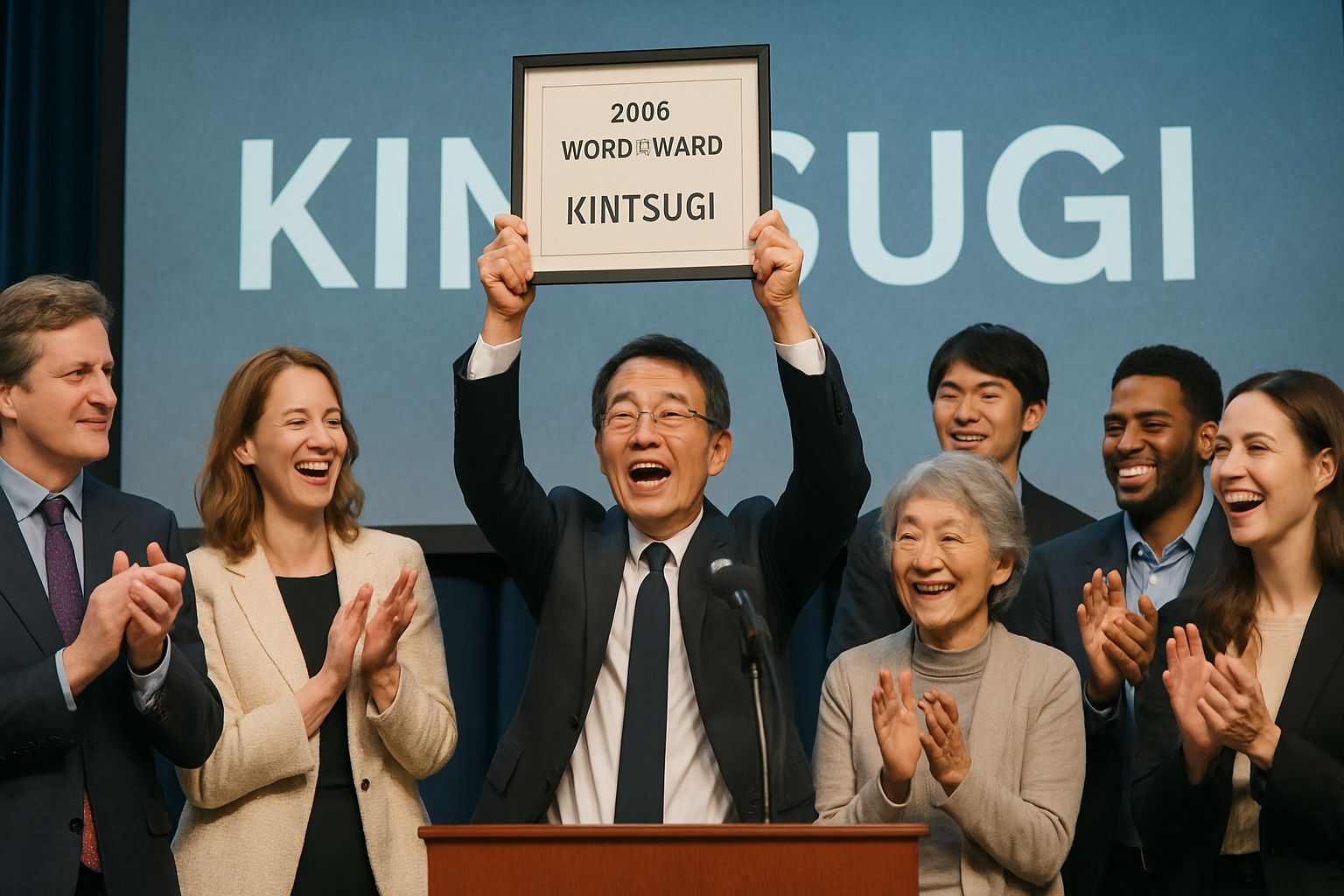
Kintsugi, the art of mending pottery with gold-infused lacquer, secured the Grand Prize title. Judges praised its sustainable ethos and metaphor of embracing imperfection. Moreover, they noted that the Oxford English Dictionary added the term during March 2024. That lexicographic milestone signaled momentum beyond marketing hype.
Importantly, the 2025 Word Award highlighted how cultural repair philosophies resonate within global mental health conversations. Corporate leaders consequently reference kintsugi during change-management workshops to illustrate resilient design thinking.
- Philosophical appeal: celebrates visible repair and growth
- Environmental message: promotes reuse over disposal
- Global recognition: featured in OED March 2024 update
- Cross-sector adoption: cited in therapy, design, and branding
Kintsugi thus proved both poetic and practical. However, other contenders also reveal shifting domains of influence. Let us review those runner-up terms next.
Analyzing Runner-Up Word Trends
Ten additional winners reflected food, wellness, manufacturing, and youth culture sectors. Matcha and omakase confirmed continued culinary fascination with premium Japanese experiences. Meanwhile, kanban illustrated factory concepts entering software project management. Shinrin-yoku and iyashikei showcased health tourism and calming media aesthetics.
Moreover, the slang “emoi” signaled ongoing youth remixing of borrowed vocabulary. The committee summarized each entry’s social relevance in concise website notes. Educators can adapt these notes as authentic reading material for advanced English classes.
During deliberation, the 2025 Word Award panel observed thematic clusters among the remaining nominees. Collectively, the shortlist mapped cultural and industrial diffusion arcs. Consequently, debate intensified around authenticity and commercialisation. That discussion forms our next focus.
Global Cultural Impact Debate
Academic critics warn that exported concepts risk losing nuance during translation and marketing. For example, ikigai has been simplified into generic self-help slogans abroad. In contrast, judges tried balancing popularity with depth, acknowledging possible semantic drift.
Moreover, some commentators view the award as cultural diplomacy that strengthens soft power. Businesses consequently leverage recognized terms to create differentiated product stories. Nevertheless, a data gap persists because submission counts remain undisclosed. Researchers therefore urge organizers to publish participation metrics during subsequent cycles.
Balancing Diverse Market Needs
Marketing executives seek simplified narratives, whereas teachers request contextual richness. Consequently, organizers plan annotation layers that present historical notes alongside concise taglines. Moreover, they will invite Japanese scholars to co-author explanatory essays, ensuring authenticity remains intact.
Such collaboration could satisfy both commercial and academic stakeholders without diluting nuance. Therefore, future word pages may feature side-by-side definitions, usage notes, and industry case studies.
Authenticity and transparency will shape future credibility. However, organizers already plan iterative improvements. The roadmap ahead warrants attention.
Future Growth Pathways Ahead
JELCA confirmed that the next call for entries will open earlier, granting nominees more preparation time. Additionally, the secretariat is exploring a bilingual public dashboard to share nomination analytics. Organizers may also cooperate with the Oxford English Dictionary on diffusion tracking research.
For professionals, staying informed offers competitive advantage. Therefore, communication teams should monitor future lists and integrate relevant terms into regional content strategies. Meanwhile, writers can certify their skills through the AI Writer™ program. That credential strengthens evidence-based storytelling for multilingual audiences.
Infrastructure upgrades will likely expand reach and rigour. Consequently, the 2025 Word Award could become a reliable barometer of cultural export velocity. Subsequently, JELCA aims to launch regional workshops that teach educators how to leverage winner terms.
They also intend to translate submission guidelines into multiple languages, increasing global accessibility. Furthermore, a planned podcast will feature monthly interviews with past contributors and lexicographers. Japanese diaspora communities have expressed interest in hosting satellite voting events.
Conclusion And Takeaways
The 2025 Word Award has already elevated kintsugi while spotlighting ten versatile runner-up terms. Japanese innovators gain validation, and international marketers gain fresh storytelling assets. However, academics warn that success demands nuance, transparent metrics, and sustained community dialogue.
Consequently, the 2025 Word Award must expand data sharing and scholarly cooperation. Industry professionals can prepare by tracking future lists, adopting context-rich language, and obtaining relevant credentials. For example, content leads enhance credibility via the AI Writer™ certification.
Meanwhile, educators may assign winner glossaries as engaging classroom materials. By uniting research, creativity, and transparency, the 2025 Word Award can shape global discourse for years.


