

AI CERTS
3 hours ago
Khaby Lame’s Digital Likeness Deal Rewrites Creator Commerce
Meanwhile, marketers saw a blueprint for nonstop influencer commerce powered by synthetic hosts. This article dissects the deal, technology, opportunity, and hazards behind the Digital Likeness project. Furthermore, it outlines what professionals must track as AI twins enter global retail. Every claim relies on public filings, verified press releases, and independent analyst coverage. Prepare for a concise deep dive into a landmark moment for the creator economy. In contrast, older licensing models rarely transferred full biometric ownership at this scale. Consequently, regulators, advertisers, and fans will test the limits of consent and transparency.
Deal Signals New Frontier
Rich Sparkle disclosed the purchase on 11 January 2026 through a Form 6-K and a press release. The filing confirms 75 million new shares issued to vendors for a headline value of US$975 million. Consequently, Khaby Lame became a major shareholder in the acquirer rather than taking immediate cash.
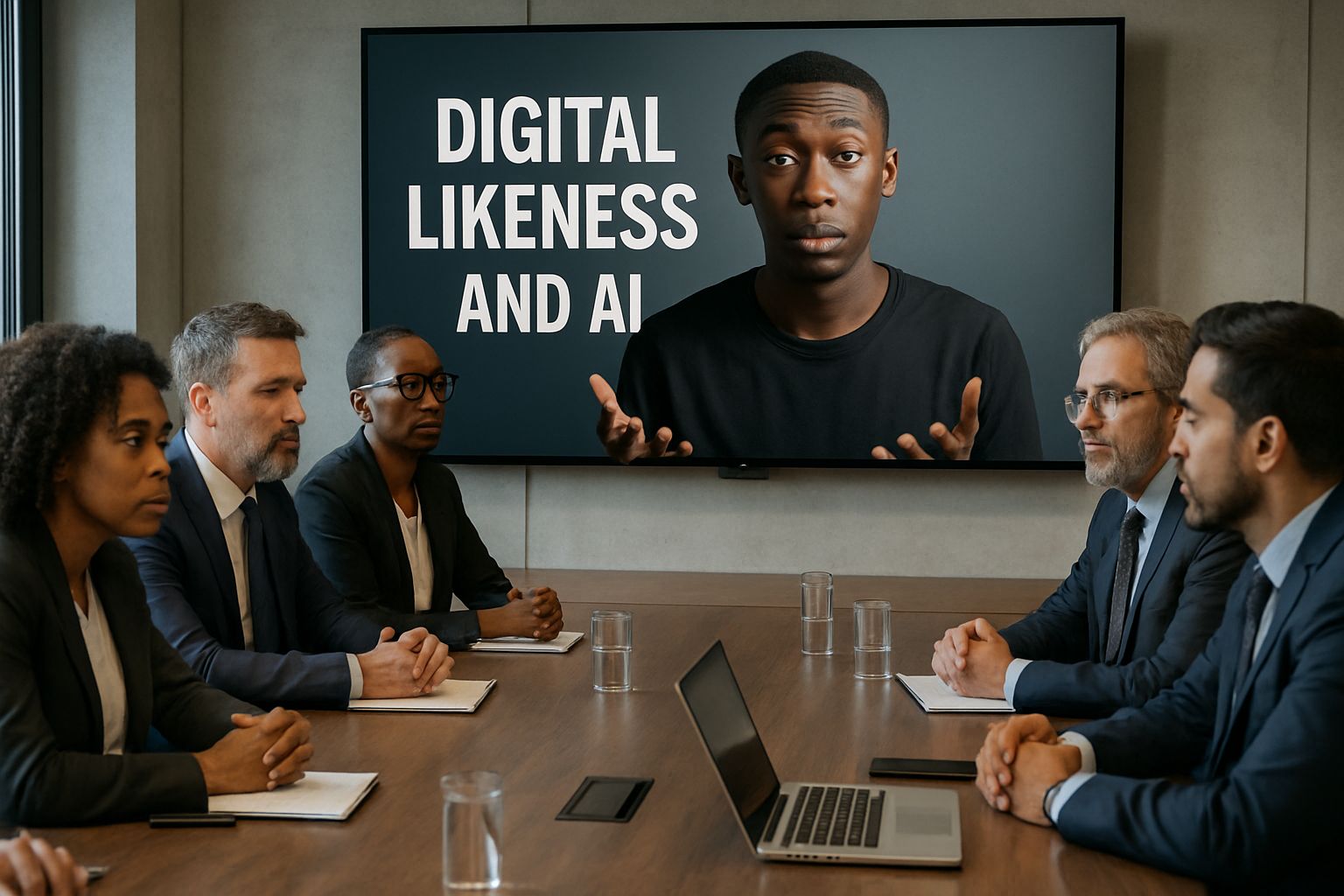
Moreover, the agreement grants Face ID, Voice ID, and behavioral data for an AI Twin program. This clause authorizes the Digital Likeness to operate across platforms for 36 months of exclusive commercialization. Such a broad likeness license raises control concerns.
Investors initially drove ANPA shares up more than 300 percent within two trading sessions. However, volatility soon followed as analysts questioned governance controls and revenue projections. Forbes highlighted “red flags” in valuation math compared with the company’s limited disclosure history.
The blockbuster structure signals that creator equity deals now rival tech IPO theatrics. However, understanding the Twin technology is essential before judging sustainability.
How The Twin Works
An AI Twin combines computer vision, speech synthesis, and large language models. Furthermore, engineers ingest hours of video to map facial geometry and gesture timing. These inputs train networks to regenerate expressions at broadcast quality.
The resulting Digital Likeness can stream, answer audience questions, and present products in multiple languages simultaneously. Moreover, fine-tuned behavior models predict the comedic pauses that made Khaby Lame viral. Real-time animation engines then lip-sync synthesized speech to the reconstructed visage.
Meanwhile, cloud inference allows several storefront streams to run in parallel without creator fatigue. Consequently, the Twin could host 24-hour commerce marathons targeting different time zones. Such scalability underpins the projected US$4 billion sales figure.
Digital Likeness technology therefore promises reach unachievable by one human. Next, we will examine whether those ambitious commerce numbers hold up.
Projected Live Commerce Potential
Rich Sparkle pairs the Digital Likeness with Anhui Xiaoheiyang, a seasoned China live-commerce operator. Additionally, the partner supplies logistics, payment rails, and influencer network support. Management claims the combined machine can exceed US$4 billion in yearly gross merchandise volume.
- Creator economy now US$260 billion; Goldman sees US$480 billion by 2027.
- China live commerce hit US$200 billion in 2025, iResearch reports.
- Typical TikTok Shop influencer conversion ranges between three and eight percent.
- Rich Sparkle cites 360 million fans, double a top-tier influencer average.
Nevertheless, analysts caution that gross merchandise projections often omit return rates and net commission splits. Fan trust still hinges on authentic likeness cues. The next section reviews those financial caveats in more depth.
Investor And Market Concerns
Shares in ANPA peaked at US$14 before retreating below US$8 within two weeks. Consequently, paper wealth swings exceeded US$450 million for Khaby Lame on volatile influencer sentiment days. Market watchers compared the spike to meme-stock patterns rather than durable fundamental rerating.
Moreover, the Form 6-K reveals limited historical revenue, raising dilution questions for minority holders. Governance experts highlight sparse board oversight regarding AI risk, data security, and consumer disclosures. Skeptics argue the Digital Likeness valuation ignores potential regulatory costs.
In contrast, larger issuers typically publish detailed scenario analyses for similar acquisitions. Investor unease underscores the gulf between narrative and audited performance. Ethical challenges further complicate monetising biometric assets, as we explore next.
Ethical And Legal Questions
Synthetic content blurs authenticity, and undisclosed promotion could violate consumer-protection statutes. Furthermore, several jurisdictions now require clear labels when Digital Likeness avatars appear in paid ads. Failure to comply risks fines and platform bans.
Privacy advocates warn that leaking biometric embeddings could enable malicious clone attacks beyond the sanctioned Twin. Nevertheless, the contract terms for takedown or auditing remain undisclosed. Unauthorized likeness misuse already fuels litigation against smaller deepfake vendors.
Khaby Lame therefore faces reputational exposure despite retaining board influence. Industry lawyers point to divergent publicity-rights laws across Europe, the United States, and China. Consequently, enforcing a Digital Likeness license internationally will demand robust monitoring and swift dispute resolution.
Regulatory uncertainty may slow aggressive rollout plans. However, professionals can still position for synthetic media growth, as the final section explains.
Preparing For Synthetic Futures
Business leaders should prepare internal policies covering disclosure, consent renewal, and algorithmic audits. Additionally, procurement teams must vet cloud vendors for watermarking support and region-specific compliance. Early movers who master Digital Likeness management could capture global shelf space at minimal marginal cost.
Professionals can deepen creative governance skills with the AI Design Leader™ certification. Such programs explore UX, ethical AI, and biometric storytelling strategies. Moreover, certified managers speak a shared language with engineers building the Twin stack. Clear policy templates should cover likeness reuse in partner campaigns.
Khaby Lame’s share-for-rights transaction demonstrates how creator IP can morph into corporate infrastructure. Digital Likeness engines promise relentless scale, yet governance and authenticity questions remain unresolved. Nevertheless, live commerce metrics suggest real upside if operational discipline matches creative ambition. Investors should scrutinize disclosure cadence, lockups, and risk controls before chasing momentum. Regulators will likely refine deepfake labeling laws, influencing expansion timelines.
Marketers must test audience tolerance for synthetic presenters through controlled pilots. Meanwhile, creators exploring similar deals should negotiate watertight likeness safeguards and revenue audits. Act now by reviewing certification pathways and securing the skills needed for responsible synthetic media leadership. Visit the certification link to future-proof your career.


