

AI CERTS
2 hours ago
Judicial Automation: LA Courts Pilot AI Judgment Assistant
California’s new Rule 10.430 establishes guardrails for any court using generative AI. Meanwhile, local policies must follow by December 2025 to align with the statewide standard. Scholars invoke Learned Hand to stress that technology should reinforce, not overshadow, human judgment. Moreover, accurate Legal Drafting remains vital because judges still sign every final order. This article examines the pilot, its safeguards, and its broader implications for busy legal departments. By the end, practitioners will grasp concrete steps toward responsible court innovation.
Why Courts Seek AI
High-volume dockets strain clerks and judges throughout large urban courts. Therefore, LASC processed roughly 47,000 eviction filings in 2023 alone. About 32% ended in default judgment, often without any tenant response. Consequently, staff spend precious minutes verifying each landlord packet for statutory compliance. Judicial Automation promises faster screening while maintaining human oversight. Legal historians note that prolonged delay erodes respect for law.
Moreover, clogged calendars exacerbate housing instability across Los Angeles County. Better Legal Drafting tools can streamline filings before any AI audit occurs. Efficient triage addresses crushing caseloads and reduces wrongful evictions. However, new rules dictate how such technology operates, which we explore next.
California Rule 10.430 Impact
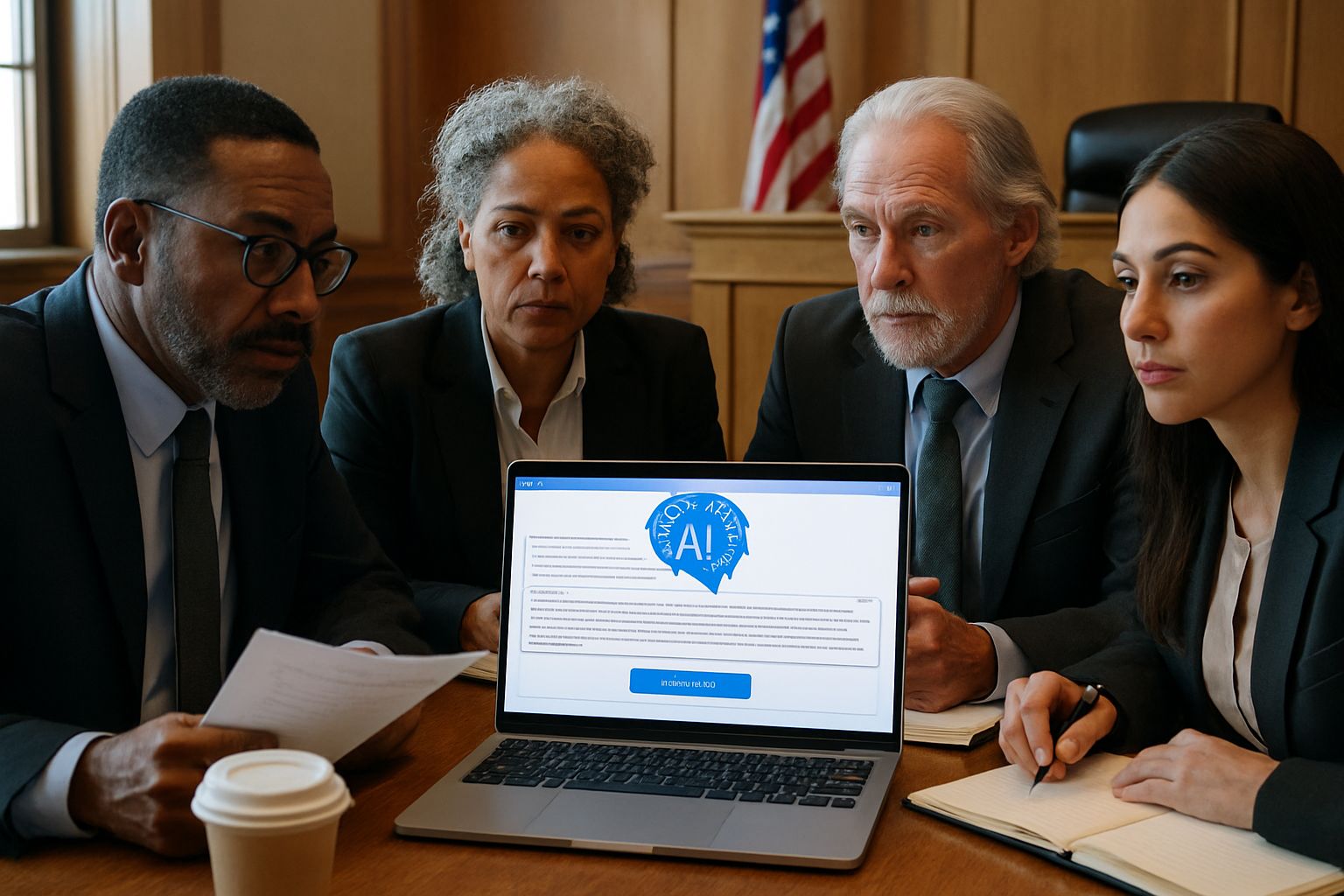
July 18, 2025 marked a milestone for courtroom AI governance. Subsequently, the Judicial Council adopted Rule 10.430 and Standard 10.80. The framework prohibits sending confidential data into uncontrolled public models. In contrast, local courts may host approved models on secure infrastructure. Any Judicial Automation must disclose AI usage, ensure human verification, and audit for bias. Consequently, disclosure guidelines now include explicit AI language. Meanwhile, advocates recall Learned Hand’s view that transparency sustains public confidence.
Key mandates include:
- Human review of every AI recommendation.
- Bias testing before deployment and during updates.
- Mandatory public notices for AI-generated materials.
These provisions anchor responsible design and limit potential harm. Consequently, the next section shows how LASC aligns its pilot accordingly.
Default Judgment Assistant Explained
Stanford engineers built the assistant with iterative feedback from clerks and judges. Moreover, the tool analyzes uploaded filings against hundreds of statutory checkpoints. Natural-language models identify missing affidavits, incorrect fee calculations, and improper service proofs. Judicial Automation in this context augments, rather than replaces, decision making. Better Legal Drafting still matters because the AI cannot infer facts not supplied.
Consequently, Learned Hand would likely approve the human backstop that validates each flag. Early simulations showed review time dropping from 30 minutes to under ten. Meanwhile, false-positive rates stayed below five percent during internal testing. These metrics suggest significant efficiency gains without sacrificing accuracy. However, benefits matter only if frontline staff accept the technology, as the next section discusses.
Benefits For Court Staff
Frontline clerks confront mountains of paperwork each day. Consequently, even small time savings accumulate into meaningful resource relief. Pilot projections indicate thousands of staff hours could shift toward complex hearings. Judicial Automation also standardizes compliance reviews, ensuring consistent treatment across cases.
Documented advantages:
- Reduced backlog of unprocessed filings.
- Faster scheduling of contested hearings.
- Improved morale through decreased repetitive work.
Furthermore, clearer Legal Drafting surfaces earlier, because the assistant highlights ambiguous language before submission. In contrast, veteran judges caution that efficiency should never eclipse careful reasoning. Overall, the pilot promises workload relief and uniform standards. Nevertheless, several risks must be managed, which we examine next.
Risks And Guardrails Ahead
Generative models occasionally hallucinate, inventing citations or misreading documents. Therefore, Rule 10.430 demands human verification before any ruling issues. Bias represents another challenge, especially in eviction contexts touching vulnerable populations. Successful Judicial Automation must include rigorous bias testing and regular audits. Moreover, data security rules forbid sending personal identifiers to external vendors without safeguards. LASC officials state that models will run on court-controlled servers with encrypted storage. Strong policy design minimizes hallucinations, bias, and leaks. Subsequently, attention turns to broader applications beyond eviction cases.
Broader Future Possibilities Courts
The assistant serves as a template for other high-volume civil dockets. Additionally, debt-collection courts face default rates above 90% in some jurisdictions. Chatbots, redesigned notices, and online dispute resolution also appear in the Stanford blueprint. Each feature fits within an expanding Judicial Automation roadmap endorsed by LASC leadership. Professionals can enhance their expertise with the AI Legal Strategist™ certification. Nevertheless, as Learned Hand might argue, safeguards should scale alongside innovation. Future modules could streamline small claims, traffic infractions, and guardianship petitions. Therefore, comprehensive impact studies remain essential before broad deployment.
Key Takeaways
Los Angeles is testing Judicial Automation in a measured, policy-driven sandbox. Early evidence shows faster reviews and fewer errors. However, bias audits, human verification, and secure hosting remain non-negotiable. Learned Hand’s legacy reminds courts that trust follows transparency and thoughtful craftsmanship. Clear Legal Drafting still anchors every final judgment. Consequently, successful Judicial Automation must complement, not eclipse, skilled human work. Professionals exploring court innovation should study LASC’s pilot and California’s rulebook. Further mastery awaits through the linked certification and ongoing research updates. Therefore, join the movement toward ethical Judicial Automation by earning new credentials and sharing pilot insights.


