

AI CERTS
2 hours ago
Journalistic Job Displacement Hits Business Insider
Timeline Sparks Industry Uproar
Problems surfaced in April 2025 when two first-person essays appeared under the suspicious "Margaux Blanchard" byline. Wired, Press Gazette, and Washington Post soon uncovered fabrication signs. In September, Business Insider deleted about 40 essays, acknowledging verification failures. Meanwhile, management promised stronger checks yet doubled down on AI pilots. Industry observers linked layoffs of 21 percent of staff to this strategic pivot. The first public crack in trust merged business risk with Journalistic Job Displacement.
The rapid sequence unsettled peers across the sector. Moreover, editors realized their freelancer pipelines lacked routine identity checks.
These dates map an accelerating disruption. The pattern underscores management urgency and public doubt. Nevertheless, bigger clashes quickly followed.
Union Pushback Intensifies Quickly
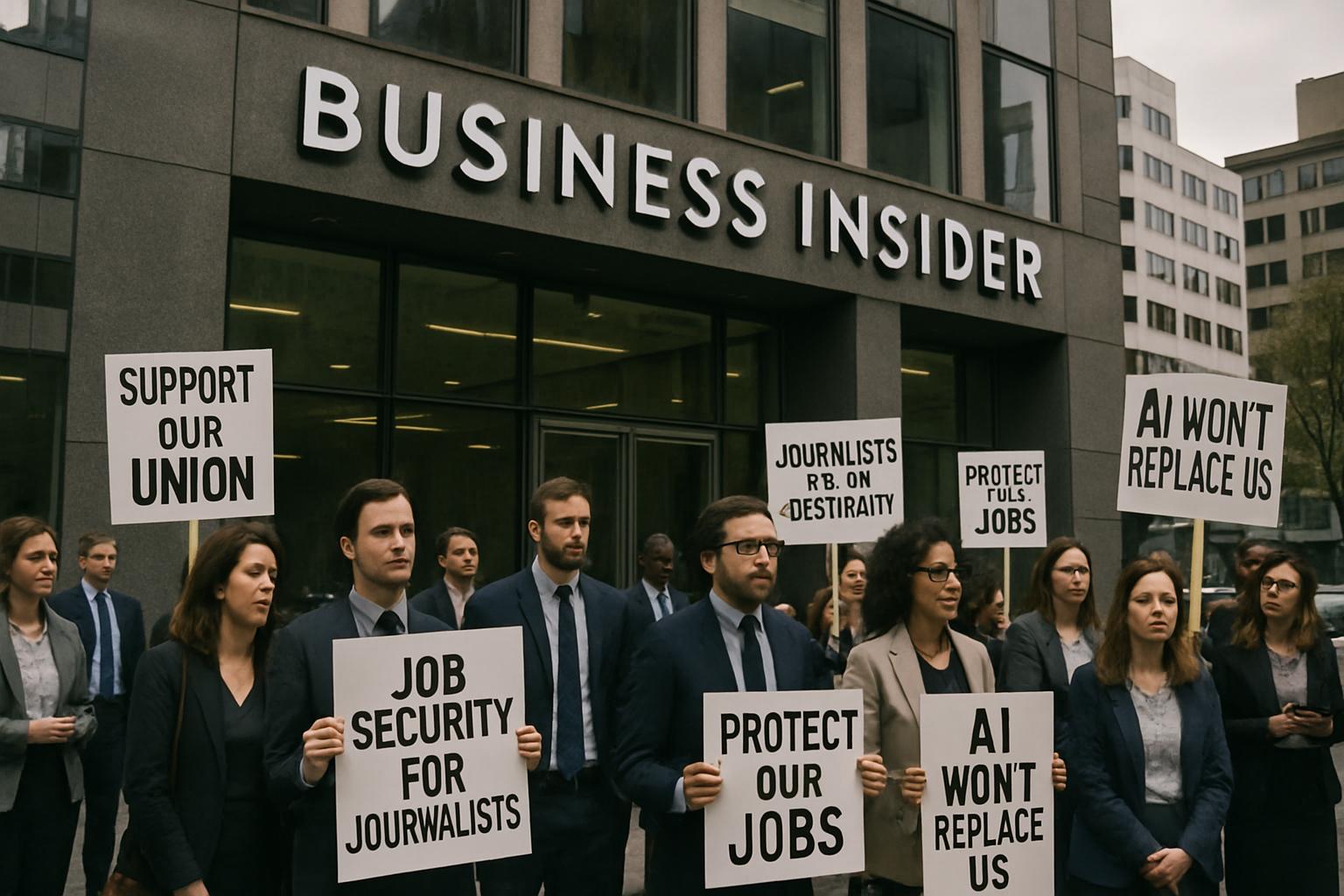
The Insider Union, part of NewsGuild, responded within hours of the AI byline launch in November 2025. Members distributed "No Slop in Our Shop" flyers referencing generative slop and demanded policy transparency. Additionally, they staged coordinated byline removals, replacing personal credits with protest language. Leaders warned that unchecked automation fuels Journalistic Job Displacement and erodes reporting standards. In contrast, executives framed the pilot as innovative and cost-saving.
NewsGuild coordinated national messaging, pressuring other publishers and lawmakers. Consequently, AI oversight language became a top bargaining demand.
The protest spotlighted newsroom solidarity. The showdown also primed the public for a deeper policy conversation. Therefore, management’s broader strategy came under sharper scrutiny.
Management Pursues Aggressive AI
CEO Barbara Peng told Axios the company must "go all-in on AI" to survive advertising headwinds. Editor-in-Chief Jamie Heller echoed that sentiment, yet stressed human editing for high-value stories. Consequently, Business Insider launched the "Business Insider AI" desk to draft short market briefs. Each item carried an explicit AI byline, theoretically distinguishing machine output from human reporting. However, staff feared the desk normalized generative slop and accelerated Journalistic Job Displacement.
Axel Springer leadership publicly supported the experiment, citing efficiency gains. Moreover, the parent company struck external licensing deals, deepening reliance on large language models.
Management sees scalability and cost control. Staff sees shrinking beats and blurred accountability. Subsequently, failures in verification magnified these divergent visions.
Verification Failures Exposed Publicly
The Margaux Blanchard episode highlighted holes in onboarding, payment routing, and fact-checking. Editors never confirmed the writer’s identity, allowing fictional resumes to enter CMS workflows. Furthermore, models hallucinated details later accepted as firsthand narratives. Experts argue that stronger protocols would have flagged fabrications instantly. Recommended safeguards include:
- Dual human review before publication
- Mandatory live video verification for freelancers
- Automated provenance checks on submitted text
- Clear AI disclosure alongside every machine-drafted paragraph
These controls limit generative slop and support newsroom ethics. Additionally, professionals can enhance their expertise with the AI Prompt Engineer™ certification.
Verification lapses damaged trust. The fixes show pragmatic paths forward. Consequently, regulators started paying closer attention.
Regulatory Momentum Gains Speed
New York lawmakers introduced a bill mandating AI news labels and human sign-offs. Meanwhile, NewsGuild lobbied for employment protections linked to Journalistic Job Displacement. Other states drafted similar measures, and federal hearings explored disclosure standards. Moreover, Pew polling cited by TheWrap revealed persistent reader skepticism toward AI-written articles.
Axel Springer urged flexible rules, arguing innovation demands space to iterate. Nevertheless, public pressure for accountability keeps rising.
Policy debates now shape corporate roadmaps. The next frontier involves practical best practices that balance speed with ethics.
Best Practices Moving Forward
Media-ethics scholars advocate "strict evaluation cultures" for any automated workflow. Furthermore, unions want contract clauses limiting staff cuts tied to algorithms. Key recommendations include:
- Create transparent AI byline pages detailing human oversight
- Perform regular external audits of training data
- Integrate newsroom ethics training on model limitations
- Maintain clear escalation channels for error correction
Adopting these steps curbs generative slop and anchors ethical reporting. Moreover, certification programs such as the linked AI Prompt Engineer™ course equip technologists to build safer pipelines.
Robust standards preserve credibility. They also defend worker roles. However, technology alone cannot replace human judgment.
Human Talent Still Vital
Jamie Heller states that AI "does zero relationship-building." Reporters nurture sources, contextualize nuance, and question power. Consequently, human skills remain irreplaceable despite ongoing Journalistic Job Displacement fears. Additionally, investigative depth requires instincts no model can replicate. Editors assert that freeing talent from rote briefs enables richer storytelling.
Axel Springer may pursue automation, yet long-term brand value relies on trust. NewsGuild leaders echo that mantra, urging management to protect the craft.
Humans will anchor future newsrooms. Technology will assist, not dominate. Ultimately, collaboration can yield efficient and ethical journalism.
The Business Insider saga encapsulates AI disruption. It exposes gaps in workflow, ethics, and governance. Moreover, it presents a roadmap for unions, executives, and lawmakers navigating rapidly shifting terrain.
Many challenges persist. Nevertheless, clear standards, continuous training, and transparent communication can prevent repeats of recent scandals.
Media professionals should monitor legislative developments, adopt rigorous verification, and pursue advanced certifications to stay competitive.
Therefore, embrace innovation, safeguard integrity, and invest in lifelong learning.


