

AI CERTS
11 hours ago
ISG AI Index Deal Reshapes Enterprise Benchmarking
This article unpacks the deal’s context, benefits, risks, and what executives should do next.
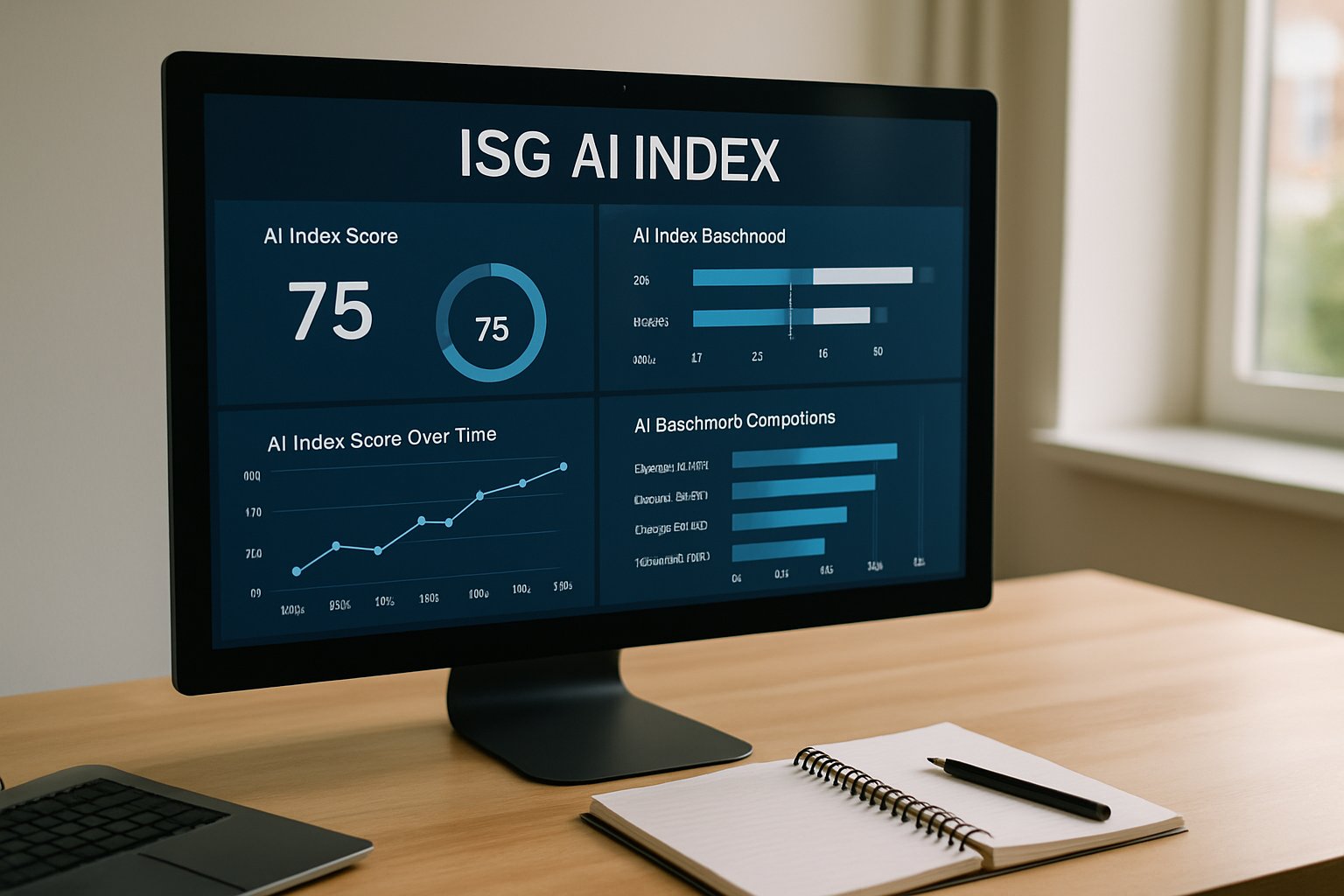
Moreover, global surveys reveal soaring budgets but stubbornly low workforce readiness levels. Therefore, robust benchmarking frameworks become essential for scaling talent, governance, and infrastructure. Readers will learn how this transaction could reshape competitive dynamics and guide strategic investment decisions.
ISG AI Index Acquisition
In contrast, few advisory firms doubled their market value last year. ISG shares climbed 78 percent in 2025, signaling investor confidence in its AI push.
Chief Executive Michael P. Connors framed the ISG AI Index as a high-impact entry point. However, the announcement omitted purchase price details, leaving analysts guessing about valuation multiples. Eryn Peters, co-founder of the acquired platform, will lead product strategy within the new unit.
The acquisition boosts ISG’s data assets and advisory credibility. Nevertheless, undisclosed financials create opacity for stakeholders. Next, we examine what the software actually offers.
Platform Features And Reach
Originally built as a 15-minute survey, the platform already assessed over 6,000 professionals. Furthermore, it amassed 400,000 data points across 75 countries and almost 100 languages.
Those statistics give the ISG AI Index rich comparative fuel for enterprise benchmarking.
Key features appear in vendor materials:
- Instant AI Maturity Score with role-specific benchmarks.
- Dimensional gap analysis spanning people, process, data, and governance.
- Personalized growth guide aligned to training roadmaps.
Moreover, professionals can enhance their expertise with the AI Network Security™ certification, reinforcing secure deployment practices.
These capabilities promise quick diagnostics and tailored guidance. Consequently, demand for workforce readiness assessments may intensify. Yet, maturity scoring is only useful when placed within wider market realities.
Urgency Of Workforce Readiness
McKinsey reports that 92 percent of executives will raise AI budgets within three years. Meanwhile, merely one percent consider their organizations AI-mature, highlighting a sharp readiness divide.
Kyndryl’s 2025 study states only 29 percent achieve adequate workforce readiness today. Therefore, the ISG AI Index arrives when companies crave reliable yardsticks and structured upskilling plans.
The data reveal urgency to prepare employees quickly. However, preparation requires more than diagnostics alone. Competitive forces illustrate that point further.
Competitive Landscape And Risks
Consultancies like Gartner, Accenture, and McKinsey already market proprietary maturity frameworks. In contrast, vendor methodologies differ widely, limiting score comparability across tools.
Privacy, governance, and potential vendor lock-in also worry regulated industries. Subsequently, buyers should request detailed documentation before integrating benchmarking outputs into transformation roadmaps.
Analysts note that independent audits of the ISG AI Index methodology remain scarce. Consequently, due diligence remains vital. Balanced evaluation mitigates unforeseen implementation hurdles. Integration plans clarify additional considerations.
Integration Roadmap And Impact
ISG appointed Chief AI Officer Steve Hall to oversee platform integration. Additionally, the company will launch an intelligence advisor in early 2026.
That advisor will aggregate survey outputs, market research, and sourcing data for automated recommendation engines. Therefore, existing ISG clients could embed ISG AI Index insights into procurement, training, and change programs. However, success depends on seamless data governance and continuous content refresh.
Early alignment between advisory and software teams looks promising. Nevertheless, quantifiable client outcomes should be tracked and published. Executives can act now to capture value.
Practical Steps For Leaders
Leaders should first validate data privacy obligations with legal and security teams. Next, appoint cross-functional champions to coordinate workforce readiness initiatives informed by assessment results.
Furthermore, compare ISG AI Index scores against at least one alternate framework to check alignment. Consider these accelerated actions:
- Map skill gaps to targeted training budgets within 30 days.
- Set measurable AI adoption milestones aligned with governance checkpoints.
- Review benchmarking updates quarterly to track progress.
Moreover, encourage staff to pursue recognized credentials to solidify knowledge foundations. These steps translate assessment insight into sustained execution. Consequently, organizations maximize returns on AI investments. The closing section recaps critical messages.
Conclusion And Future Outlook
The ISG AI Index represents more than a simple product pickup. It signals a strategic fusion of benchmarking data and advisory depth at a critical adoption juncture.
Moreover, soaring budgets and low workforce readiness create fertile ground for rapid platform expansion. Nevertheless, leaders must demand transparent methodologies, rigorous security, and proof of measurable outcomes.
By leveraging the ISG AI Index, firms can benchmark progress with confidence. In closing, executives seeking competitive edge should trial the assessment and pursue complementary certifications.
Additionally, explore the linked AI Network Security™ certification to strengthen defenses while scaling enterprise AI projects. Consequently, adopting the ISG AI Index can turn data gaps into actionable priorities.


