

AI CERTS
2 hours ago
Intel’s Panther Lake to Redefine PC Silicon
However, the launch is more than a single chip reveal. It represents Intel's first volume product on the 2-nm-class 18A process. Moreover, the chip will test domestic manufacturing capacity at Fab 52 in Arizona. Therefore, supply chain executives and CTOs should study the technical disclosures now available. Meanwhile, developers expect stronger local AI acceleration to unlock novel user experiences. In contrast, competitors will measure their upcoming designs against Intel's claimed 50 percent CPU uplift. Additionally, laptop OEMs plan CES demo units that could validate or challenge those claims on stage. Subsequently, purchasing decisions for business fleets in 2026 may hinge on early benchmark data.
Global Market Stakes Overview
Consequently, market researchers are recalibrating forecasts for premium notebooks and edge devices.
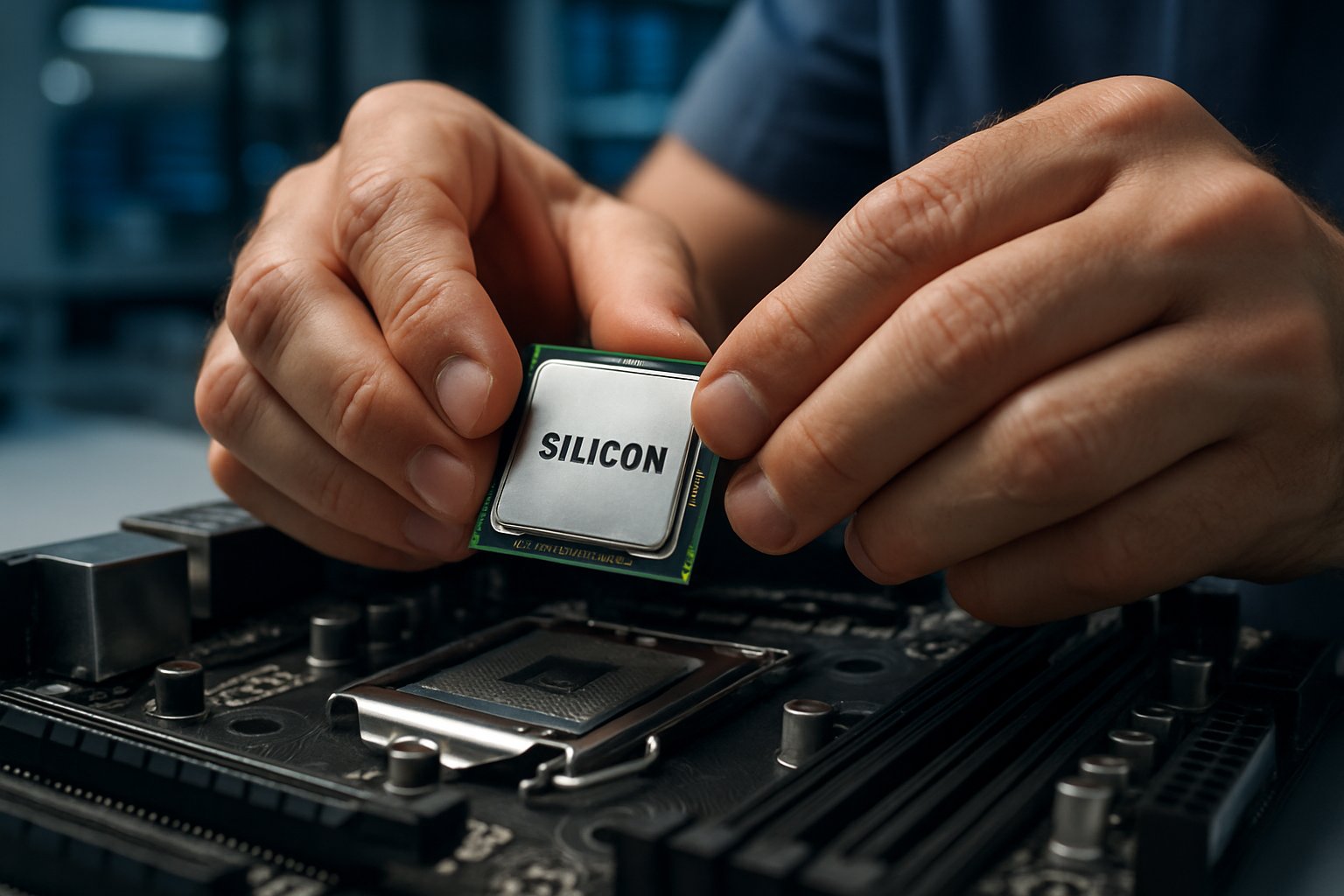
Bob O’Donnell of Technalysis Research states that Panther Lake will determine Intel’s reputation for next-generation PC Silicon leadership.
Moreover, corporate buyers who delayed refresh cycles during supply shortages now expect concrete benefits before authorizing bulk orders.
Key upside drivers include battery gains, reduced thermal throttling, and lower total cost of ownership.
Nevertheless, any production slip on the 18A node could hand competitive momentum to rivals.
Furthermore, the PC Silicon roadmap influences software ecosystems that rely on predictable architectural cadence.
These stakes reveal a finely balanced scenario for vendors and buyers alike.
However, technical fundamentals behind the process node will ultimately shape outcomes; the next section explores those details.
Process Node Advances Explained
Intel positions the 18A process as its first 2-nm-class manufacturing technology.
Moreover, RibbonFET transistors and PowerVia backside power delivery aim to improve switching speed and efficiency by 15 percent.
In contrast, previous node designs lacked the power delivery breakthrough now critical for compact PC Silicon.
Additionally, 18A promises 30 percent higher density, allowing more cores without enlarging die area.
Fab 52 in Chandler already runs pilot wafers; high-volume output must scale before year-end to meet January launch commitments.
Node success directly influences cost, yield, and brand credibility for the upcoming products.
Consequently, attention turns to architectural choices that convert transistor gains into user-visible performance.
Architecture Performance Claims Examined
The preliminary benchmarks highlight substantial gains over the current Lunar Lake generation.
Furthermore, Panther Lake integrates up to 16 performance and efficient cores alongside an Arc GPU.
The design targets 50 percent faster CPU throughput and matching graphics uplift, according to company data.
Rapid Stats Recap List
- Up to 180 Platform TOPS for AI inference
- Up to 12 Xe GPU cores integrated
- 16 P-cores and E-cores combined
- 50 percent CPU and graphics improvement
Moreover, the company markets the platform as an XPU, blending CPU, GPU, and neural engines for cohesive workloads.
Nevertheless, real software stacks and thermals will determine whether these numbers translate into practical PC Silicon advantages.
Early figures generate enthusiasm yet require independent validation through consistent test suites.
Meanwhile, AI workloads represent the next litmus test for the entire platform.
On Device AI Impact
AI workflows increasingly execute on the endpoint rather than the cloud.
Consequently, Panther Lake’s advertised 180 TOPS could accelerate language models, vision tasks, and real-time translation without internet latency.
Developers can exploit the enhanced neural engines through familiar frameworks tuned for PC Silicon.
Additionally, local inference preserves privacy and mitigates bandwidth costs for enterprise deployments.
Professionals can enhance their expertise with the AI Project Manager™ certification.
The credential ensures strategic alignment between hardware capabilities and AI project goals.
Nevertheless, metrics like TOPS scarcely capture software maturity, quantization efficiency, and driver stability.
Independent reviewers at CES plan to run open-source workloads that better reflect production demands.
On-device AI could become a headline differentiator once real tests confirm latency and power benefits.
Next, supply readiness will decide whether enterprises can deploy these features at scale.
Manufacturing And Supply Outlook
High-volume output is scheduled before December 2025, with broad availability targeting show-floor shipments.
Moreover, Fab 52 represents a cornerstone in the firm’s plan to regain foundry leadership and secure domestic resiliency.
Analysts warn that yield hiccups on a fresh node can ripple through the whole PC Silicon ecosystem.
In contrast, a smooth ramp would validate the company’s ambitious five-nodes-in-four-years roadmap.
Additionally, OEM partners such as GMKtec already tease mini-PCs using the H variant of the chip.
However, purchase orders will only materialize once retail pricing and battery metrics become public.
Supply certainty will influence notebook design cycles, channel inventory, and corporate refresh timelines.
Finally, industry rivalry shapes how quickly those notebooks reach eager professionals.
Competitive Landscape Watch Ahead
AMD, Apple, and Qualcomm are not idle while the x86 giant prepares its showcase.
Meanwhile, AMD’s Strix Point architecture also touts robust AI accelerators targeting premium PC Silicon segments.
Moreover, Apple’s M-series silicon continues setting efficiency records in thin laptops.
Consequently, market share shifts will depend on cross-vendor benchmark shoot-outs immediately after CES.
In contrast, the company wields the home-grown manufacturing narrative, which resonates with governments and enterprises focused on resilience.
Additionally, software ecosystem breadth could tip the balance, especially for specialized AI edge deployments.
The competitive tableau underscores why accurate data, not slides, will decide winners this cycle.
These industry dynamics lead to critical takeaways summarized below.
Therefore, the January reveal will reach far beyond a single keynote.
Stakeholders await proof that the new PC Silicon can deliver sustained performance, efficient AI, and reliable supply.
Moreover, early devices showcased at CES should offer the first external verdicts on the chip’s real merits.
Nevertheless, successful adoption demands prepared teams who understand hardware roadmaps and AI project alignment.
Consequently, readers should follow launch updates closely and upskill ahead of procurement waves.
Adopters who master emerging PC Silicon trends will secure competitive differentiation in 2026 and beyond.
Explore deeper strategic guidance and strengthen leadership credentials through the AI Project Manager™ program today.


