

AI CERTS
2 hours ago
Intelligent Product Design Drives Airwheel SE3S Hype
Moreover, corporate press releases claim billions of impressions and millions of users. Nevertheless, regulators, airlines, and seasoned travelers highlight practical caveats. This article dissects the phenomenon with a professional lens.
Global Market Momentum Shift
Airwheel positioned the SE3S line as mainstream during its February 2026 announcement. Additionally, the firm reported distribution in 68 countries and 4,600 retail points. Analysts caution that these numbers stem from company statements, not audited reports. Nevertheless, marketplace listings show genuine sell-through momentum. North American and Asian airports now host visible clusters of rideable luggage riders.
In contrast, European uptake remains measured due to stricter airline gate checks. Intelligent Product Design enables viral shareability by merging mobility with novelty. These adoption signals confirm a rising curve. However, the underlying metrics still require independent validation.
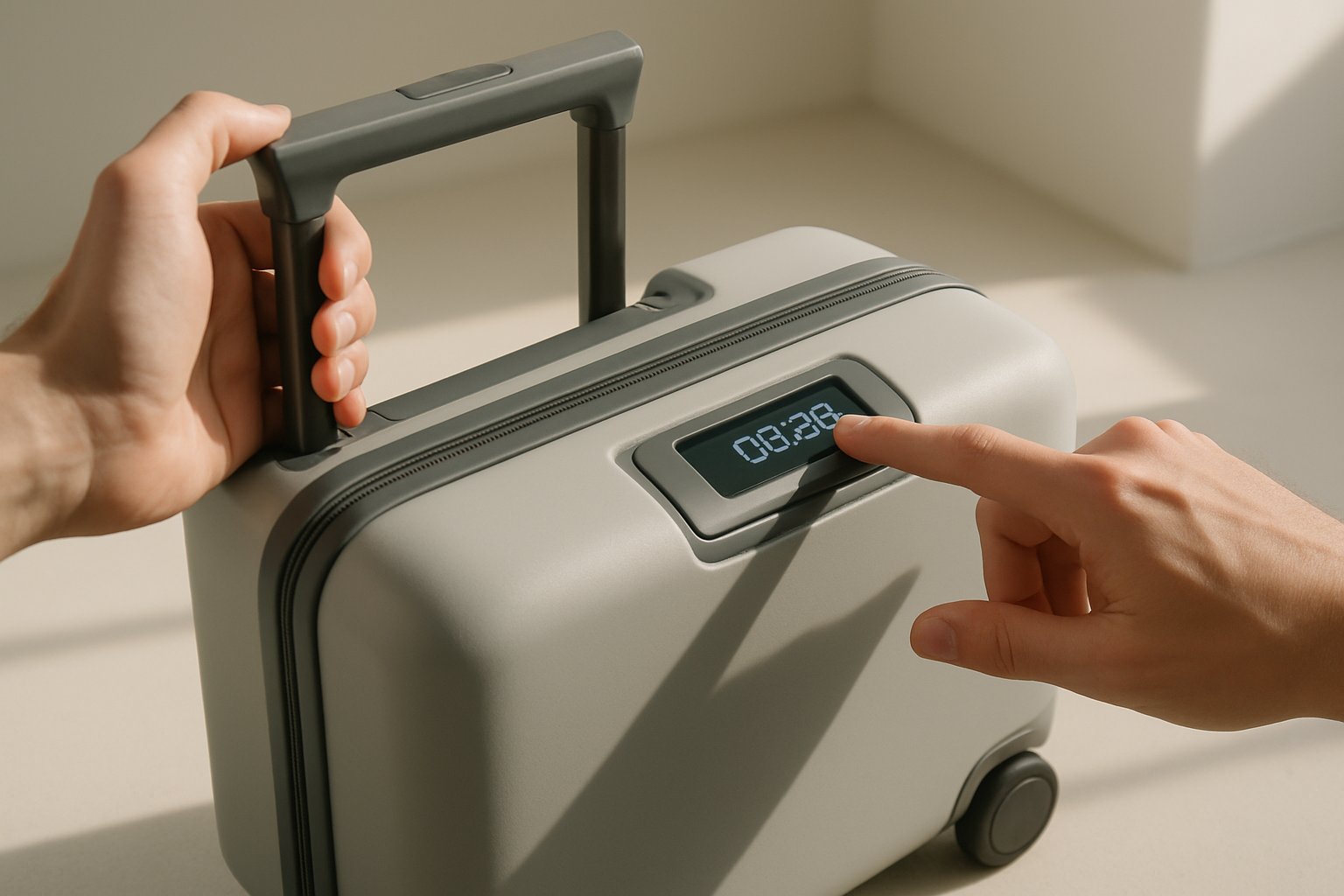
These market dynamics demonstrate impressive reach. Consequently, deeper technical scrutiny becomes essential.
SE3S Core Feature Breakdown
Airwheel equips each SE3S variant with a 73 Wh removable lithium-ion battery. Therefore, the suitcase complies with FAA’s 100 Wh threshold. The rideable platform achieves 9-13 km/h top speeds and roughly 8 km ranges. Moreover, integrated USB ports let users charge phones during travel. Empty weights span 6.6–9.4 kg, heavier than standard carry-ons. Intelligent Product Design choices, such as a hard magnesium frame and fold-out handlebars, enable ride comfort despite compact volume. Furthermore, Airwheel lists roughly 20 L of internal packing capacity.
Key specifications at a glance:
- Battery: 73 Wh, airline compliant
- Speed: Up to 13 km/h
- Range: About 8 km per charge
- Load limit: 95–110 kg rider weight
- Price: USD 700–1,000 depending on seller
These figures reveal thoughtful engineering trade-offs. However, battery policy remains the decisive gatekeeper.
The feature mix showcases deliberate craft. Subsequently, policy realities shape real-world usability.
Complex Airline Policy Maze
FAA guidance permits sub-100 Wh batteries in cabin luggage. Nevertheless, individual airlines impose extra hurdles. Delta forbids smart bags with non-removable batteries. Meanwhile, several European carriers require tool-free battery removal demonstrations at check-in. Travelers report gate agents occasionally misinterpreting policies, causing last-minute confiscations. Intelligent Product Design mitigates some friction by labeling battery watt-hours clearly. Moreover, Airwheel supplies quick-release battery modules for stress-free removal.
Regulatory nuance demands passenger vigilance:
- Check carrier smart baggage policies before booking.
- Carry printed battery specifications for staff reference.
- Remove and hand-carry the module when requested.
Policy fragmentation generates unpredictable experiences. Therefore, user preparation becomes critical.
These regulatory layers add operational complexity. Nevertheless, user sentiment also shapes adoption momentum.
Diverse User Experience Insights
Independent reviewers praise the SE3S for shortening long terminal hikes. Furthermore, the suitcase functions as a casual mobility aid for passengers with minor injuries. In contrast, tight turning radii and crowded gates expose stability limits. Several Best Buy and Walmart reviews cite durability concerns after heavy trips. Meanwhile, five-star posts emphasize novelty, speed, and crowd reactions. Intelligent Product Design balances thrill and practicality, yet heavier chassis demands upper-body strength when lifting into overhead bins. Moreover, some riders note anxiety while steering near children or obstacles.
Feedback underscores a split verdict. Consequently, competitive context deserves examination.
Rideable Luggage Landscape Snapshot
Airwheel faces rivals like Modobag and several Shenzhen OEM brands. However, the SE3S enjoys earlier mass exposure and wider SKU diversity. Competitors chase lower weights or autonomous following features. Additionally, hovering skateboard luggage prototypes appear at tech shows but remain pre-production. Intelligent Product Design trends steer each entrant toward modular batteries and app connectivity. Price competition intensifies, yet premium buyers prioritize brand recognition. Meanwhile, regulators scrutinize every prototype for battery compliance.
This landscape pressures continuous improvement. Therefore, design strategy becomes paramount.
Strategic Design Lessons Learned
Four principles emerge from the SE3S case:
- Design for policy, not just performance.
- Embed social-media-ready aesthetics.
- Prioritize modular components for serviceability.
- Pair hardware with digital engagement loops.
Moreover, data transparency now influences B2B buyer trust. Airwheel’s impression claims lack third-party validation, raising analyst eyebrows. Intelligent Product Design must extend to metric reporting systems. Furthermore, warranty ecosystems need equal attention to quell durability skepticism. Professionals can enhance their expertise with the AI+ UX Designer™ certification. Consequently, organisations upskill teams to balance novelty, safety, and compliance.
These lessons guide future product roadmaps. Subsequently, targeted training pathways support implementation.
Professional Certification Pathways Forward
Product strategists often juggle mechanical constraints, user psychology, and legal frameworks. Additionally, cross-functional fluency accelerates go-to-market timelines. Intelligent Product Design curricula now integrate regulatory literacy and viral-growth mechanics. The referenced certification delivers structured modules on AI-driven prototyping and compliance-first planning. Moreover, alumni studies report faster promotion cycles after completion. Airwheel’s journey illustrates how multidisciplinary mastery shapes market perception.
Certification advances individual careers. Nevertheless, organizational adoption hinges on culture and budget alignment.
These pathways build future-ready skill sets. Therefore, market leaders should evaluate structured learning investments.
Conclusion
Rideable luggage transformed airport corridors into micro-mobility runways. However, the Airwheel SE3S saga proves hype alone cannot override airline rules or durability realities. Intelligent Product Design elevates user delight yet must coexist with policy subtleties and mixed consumer feedback. Moreover, competitive pressure accelerates iteration cycles and transparency demands. Consequently, professionals who master design, compliance, and storytelling secure an edge. Explore the linked certification to deepen those capabilities and steer the next travel innovation wave.


