

AI CERTS
3 months ago
Intellectual Property Risks of Downloading Pirated Books Online
Meanwhile, AI developers now face parallel lawsuits for training systems with the same pirate datasets. This article unpacks the law, business stakes, and practical alternatives. Moreover, it offers a concise roadmap for professionals managing compliance or product strategy. Each section ends with clear takeaways and seamless transitions for efficient reading.
Fair Use Core Basics
Additionally, the Legal framework for fair use lives in 17 U.S.C. §107, a flexible four-factor balancing test. Therefore, every dispute turns on specific facts rather than bright-line rules.
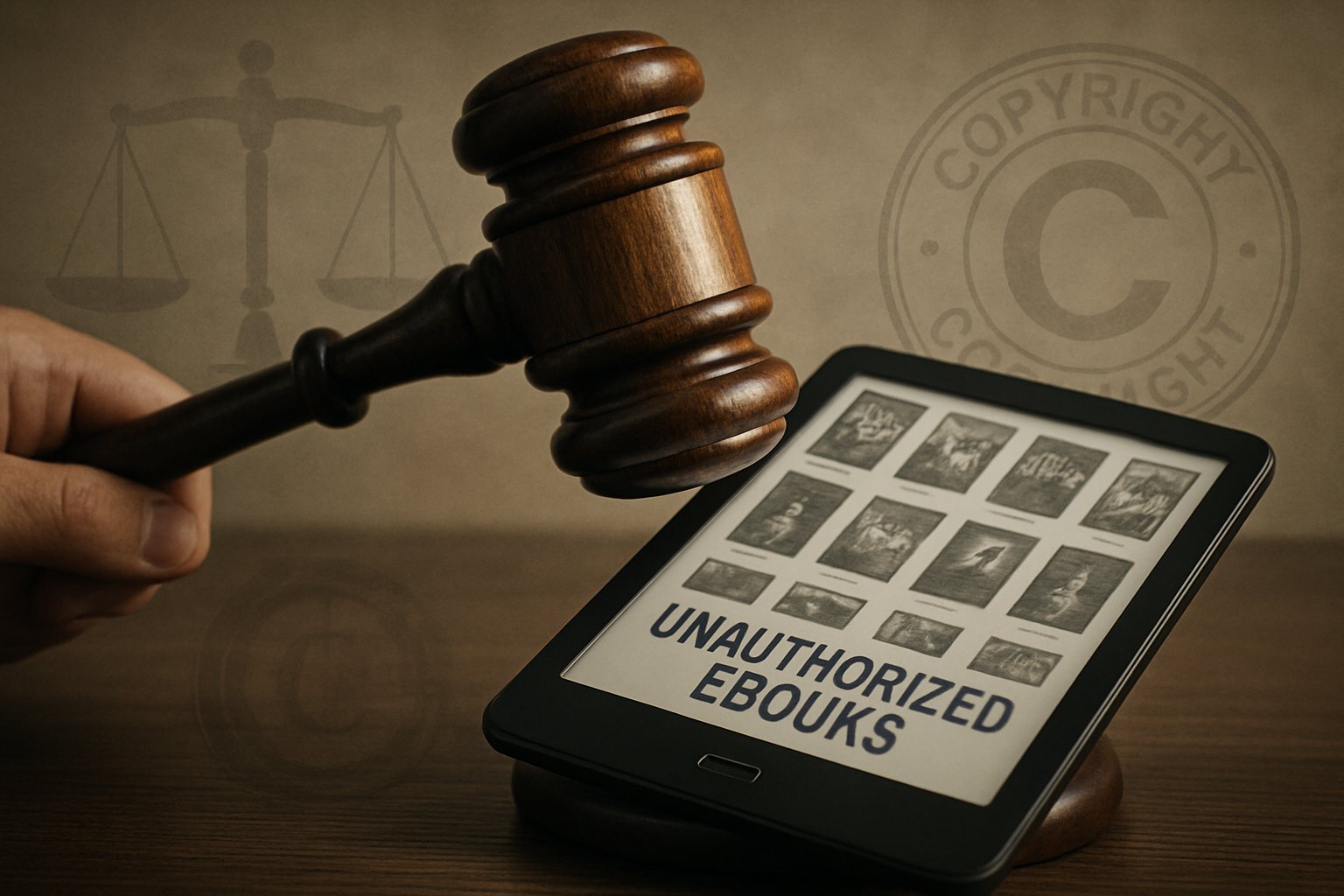
Courts weigh purpose, work nature, amount taken, and market effect under Intellectual Property doctrine. Moreover, they consider whether the use transforms the original’s meaning or audience. Failing the test exposes users to Infringement claims and statutory damages.
In contrast, simple format shifts from print to digital add little new expression. Consequently, judges usually find such acts non-transformative. Traditional Library lending, by contrast, relies on physical first-sale rights, not new reproductions.
These fundamentals show why defendants seldom win after copying entire books, even when Piracy feels victimless. However, deeper precedent underscores this conclusion, as the next section details.
Recent Courtroom Signals Explained
Furthermore, the Second Circuit’s 2024 decision in Hachette v. Internet Archive shapes current analysis. Judges ruled Controlled Digital Lending violated Copyright because the service offered full substitutes for print and eBooks. The case dominated Library conferences throughout 2024. Publishers framed the dispute as mass Piracy disguised as lending.
Moreover, the court emphasized non-transformative character and direct market harm. Consequently, all four factors favored publishers. Similar reasoning appears in earlier Google Books snippets but with the opposite outcome.
In contrast, Google limited display to snippets, transforming access with searchable indexes. Therefore, transformative purpose shielded the project under Intellectual Property precedents.
The Hachette ruling sends a strong deterrent signal to shadow libraries and individual downloaders. Meanwhile, upcoming appellate cases will reinforce or refine these boundaries.
Whole Book Copying Risks
Downloading an entire text from Z-Library or similar portals creates a perfect substitute for the paid edition. Consequently, courts presume the fourth factor weighs heavily against fair use.
Moreover, whole-book duplication leaves no room for transformative argumentation. Judges label the activity straightforward Piracy rather than scholarship. Civil statutory damages can reach $150,000 per work when willful Infringement is proven.
Additionally, criminal penalties apply in large commercial schemes, although prosecutors target organizers first. Nevertheless, individual users may still receive settlement letters demanding thousands. Companies hosting user uploads face secondary Intellectual Property liability for contributory conduct.
Full-text copying maximizes monetary exposure and undercuts any fair use narrative. Therefore, risk-aware professionals must explore safer workflows, outlined in the following section.
AI Dataset Litigation Trends
AI developers often scrape shadow repositories such as Books3 to feed model Training pipelines. Furthermore, several authors now sue Meta, OpenAI, and NVIDIA for unauthorized text ingestion.
Plaintiffs claim the process copies expressive prose wholesale, triggering Intellectual Property rights. Defendants counter that model outputs transform the material and serve new purposes. However, courts remain split on whether algorithmic analysis outweighs market harm.
Meanwhile, discovery requests seek evidence that free corpus access reduced eBook licensing revenue. Consequently, transformation and market substitution will likely decide these Training cases. Legal teams must monitor evolving docket orders carefully.
AI disputes illustrate how technology magnifies traditional Intellectual Property tensions. In contrast, human readers have simpler alternatives, explored next.
Alternatives For Book Access
Libraries still offer robust interlibrary loan and licensed eBook programs. Additionally, readers can request print copies through regional Library networks when digital versions lack licensing.
For accessibility, Section 121 permits authorized bodies to create copies for print-disabled patrons without Infringement. Moreover, rights holders sometimes grant direct permissions when approached professionally. Professionals can deepen expertise through the AI Project Manager™ certification.
In contrast, legitimate second-hand marketplaces allow resale under first-sale doctrine. Consequently, consumers avoid Legal headaches and malware threats common on pirate sites.
Lawful channels preserve creator revenue and reduce personal Intellectual Property risk. Therefore, adopting these options prepares readers for the compliance checklist ahead.
Practical Risk Checklist Overview
Compliance officers value concise action items. Consequently, the following checklist distills key risk factors.
- Verify source licenses before downloading or sharing any file.
- Document fair use analysis before any public release.
- Avoid sites flagged for Piracy or malware distribution.
- Use Library portals with authenticated digital lending systems.
- Monitor AI Training datasets for unauthorized books.
Additionally, keep written policies that outline reporting lines for suspected Infringement. Meanwhile, invest in periodic Legal audits to validate controls.
These steps reduce uncertainty and demonstrate proactive Intellectual Property stewardship. Subsequently, readers can implement them immediately after finishing this article.
Downloading unavailable books from pirate hubs remains fraught with financial and reputational danger. Courts reject fair use when whole works substitute for paid editions and hurt markets. Furthermore, AI researchers scraping pirate datasets now face similar scrutiny. Nevertheless, licensed lending platforms and accessibility exceptions give readers workable options. Consequently, organizations should apply the risk checklist and update governance playbooks immediately. Additionally, career growth benefits from structured learning on emerging compliance roles. Consider advancing through the AI Project Manager™ program to lead responsible innovation. Act now, and stay ahead of evolving enforcement trends.


